

Operations · 6 min read
Choosing a vision AI vendor, buying a capability or renting one forever
The first site is a project either way. The tell is whether the second is a statement of work or a window of frames, and whose people correct labels later.
Summary
This post separates two things a vision vendor can sell a utility: a capability that transfers to the utility's own people, or a service that is re-bought at every site and every year. It lays out the questions that expose which one a vendor's commercial model rewards, and describes what owning the loop looks like when the utility's own linesmen correct the labels and the next region rolls out without a new project. It is for the person signing the contract.
Ayman Quadir · Head of Product · Sep 27, 2026
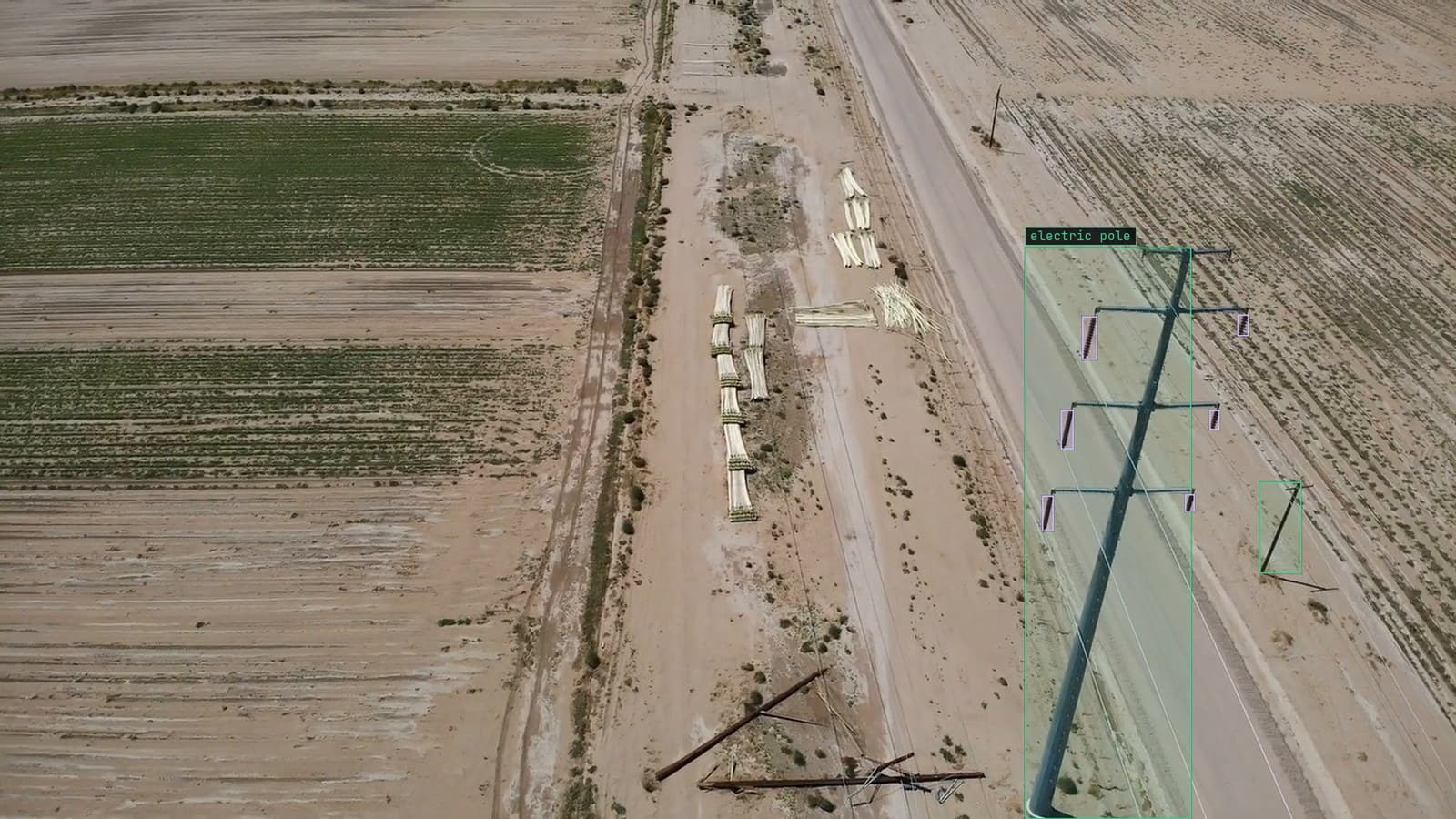
Overhead pass along a desert distribution line, poles and insulators boxed, from a customer inspection run
The utility's first inspection programme covered one region: a season of drone passes from March to June along the distribution lines, a vendor's team labeling poles, insulators and cracked hardware, a model that found the defects, and a report. It worked. The second region was quoted as a new statement of work at roughly the first region's price, and the third region the same, and by the third quote the asset manager had noticed that the utility owned a report and the vendor owned everything else.
That is the shape of renting. It suits some buyers, and it is a shape a buyer should be able to recognise before the second quote rather than after the third.
The vendor's commercial model decides more than the pitch does
Every vendor's pitch says the same thing about partnership. What decides how the engagement actually behaves is what the vendor is paid for. A vendor paid per labeled frame is paid more when the utility's own people label nothing. A vendor paid per site is paid more when every site is a fresh project. A vendor paid to run the model is paid for as long as nobody else can. None of that makes the vendor dishonest; it makes the incentives visible, and the incentives are what the utility will be living with in year three, when the March budget is set without the vendor in the room.
The opposite shape is a vendor whose revenue does not fall when the utility's people do more of the work, because the vendor is paid for the platform the work runs on rather than the work itself. That vendor has a reason to hand over the labeling guideline, to put the utility's linesmen in the review queue, and to make the third region cheaper than the first.
The first site is a project either way and the second is the tell
The first region is a project under any model. Frames have to be collected from the utility's own drone passes between March and June, and the classes have to be settled. Someone has to label a few thousand frames against a written guideline and check them, and a model has to be trained and evaluated per class on the utility's own footage. Nobody can skip that, and the cost of it is not the tell.
The second region is. Under a capability model, the second region is a window of frames from the new lines, folded into the existing model before it goes live, reviewed by people who already know the guideline. The classes, the alert rules, the review cadence and the model all carry over, and the cost is the window. Under a service model, the second region is the first region again, because that is what the vendor is paid for. Ask for the second site's price at the first site's quote, in labeled frames and in money, and the answer sorts vendors into the two shapes without any further questions.
Five questions that expose which shape a vendor is
These are the questions worth putting to a vendor before signing, and the answers worth writing down.
- Does the commercial model reward the utility's own people doing the labeling and the review, or penalise it? A vendor whose price falls as the utility's linesmen take over the queue has answered.
- Can the dataset and the model be exported at any time, in what formats? The dataset as COCO and the model as PT, ONNX or TorchScript is the answer we give, described by the device it will run on. A vendor who cannot say has answered too.
- What does the vendor's involvement look like in year three? If it looks the same as year one, the utility is renting.
- Who holds the labeling guideline, and who can change a class? If the vendor does, the classes belong to the vendor.
- What runs, and what does the utility keep, if it stops paying? A model it can run itself on its own hardware, and the frames and labels it was trained on, is ownership. A portal that goes dark is a lease.
The pricing page is where our own answers to the first and last of those are written down, because a buyer should be able to read them before a call rather than after one.
Owning the loop is the utility's linesmen in the review queue
Ownership is a description of who does what once the model is live. On the programmes we run, by the second season the frames the model doubts are reviewed by the utility's own linesmen: an insulator half hidden by a crossarm, a stain that might be a crack. They review on the guideline the utility now holds, and their corrections count toward the threshold that trains the next version. The vendor is not in that loop as labour. The vendor is the platform the loop runs on.
That is what makes the third region cheap. The linesmen who reviewed the first region's doubted frames are the ones who review the third region's, the classes are the ones they named, and the alert that reaches the regional depot in Slack, with the frame attached, is the one they approved. The energy work behind our numbers, 21,000+ hazard detections a month, is done this way, and the number comes from the utilities' own people acting on their own alerts.
The word linesman is older than the electricity grid; it was the telegraph companies' word first, and the utilities kept it when the wires changed. The job of walking the line and looking at the hardware is the same one the model is now doing the first pass of.
A vision AI programme is owned when the next site needs no project
LexData takes the utility's model through its whole life. You type what to look for, Lexi puts a box on every frame, and a person checks each label before anything trains on it. The model then watches the footage the utility's own drones and cameras produce, in the cloud, on your servers, or on a runner beside the recorder. Frames it is unsure of come back to a person, the corrections retrain it, and the new version replaces the old one with no downtime. The person in that sentence is the utility's, and that is the whole of the difference between the two shapes.
My own view, having been on the vendor side of these conversations, is that the buying question is simpler than the RFP makes it. Ask whether the vendor gets richer when the utility gets more capable. If the answer is yes, the utility is buying a capability. If the answer is no, it is renting one, and the third quote will say so in numbers. The platform is built for the first answer, and the second region is where a buyer finds out which one they signed for.
See it on your own footage.
Start with your footageMore in Operations
Operations · 7 min read
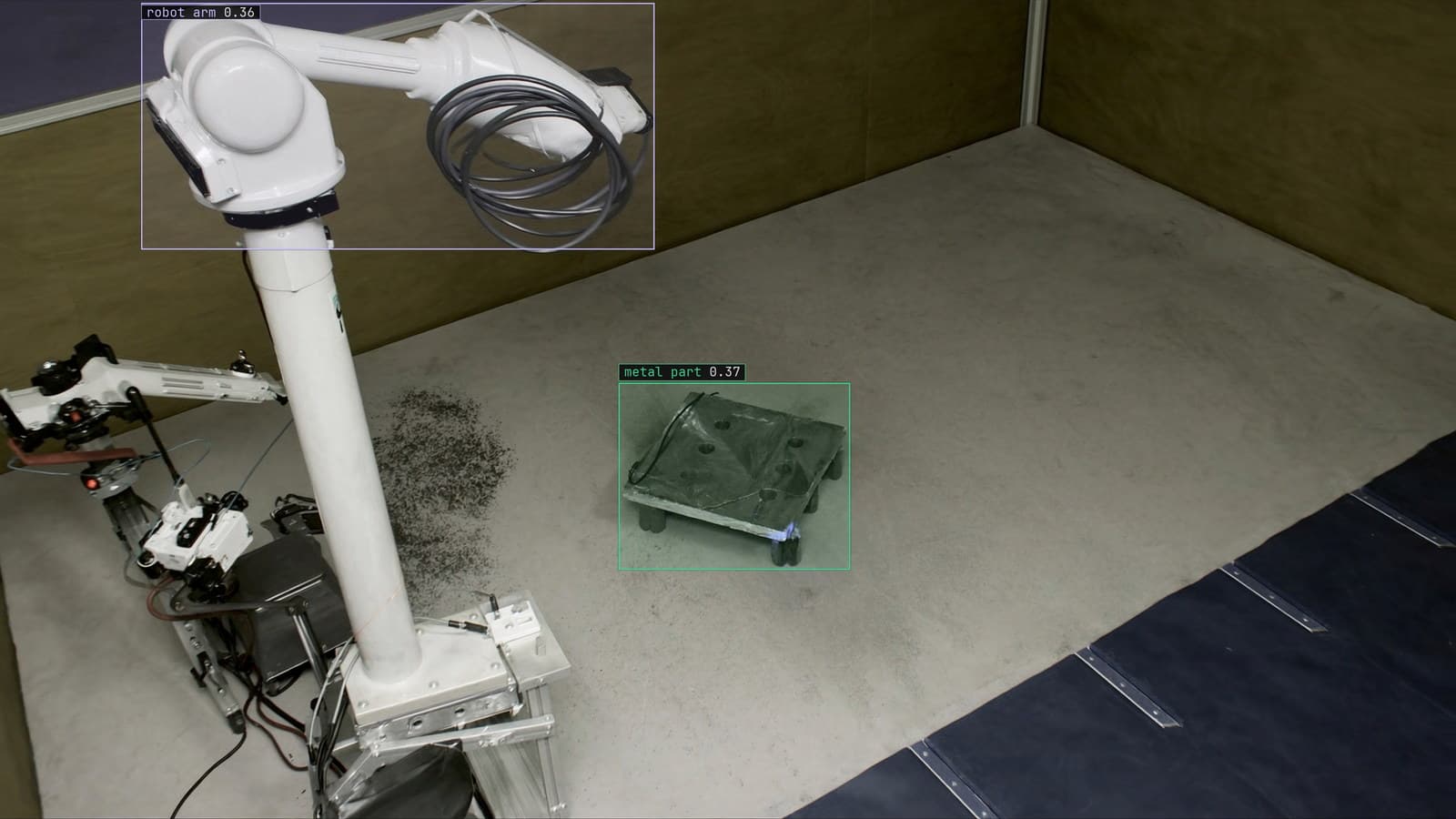
Active learning for computer vision on a line camera that never stops
The weld camera runs three shifts. The model returns the frames it doubts, the inspector corrects them, and past the threshold a new version trains and ships.
Rob Hickey · Sep 27, 2026

Operations · 7 min read
Camera focus measurement for a fixed camera that slowly goes soft
A lens loosened by vibration fails over weeks, and the model suffers before anyone sees blur. A sharpness score against the camera's own history catches it.
Rajiya Sultana · Sep 27, 2026
Operations · 6 min read
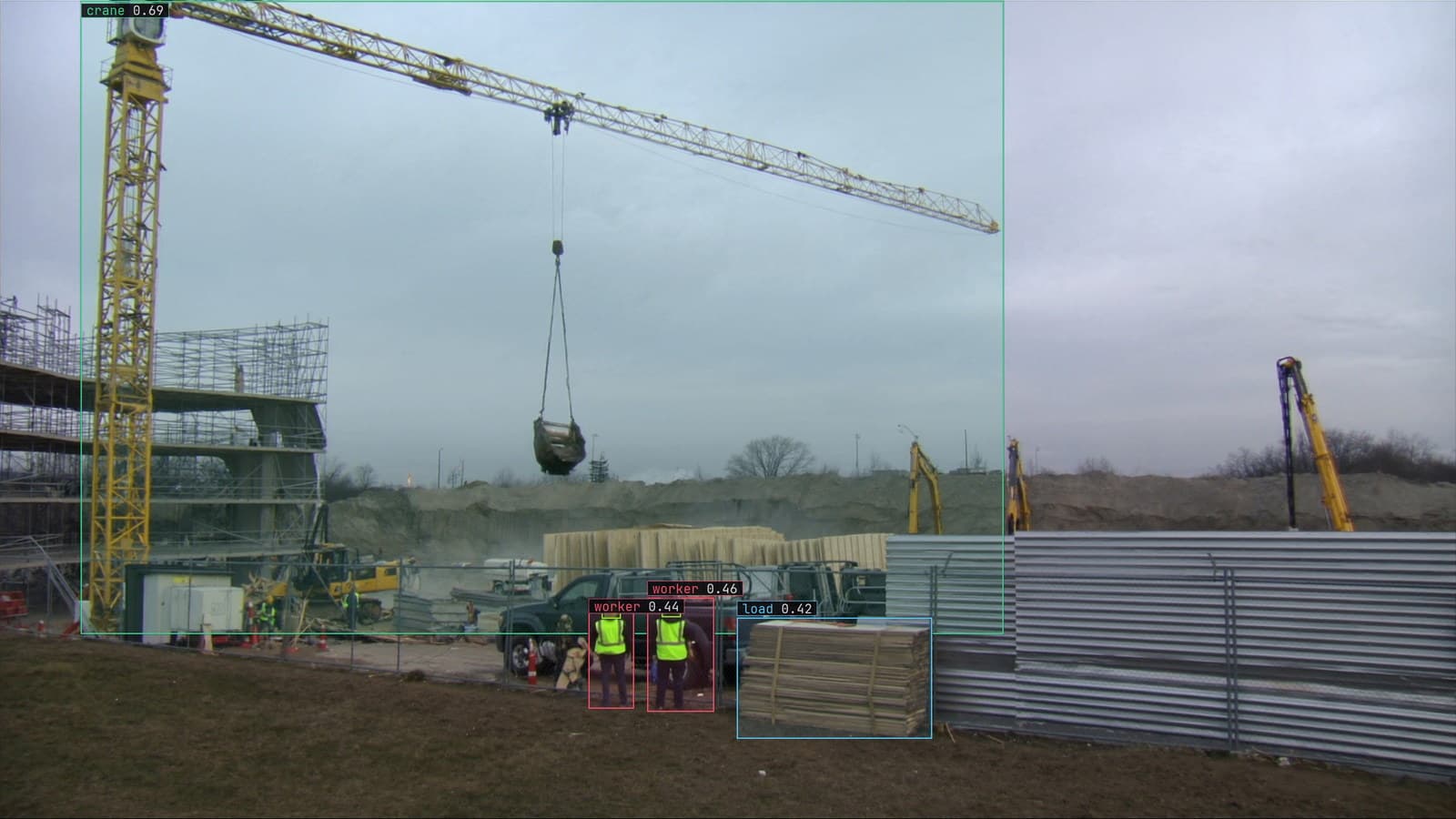
Danger zone monitoring with object detection on a site camera
A polygon over the crane swing radius on a site camera. People and vehicles as classes, the bottom of the box as the test, the alert with the frame attached.
Esdras Ntuyenabo · Sep 27, 2026