

Operations · 7 min read
A computer vision maturity framework for moving past the pilot, in five stages
Five plants, five pilots, no way to say which is further along. Five stages from a model on a bench to an operation nobody restarts, and what moves one up.
Summary
This post gives a manufacturer with several plants a five-stage scale for a vision programme, from a model that works on a bench to an operation that nobody has to restart, and names the three gaps that stall most programmes between stages: the lab-versus-line gap, every plant starting from scratch, and detection without action. It concludes that the loop of label, watch, correct, retrain and roll out is what moves a programme up a stage. It is for the plant director who has to compare five pilots on one slide.
Ayman Quadir · Head of Product · Sep 27, 2026
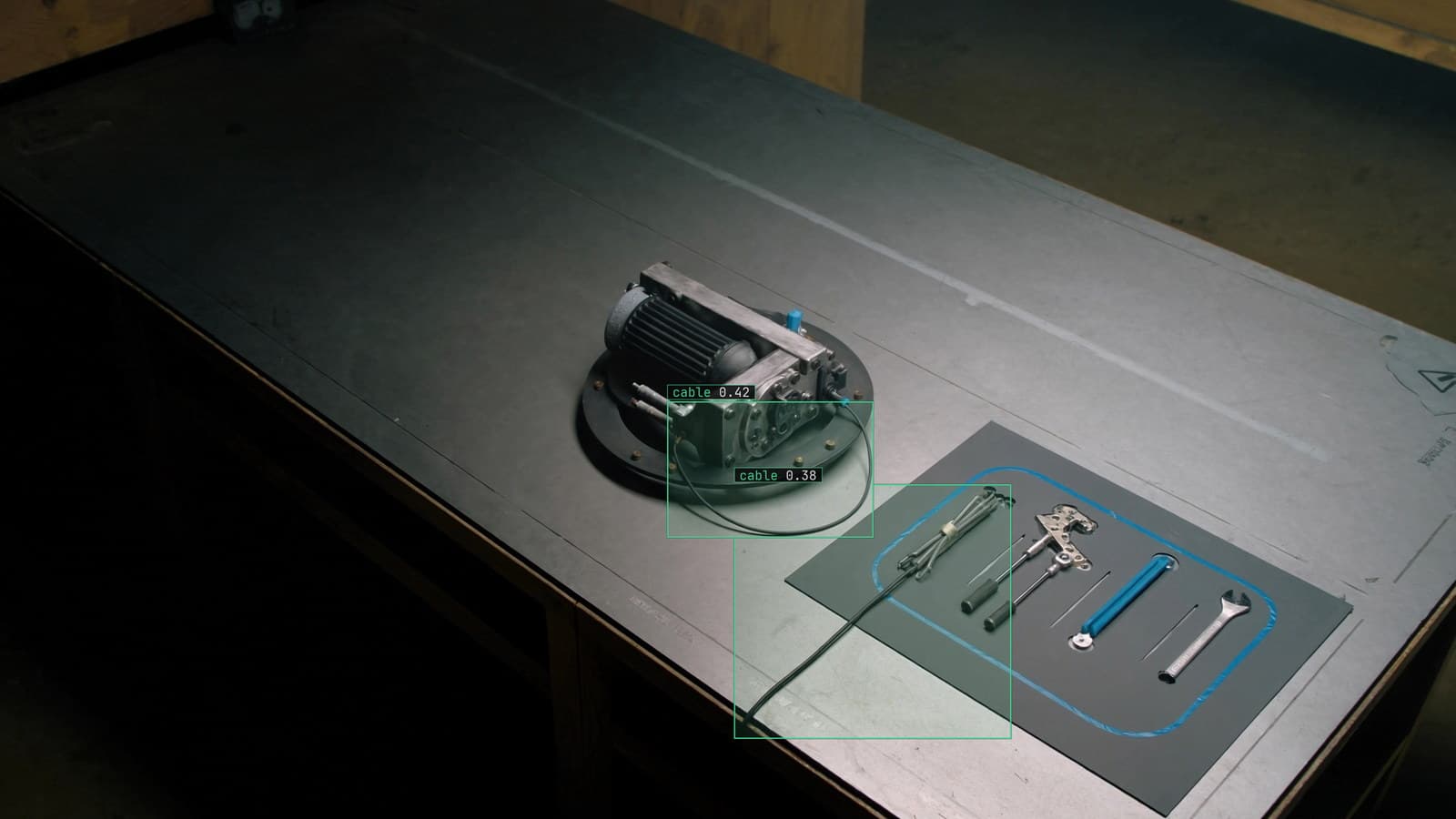
Assembly station with a housing and wiring loom laid out, cable boxed, generated scene with detections from our model
The plant director has five plants and, as of this quarter, five vision pilots, each started by a different plant manager with a different vendor for a different reason. One counts fasteners at an assembly station. One watches a weld cell. Two inspect painted panels. One was switched off in March and nobody has said so. The board wants a single slide on where the programme stands, and there is no scale to put the five on.
A scale is worth having, less for the slide than for the argument it forces about what the next stage actually requires. This one has five stages, and most programmes are further down it than they describe themselves.
Stage one is a model that works on a bench
The fastener pilot began the way most do. A few hundred photographs of the station were taken with a phone, a model was trained on them over a weekend in January, and it was demonstrated in a meeting room where it found every missing fastener in the photographs it was shown. The plant manager called it a success and asked for budget.
Stage one is feasibility, and it answers one question: can a model tell these things apart at all. It is a real stage and a necessary one, and it says nothing about the line. The photographs were taken by hand under the meeting room's light, the model has never seen the station camera's angle, and the accuracy figure on the slide was measured on frames the model was trained beside. The what vision can see lesson is the honest gate here: could the best operator make the call from the station camera's frame, rather than from a phone held a hand's width away.
Stage two is a model that survives the line
The weld cell pilot is at stage two, and it earned it the hard way. Its model was retrained in April on frames from the cell camera itself, at the mounted height, across three shifts, with the spatter and the smoke in them, and its labels were checked against a written definition of a reject before anything trained. It runs on the line. Its accuracy per class was measured on a fortnight of frames held out by time, and the inspector on the cell trusts it.
The gap between stage one and stage two is the lab-versus-line gap, and it is where the two painted panel pilots are stuck. Both were trained on supplier photographs and both produce false alarms under the plant's own sodium lights that the operators have learned to ignore. Getting to stage two costs a window of the line's own frames and a guideline, and it is the cheapest step on the scale that most programmes skip.
My own observation, from a lot of these slides, is that most programmes are at stage two and describe themselves as stage four. The tell is that each plant's model was built as a separate project.
Stage three is a deployment that looks the same at every plant
The weld cell model works at site 2. Site 4 has a similar cell. The question that separates stage two from stage three is what it costs to put the model there. The honest answer at most manufacturers is a new project: a new vendor engagement, new labeling from nothing, a new integration to a different recorder, a new alert path into a different plant's channels.
Stage three is a standard shape: the same way of connecting to a recorder's streams, the same review queue, the same alert rule written as a sentence and delivered to Slack or email. The model runs in the same place at every plant too, whether that is the cloud, the manufacturer's own servers, or a runner beside each plant's recorder. With that in place, site 4 is a window of frames from its own cell folded into the model before go-live, and the drift catalog's new site came online entry describes exactly what that window is for. Without it, every plant is the first plant, and the programme cannot get past five pilots however good each one is.
Stage four is a catalogue a plant can pull from without a project
At stage four the fastener count, the weld inspection and the panel check are entries in a catalogue rather than projects. A plant manager at site 5 can take the weld inspection and have it running on their cell with a window of local frames and a week. The classes, the guideline, the alert rules and the review cadence come with the entry. What the plant supplies is its own footage and its own people to review the doubted frames.
The gap here is that every deployment starts from scratch, and it is organisational rather than technical. Somebody has to own the catalogue, decide what goes in it, and hold the line on classes and guidelines so that a weld reject means the same thing at site 2 and site 5. On the programmes we run this is one person with a title, and the programmes without that person stay at stage three.
The five-level shape of every maturity model traces back to software process assessments written for defence contractors in the late eighties, which is why there are always five and never four or six.
Stage five is an operation nobody has to restart
Stage five is the one the board's slide cannot show, because it is what happens after every plant is live. The weld model at site 2 drifts when the wire supplier changes. The panel model at site 3 meets a new paint colour. Each of those is a moment where a stage-three programme raises a ticket and a stage-five programme does nothing special. The frames the model doubts come back to a person, the corrections count against a threshold, and a new version trains on the original set plus the corrections. It is checked per class, and it replaces the old one with no downtime.
The third gap lives here: detection without action. A stage-five operation is defined by what happens after a box is drawn. An alert reaches the person on shift with the frame attached. A doubted frame reaches a reviewer. A correction reaches the next version. A programme where boxes are drawn and nothing else moves is stuck at whatever stage it reached, and the tell is a dashboard everyone has stopped opening.
The loop is what moves a programme up a stage
Each gap on the scale is the same missing thing seen from a different stage. Stage one to two needs the plant's own frames, labeled and checked. Two to three needs a standard way to watch, alert and review. Three to four needs the classes and guidelines held constant across plants. Four to five needs corrections flowing back into training without a project.
LexData takes each plant's model through its whole life. You type what to look for, Lexi puts a box on every frame, and a person checks each label before anything trains on it. The model then watches the cameras the plant already has, in the cloud, on your servers, or on a runner beside the recorder. Frames it is unsure of come back to a person, the corrections retrain it, and the new version replaces the old one with no downtime. That sentence is stages two through five, and the platform is where a plant director's five pilots become one programme with five sites on it.
The slide for the board, in the end, was one line per plant with a stage number beside it, and the pilot that was switched off in March was on it at stage one, honestly. That was the row the board asked about.
See it on your own footage.
Start with your footageMore in Operations
Operations · 7 min read
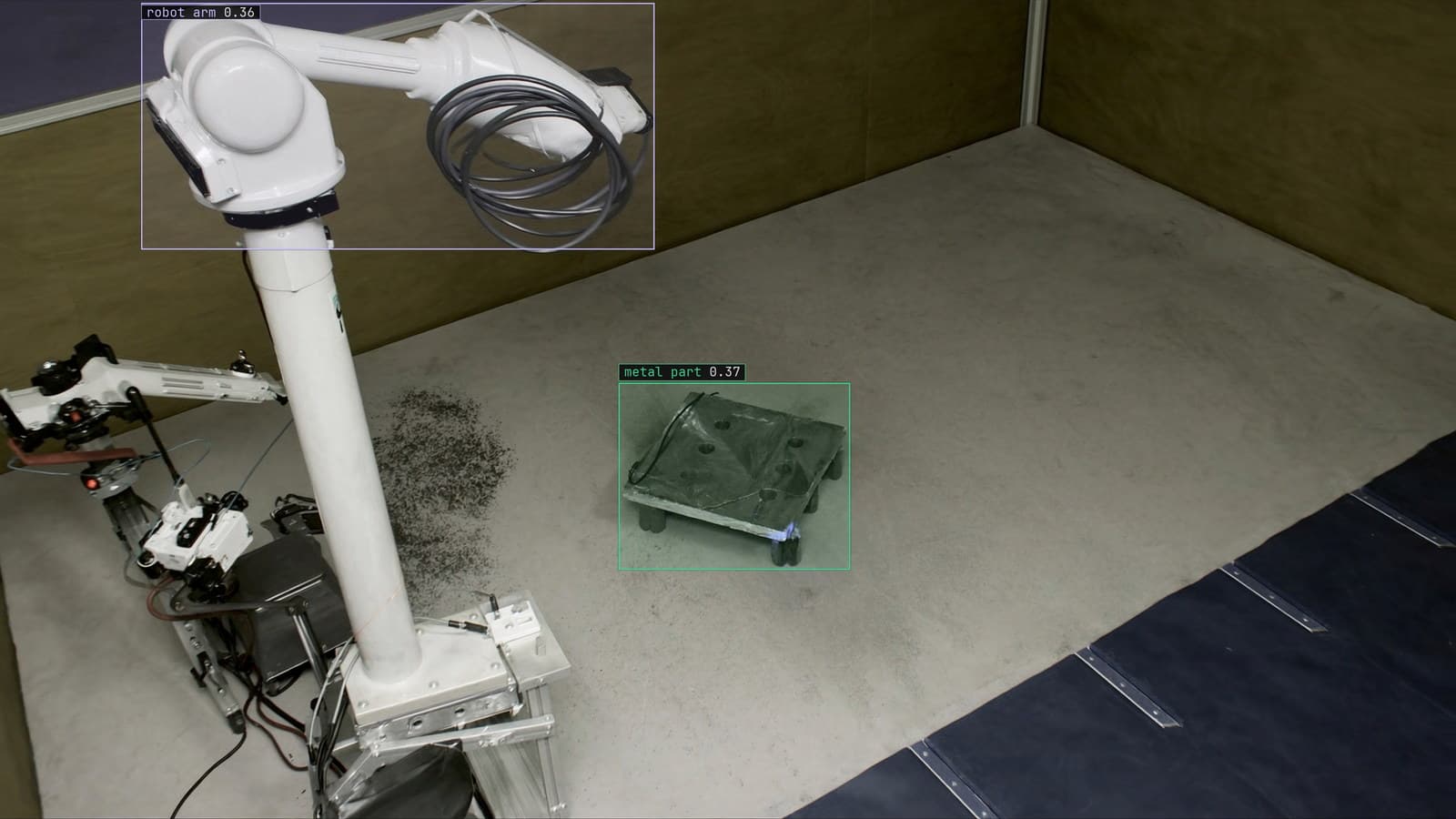
Active learning for computer vision on a line camera that never stops
The weld camera runs three shifts. The model returns the frames it doubts, the inspector corrects them, and past the threshold a new version trains and ships.
Rob Hickey · Sep 27, 2026
Operations · 7 min read
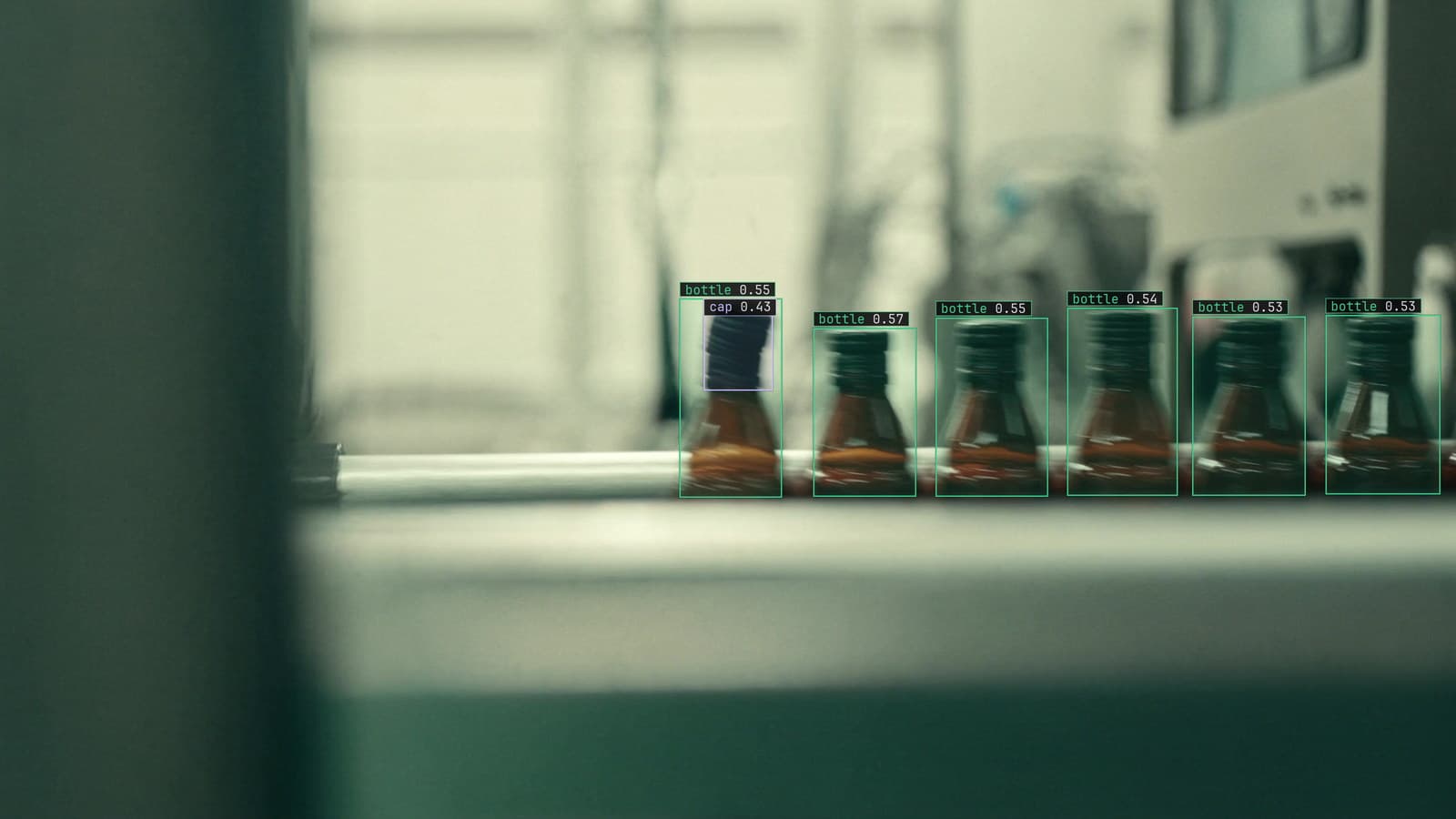
Camera focus measurement for a fixed camera that slowly goes soft
A lens loosened by vibration fails over weeks, and the model suffers before anyone sees blur. A sharpness score against the camera's own history catches it.
Rajiya Sultana · Sep 27, 2026
Operations · 6 min read
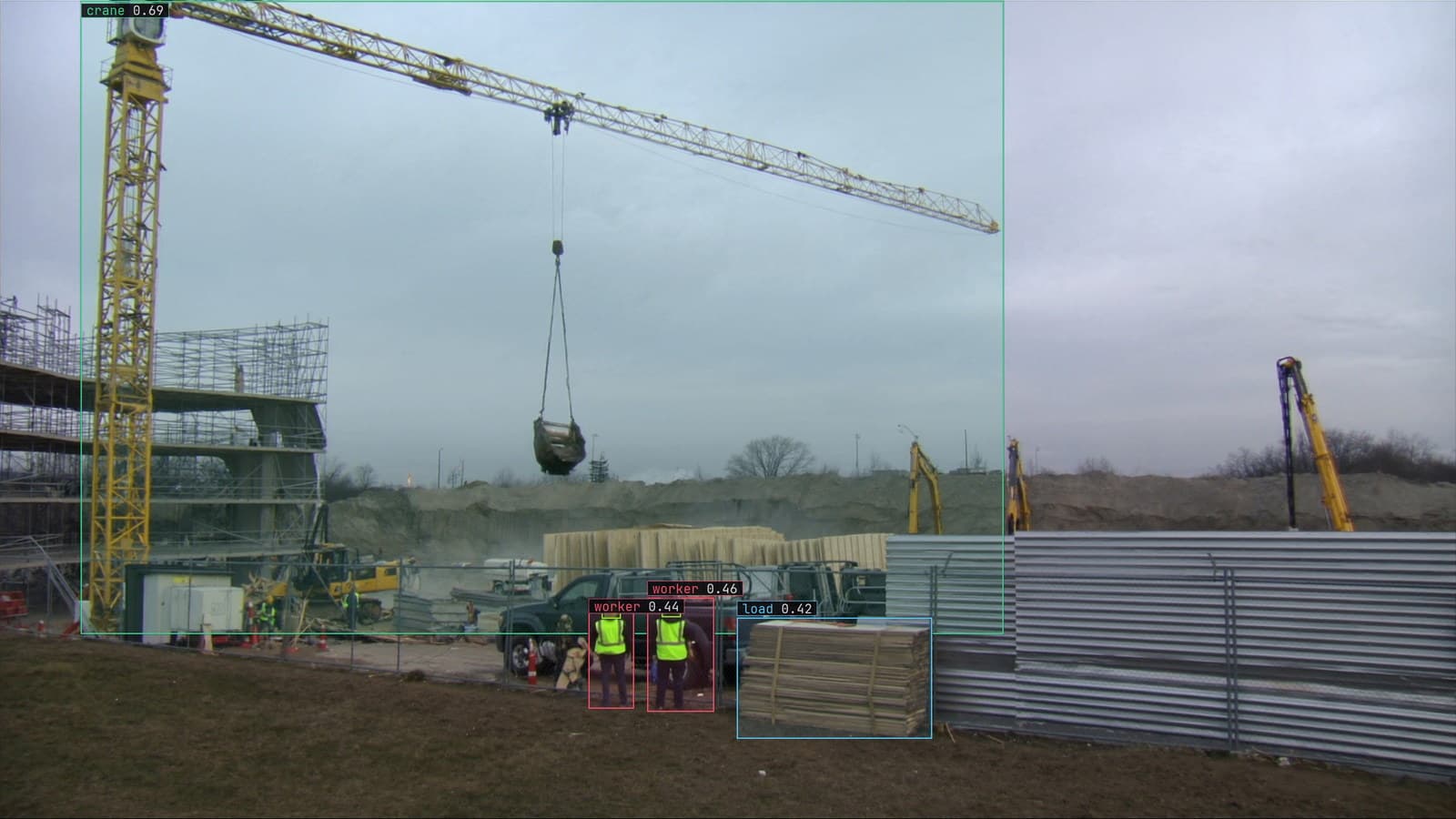
Danger zone monitoring with object detection on a site camera
A polygon over the crane swing radius on a site camera. People and vehicles as classes, the bottom of the box as the test, the alert with the frame attached.
Esdras Ntuyenabo · Sep 27, 2026