

Industries · 7 min read
Crack detection with computer vision as a tag, a box or a width in millimetres
A tag says whether a footing is cracked, a box says where, and only a mask gives a width the engineer can act on. The low winter sun turns texture into cracks.
Summary
This post takes three cracks, on a tower footing, a turbine blade and a substation floor tile, and works out which of a tag, a box or a mask each one needs, ending with how a mask becomes a length and a width in millimetres. It concludes that the label should match the decision the engineer makes, and that the low sun of the first winter is when a crack model starts finding cracks in texture. It is for utility and plant inspection teams.
Sheikh Srijon · GTM Lead · Sep 25, 2026
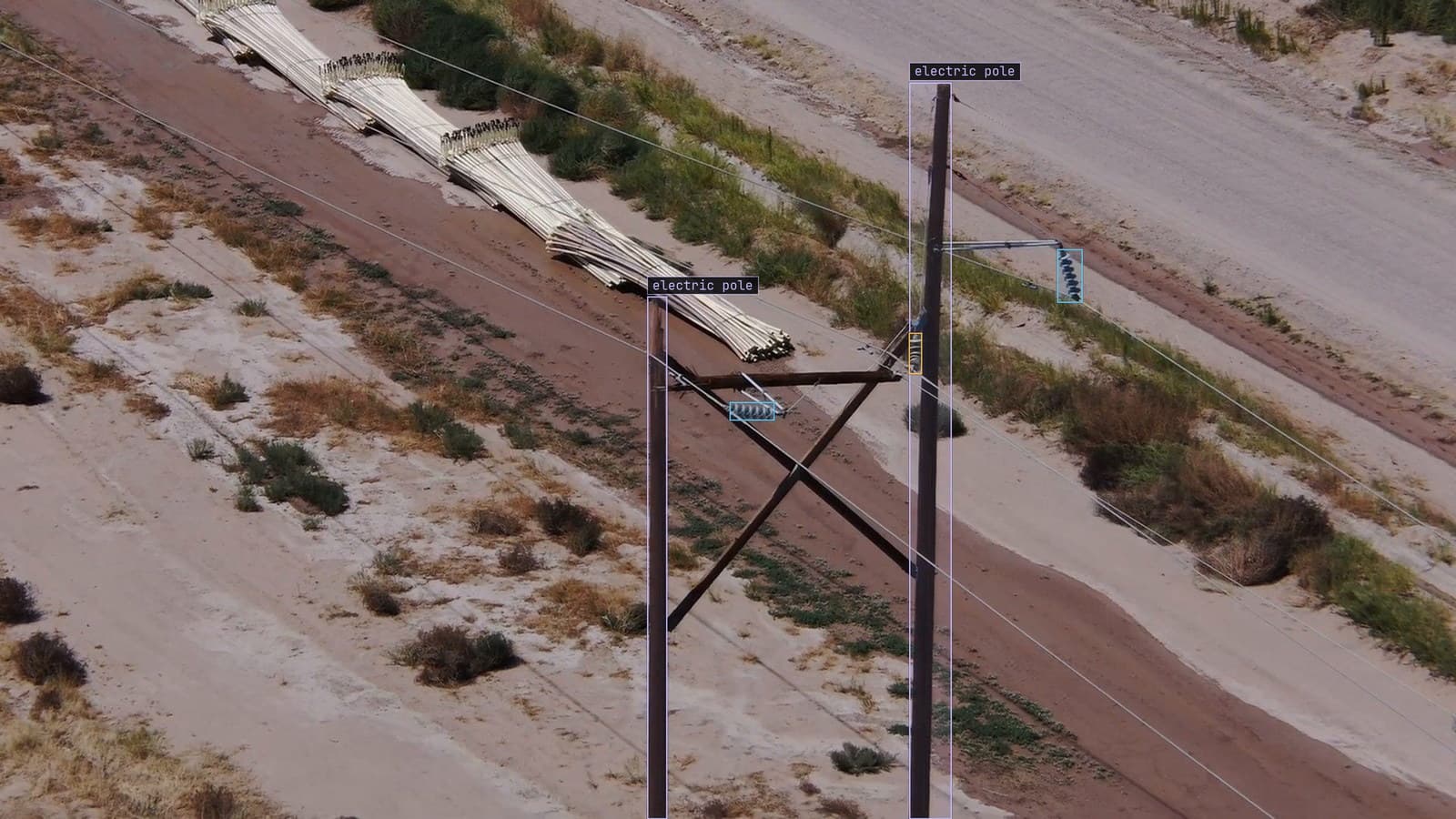
Distribution poles along a desert track with one insulator flagged as cracked, from a customer inspection run
The footing of tower 14 has a crack in it that the line crew photographed in June, and the question in the maintenance meeting is the same one it was last year: is it the same crack, and is it wider. The photograph from last June is on a different phone at a different distance. Somebody holds the two side by side and says it looks about the same, and the footing goes another year.
That question has three different answers depending on how the crack was labeled, and the label was chosen long before anyone in the meeting was asked what they needed to decide.
A tag answers whether, and that is sometimes enough
The simplest crack model is a classifier. Every frame gets a tag, cracked or not cracked, and nothing else. For a March survey where the question is which of a thousand footings need a closer look, a tag is the right label, because the decision it feeds is a list: these footings, in this order, for the crew to visit. Labeling is fast, since a person only has to say yes or no per frame, and the model learns from many more frames per hour of labeling than a box or a mask would allow.
What a tag cannot do is say where. On a frame of a footing that has a crack somewhere on it, a tag is enough. On a frame of a whole tower base with cable trenches, a drain cover and a crack in one corner, a tag says "cracked" and the crew walks around the tower looking for it. The tag also cannot tell the difference between one crack and five, or a hairline and a gap.
A box says where, and object detection is where most crack work starts
A box per crack gives the position on the asset and a count. That is the label most inspection programmes need first, because the engineer's question is usually where and how many before it is how wide. Object detection draws the box, and the box can be checked against the crew's own photograph: this crack, on this face, at this height.
The labeling is boxes on cracks, and the difficulty is that a crack is long and thin. A box around a diagonal crack across a footing is mostly concrete with a line through it, and a model trained on such boxes learns that a crack is a region rather than a line. The labeling rule, written before anyone starts, is to box each straight run of crack separately, so that a crack that turns a corner is two boxes rather than one large one full of clean surface. You type "crack" once, Lexi proposes the boxes, and a person checks them against that rule.
The what a vision model can see lesson is worth a read before labeling a crack set. Whether a crack is visible at all depends on the pixels it spans, and a hairline at the distance the drone flew for coverage is often below that.
Only a mask gives a width the engineer can act on
The maintenance standard for the footing is written in millimetres. A crack under a written width is monitored; over it, the footing is repaired. Neither a tag nor a box carries a width. A mask does: the labeler traces the crack itself, every pixel of it, and the outline becomes measurements.
The measurement is two steps. The mask is thinned to a one-pixel centreline, and the length of that line is the crack's length. For every point on the centreline, the distance to the nearest edge of the mask gives the local half-width, so the width profile along the crack falls out of the same mask, and the widest point is what the standard cares about. Both are in pixels until a scale is known, and the scale comes from the camera's distance to the surface and its lens, or from the ground sample distance a drone's survey software already records. A fixed camera on a substation wall is calibrated once. A drone pass carries its scale with every frame.
The predictive maintenance on grid assets use case argues the same way about corrosion: the prediction is a rate, a rate is the same quantity measured twice, and only a mask supplies the quantity. A crack width in June compared with a crack width the June before is the answer the maintenance meeting wanted, and it is only available if the label was a mask both years and the two frames were taken at a known scale.
Masks cost the most to label. The honest way to spend that cost is a tag or a box for the survey, and masks only on the assets already on the watch list, where the width is the decision.
Three cracks, three labels
The tower footing is on the watch list, so it gets a mask, from a fixed distance the crew measures with a tape, and the width is compared year on year. The turbine blade gets a box from the drone pass, because the decision on a blade is whether to send a rope team, and the rope team will measure it. The tile on the substation floor gets a tag from the walkaround camera, because a cracked tile is replaced, whatever its width.
Across our energy work, 21,000+ hazard detections per month come out of models like these, and the ones that hold up are the ones where the label was chosen from the decision rather than from what the labeling tool made easiest.
A reportable crack is a rule written as a sentence, with a severity and a cooldown, approved before it goes live. A crack on a footing wider than the standard's limit, high, to the maintenance planner in Slack, with the frame and the mask attached. The planner sees the crack drawn on the footing with the width beside it, which is a different meeting from two phones held side by side.
The low winter sun turns texture into cracks
The footing model that worked all summer starts finding cracks in October. Not on the footings: on the shadows. The sun is lower, the light rakes across the concrete, and every pour line and aggregate edge throws a shadow that has the shape of a crack. On a blade, the same sun makes the leading edge's own seam read as a fracture. The drift catalog calls this the season turned: the background the model learned has been rewritten by the sun angle, and the slide is over weeks rather than a fall off a cliff.
LexData takes the crack model through its whole life. You type what to look for, Lexi puts a box on every frame, and a person checks each label before anything trains on it. The model then watches the footings and the walkaround feeds, in the cloud, on your servers, or on a runner beside the recorder. Frames it is unsure of come back to a person, the corrections retrain it, and the new version replaces the old one with no downtime. The doubted frames in October are the shadows, and the crew's corrections on them are what the winter version learns from.
The signal is the correction rate. The crew starts dismissing crack flags on footings they know are sound, the override rate climbs through the autumn, and that climb is the model asking for winter frames. A programme that launched in spring should expect it and budget an afternoon of review in the first low-sun week.
My view, for what it is worth, is that a crack programme should label its first winter's shadows before it labels its second summer's cracks. The shadows are where the false alarms come from and the false alarms are what makes a crew stop reading the alerts. An aside: the line crew still photographs the footing with a coin beside the crack for scale, as they did before there was a model, and that coin is how the mask's millimetres get checked.
See it on your own footage.
Start with your footageMore in Industries
Industries · 7 min read
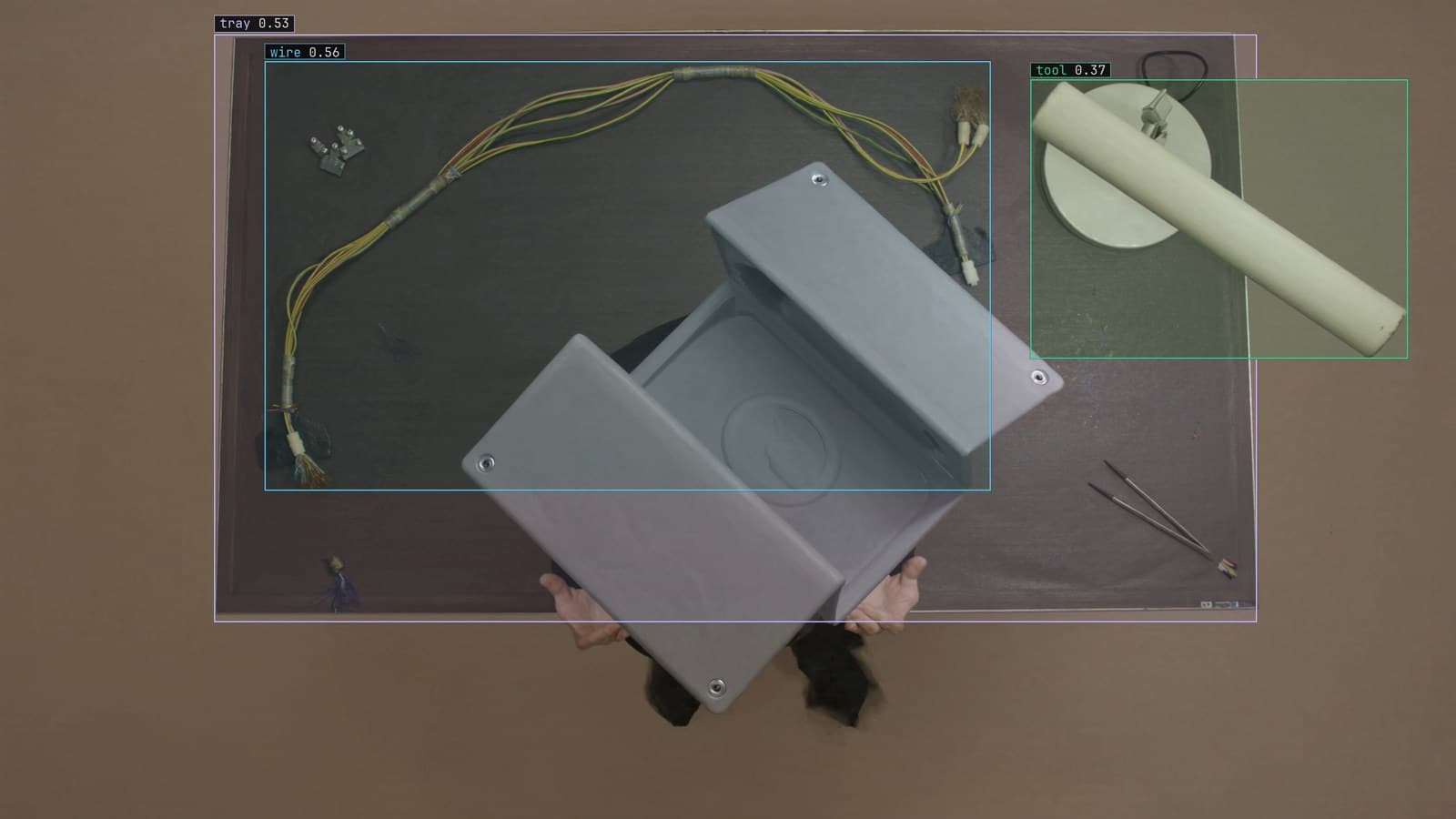
Counting the screws in a kit with object detection over the bench
A camera over the kitting bench counts every screw and bottle one box at a time. Exact for kits, a band for cases, and a half-hidden item is a written rule.
Rajiya Sultana · Sep 25, 2026
Industries · 7 min read
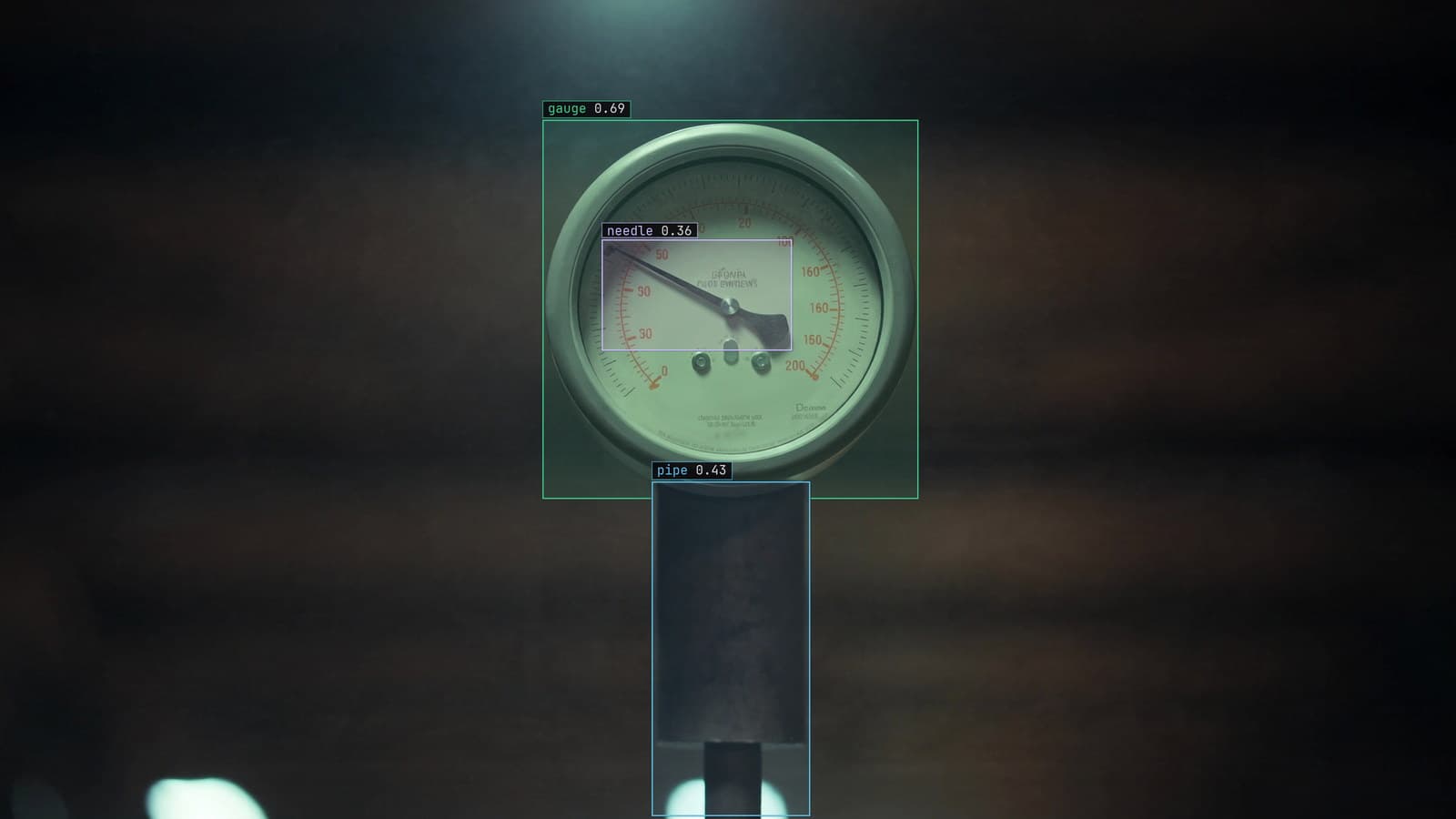
Automated water meter reading with a camera in the vault
Ten digit classes in a fixed row turn a truck roll into a frame. A rolling digit and condensation on the glass are the frames that come back to a person.
Stephen Biswas · Sep 25, 2026
Industries · 7 min read
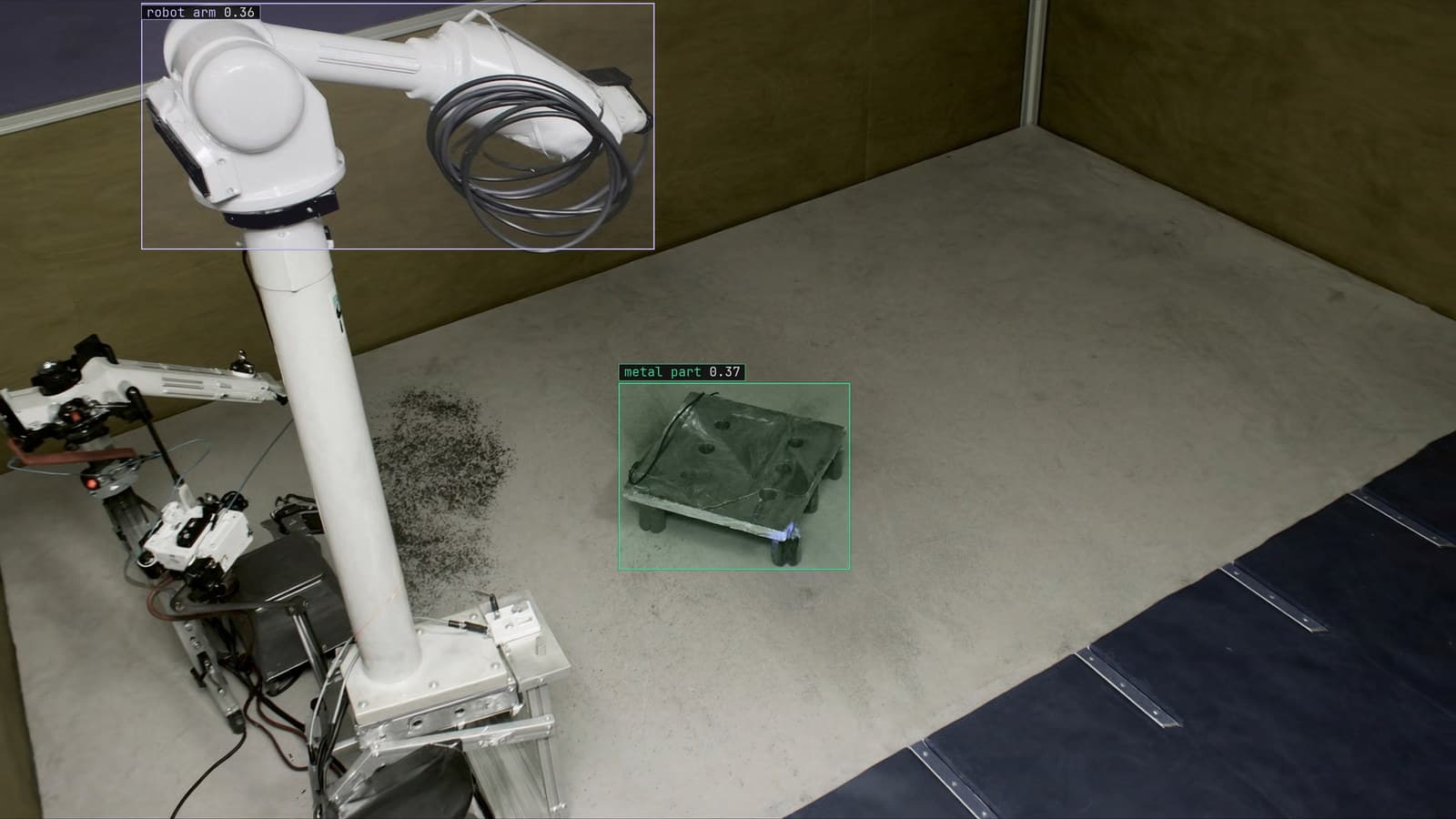
Body-in-white inspection with a station camera on unpainted steel
Dents on a bare body shell hide in the reflections. Masks give the extent, a second pass decides reportable, and a tightened tolerance is a spec change.
Finn Ellingwood · Sep 25, 2026