

Industries · 6 min read
OEE, OOE and TEEP, and the quality factor a camera can supply
The three metrics divide by different clocks and share one quality factor, estimated from a tray pulled at 2 pm. A camera counts every reject as it happens.
Summary
This post defines OEE, OOE and TEEP by the time each divides by, and shows that all three share a quality factor which, on most lines, is an estimate from a sampled count entered at the end of the shift. It concludes that a camera counting every reject as it happens turns the factor into a measurement, and that a moving defect rate is exactly what the metric exists to show. It is for plant managers and continuous improvement teams.
Ayman Quadir · Head of Product · Sep 29, 2026
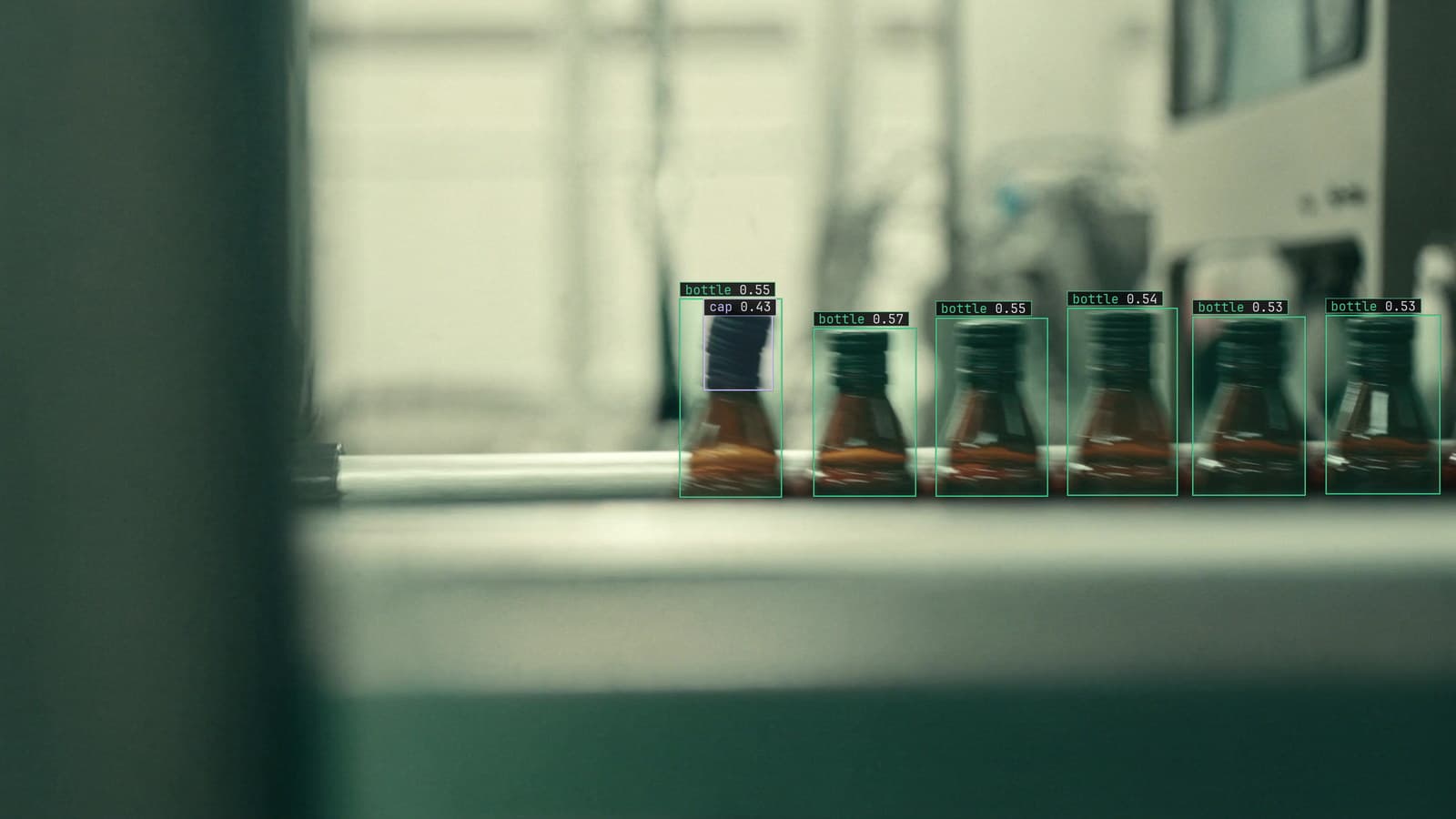
Bottling line, bottles under a fill head with one missing its cap, generated scene with detections from our model
The OEE board at the head of the bottling line is updated at the end of every shift. Availability comes off the line's downtime log, performance off the counter at the filler against the rated speed, and quality from a number the line lead writes in after the quality technician has checked a tray of bottles pulled at 2 pm. Two of the three factors are measured. The third is an estimate from a sample, and it is the one the whole line is judged by.
The camera over the capper outfeed has been watching every bottle since the line was commissioned. It was put there for the missing-cap check. It has been counting the rejects all along.
OEE, OOE and TEEP differ only in the clock they divide by
The three metrics multiply the same three factors, availability, performance and quality, and differ in the time the availability is measured against. OEE divides by planned production time, so a line scheduled for two shifts and idle for the third is not penalised for the third. OOE divides by operating time, which includes the changeovers and the breaks the schedule allowed for. TEEP divides by the whole calendar, every hour of every day, and asks how much of the plant's theoretical capacity the line delivered.
Which one a plant watches depends on who is asking. The line lead watches OEE because it is the number the shift can move. The board watches TEEP because it is the number that says whether to build a second line.
An aside from the board: the marker for the quality column is a different colour from the other two, because the number in it arrives from a different person at a different time, and the line lead wanted that visible.
The quality factor is good units over units started, and it is estimated
Quality is the simplest of the three factors to define and the hardest to measure. Good units over units started, for the shift. The denominator is easy; the filler's counter has it. The numerator is the count of units that passed, which means somebody has to know how many failed, and on most lines that somebody is the quality technician with a tray of bottles at 2 pm.
A tray pulled from a shift's worth of bottles is a sample.
If the missing-cap rate on the night shift is small, the tray will most often contain no misses at all. The quality factor on the board then reads as perfect on a shift that sent a case of uncapped bottles to the warehouse.
A camera counts every reject as it happens
The camera over the capper outfeed sees every bottle. The model boxes each one and classes the cap as seated, cocked or missing, and the count per class per shift goes into LexInsight as a value per camera. The quality factor for the night shift is then good bottles over bottles started, counted rather than sampled, with the frames behind every reject.
That changes what the board says and when. The number is available at 6 am when the shift ends rather than after the technician's afternoon check, and it is available per hour, which is what shows that the misses cluster in the half hour after the cap hopper is refilled. The question "when did the cap misses happen last night" has an answer with the frames attached.
On the bottling lines we run this on, the same camera feeds the reject gate directly, and the count is a by-product of the check the line already wanted. The manufacturing work behind our figure, 99%+ accuracy maintained in production, is mostly cameras that were put on a line for one check and turned out to be the quality factor as well.
A moving defect rate is what the metric was built to show
Here is where the counted factor pays for itself. The board's job is to show when the line got worse, and a quality factor from a sample cannot show a defect rate moving because the sample is too small to see it. A counted rate can. When the cap misses rise from a handful a shift to a few dozen, the factor drops, and the drop is visible on the morning it happens rather than on the week the warehouse complains.
The drift catalog calls a changed base rate the defect rate changed, and it is the condition most often mistaken for a model problem. The model is finding misses correctly. There are more of them. Per-detection the system looks fine, which is what makes the argument hard to have, and the counted quality factor is the number that settles it.
That is an operations finding rather than a vision one. A cap miss rate that doubled on the night the new cap supplier's lot arrived is a purchasing conversation, and the camera's contribution is that the conversation happens on Tuesday instead of at the end of the quarter.
The threshold tuned to last quarter's rate is the first thing to check
When the rate moves on a Tuesday, every threshold tuned around the old rate is wrong. The alert that fired on a few misses an hour now fires constantly, or the alert set for a flood never fires because the flood became normal. The alert is a rule written as a sentence, "cap misses above the shift's usual rate", with a severity and a cooldown, approved before it goes live, and the rule has to be re-tuned against the current rate before anyone touches the model.
The order matters. Re-tune the threshold first. If the rate moved because the world moved, the new supplier, a worn capper chuck, a hopper that jams, that is the finding. Retraining a model that is already correct teaches it nothing and costs a week.
The count is only as honest as the corrections behind it
LexData takes the capper model through its whole life. You type what to look for, Lexi puts a box on every frame, and a person checks each label before anything trains on it. The model then watches the outfeed camera the line already has, in the cloud, on your servers, or on a runner beside the recorder. Frames it is unsure of come back to a person, the corrections retrain it, and the new version replaces the old one with no downtime. A quality factor from a model nobody checks is a sample of a different kind, and the review queue is what keeps the count a measurement.
My own view is that TEEP is the number the board wants and OEE is the only one the floor can change, and that the quality factor is the place where the two are most often lying to each other. A line that reads perfect on quality because the sample never caught a miss will justify a second line that inherits the first one's capper.
The tray at 2 pm still gets pulled. The technician checks it against what the camera counted, and on the shift where the two disagree, the disagreement is what gets looked at.
See it on your own footage.
Start with your footageMore in Industries
Industries · 7 min read
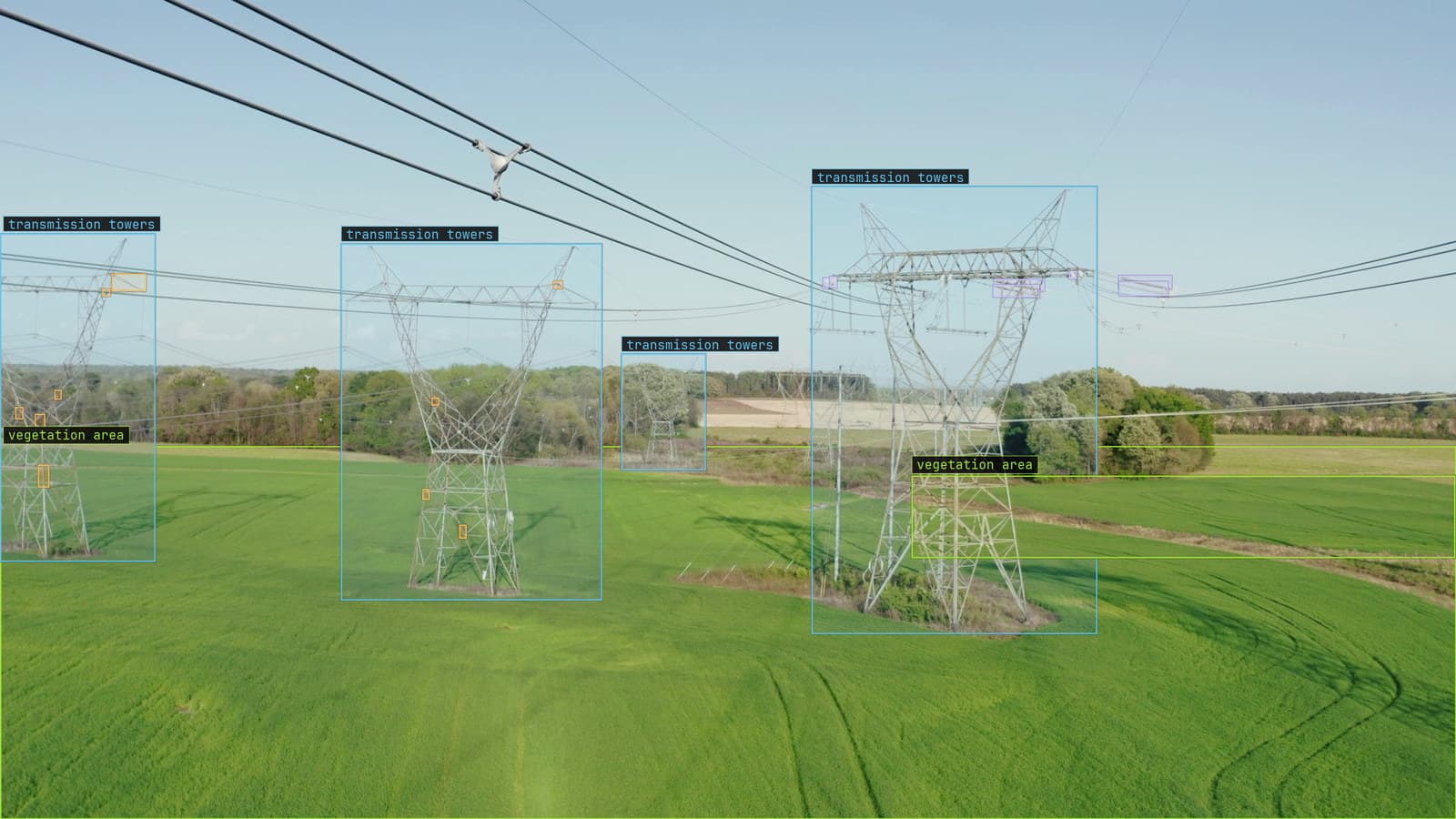
Aerial fire detection from a drone patrol, smoke before the flame reaches the line
On a right-of-way patrol, smoke is a few dozen grey pixels that look like haze. Two boxed classes, an alert with a cooldown, and the bad-weather days kept.
Rob Hickey · Sep 29, 2026
Industries · 6 min read
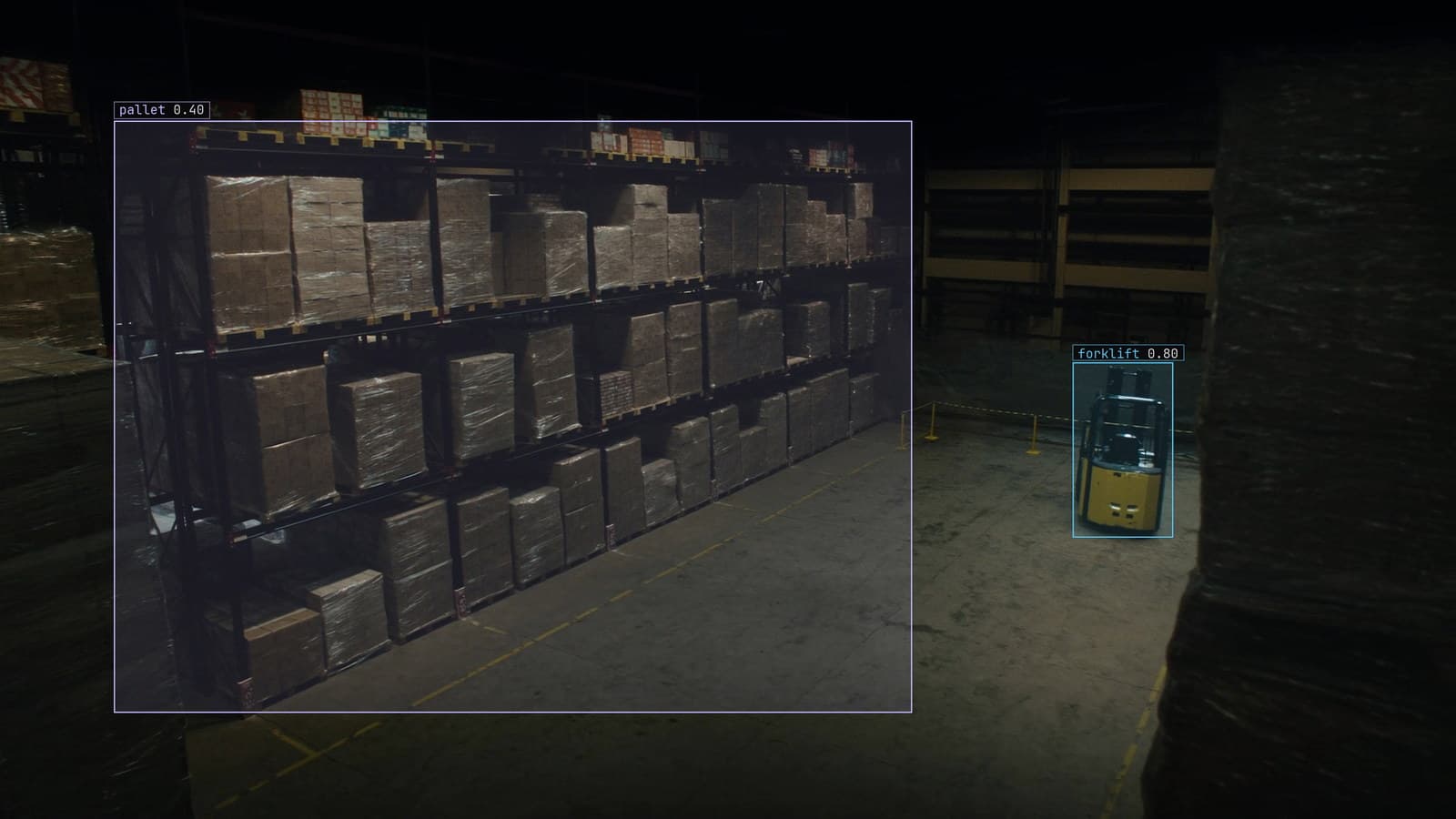
AI in robotics after the robot ships, what the warehouse cameras keep learning
The forward camera boxed pallets and people well at the pilot site. Then the racking moved, and the edge cases the planner never saw came back for review.
Andreas Ohrvall · Sep 29, 2026
Industries · 6 min read
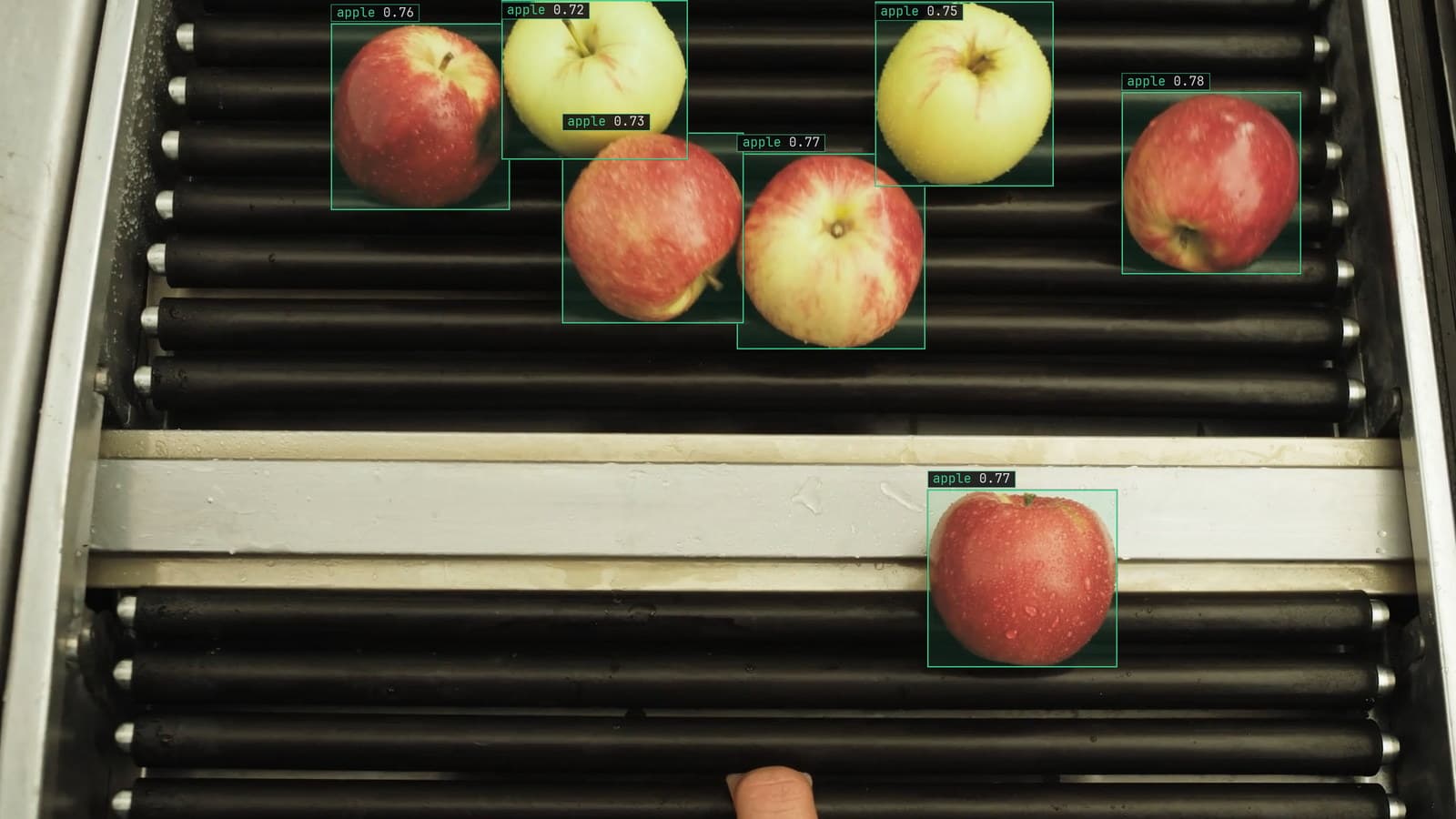
Automated sorting with computer vision, from the camera over the conveyor to the diverter
A box on every apple, a grade from the box, and an air jet that acts on it before the belt moves on. The new cultivar is when the model needs the graders again.
Rob Hickey · Sep 29, 2026