

Industries · 6 min read
Production line monitoring with the cameras already over the line
The cameras were installed for disputes. A model turns a missing cap, a low fill and a count into events for the line lead. The mount decides whether it holds.
Summary
This post takes the cameras a bottling plant installed for disputes and turns them into sensors: a missing cap, a low fill and a count per minute become events, and the line lead gets the frame. It spends most of its length on the physical setup that decides whether the model holds, the enclosure, the mount, the pixels each defect occupies, and on a nudged camera as the change that silently shifts a count. It is for plant engineers and line managers.
Andreas Ohrvall · CTO · Sep 23, 2026
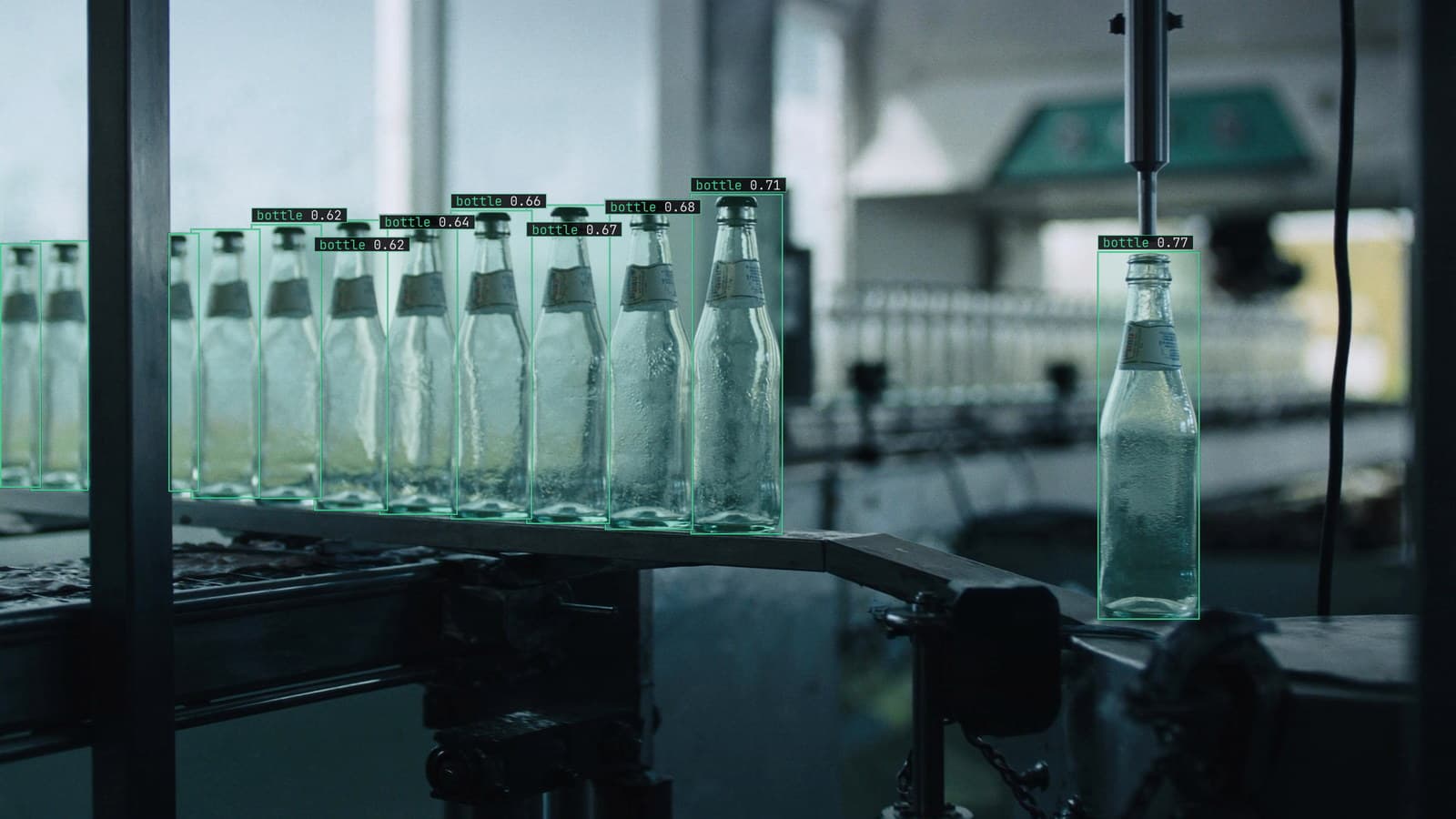
Bottling line with bottles queued under the fill head boxed, one missing its cap, generated scene with detections from our model
The two cameras over the bottling line were installed after a dispute with a customer about a pallet of underfilled bottles. They record to a box in the electrical room, the footage is kept for a month, and it has been watched perhaps a dozen times, always after something has gone wrong. Meanwhile the line runs, the capper occasionally misses, the filler drifts low on the third head after a changeover, and the count on the shift report is whatever figure the end of the shift produced from memory.
A model watching those two cameras makes them sensors. The footage is the same. What changes is that somebody finds out about the third head at 9 am rather than at the pallet.
Missing caps, low fills and counts are events
The camera at the capper sees each bottle for a second or two. The model boxes the bottle and the cap, and a bottle box with no cap box above it is an event. The camera at the filler sees the bottles against a backlight, and a fill line below the mark is an event. The count is the number of bottle boxes crossing a line drawn once across the conveyor, per minute, and a count that falls while the line is nominally running is also an event, because it usually means a jam upstream.
Each is a class or a rule on a class, labeled from the line's own frames. In LexAnnotate you type "bottle, cap", Lexi puts a box on every frame, and a person checks each label before anything trains on it. The person's attention goes to the bottles seen half behind the guard rail and the caps that are on but cross-threaded, which look like caps to a model that has only seen good ones. On the manufacturing lines we run, 99%+ accuracy maintained in production is the figure, and it holds because of what happens next.
The alert goes to the line lead with the frame
An alert in LexAlert is a rule written as a sentence, with a severity and a cooldown, approved before it goes live. For the filler it reads: three low fills within a minute on any head, to the line lead's phone, with the frame. The frame shows the bottle, the fill mark and the head number, and the line lead can walk to the filler rather than to the office to look at a chart.
The cooldown is what keeps this usable. A filler that has drifted low produces a low fill every few seconds until somebody adjusts it, and the line lead needs one message rather than a hundred. The count goes to the shift report as a number per minute, by hour, which is the number the operator used to write down from memory.
The line lead's reply to a wrong alert, a bottle that was at the mark and read low because of a bubble, is a correction. Those corrections are the signal that the model is drifting, and they are what retrain it.
The enclosure and the mount decide whether the model holds
Most of what decides whether this model is still right in six months has nothing to do with the model. It is the enclosure around the camera and the light, which keeps the hall's skylight out of the frame and stops the picture changing at 4 pm when the sun reaches the west wall. It is the mount, which if bolted to the capper's own frame shakes with every stroke and gives the model a blurred bottle every cycle. A camera on its own stand from the floor sees a still bottle.
And it is the arithmetic of pixels. A cross-threaded cap differs from a seated one by a millimetre or two of tilt, and on a camera two metres from the line that is a pixel. The lens and the distance are chosen so that the smallest defect the plant cares about occupies enough pixels to be a shape rather than a speck. That choice is made before anybody labels a frame, because labels drawn on specks teach the model nothing.
My own view, from the plants where we have run this, is that video decode is the resource nobody budgets for. A box beside the recorder can run the model on two streams comfortably and run out of decode long before it runs out of anything else. The deployment guide says the same thing in its tip: plan for the enclosure and the decode, never for the benchmark.
A camera moved is what silently changes the count
The count line is drawn once across the conveyor in the camera's view. A crew washes the enclosure on a Sunday, the bracket is re-tensioned, and the camera now looks a few degrees to the left. Every bottle is still found. The count line has moved relative to the belt, and bottles that used to cross it now graze it, so the count per minute drops on Monday morning while the line runs exactly as it did on Friday.
The drift catalog calls this a camera moved, and its signal is the one this plant can check in a minute: one camera's numbers diverge from their own history on a maintenance date while the other camera holds. The fix is a redrawn line, a short window of frames re-labeled from the new framing, and a retrain on footage the plant already has. The bottles never moved.
The model runs beside the recorder and the footage stays
The two cameras record to a box in the electrical room, and the model runs on a runner beside it. The alerts fire on the plant network first, the count goes to the shift report, and the only frames that leave the building are the ones the model doubted, on their way to a person for review.
LexData takes the line model through its whole life. You type what to look for, Lexi puts a box on every frame, and a person checks each label before anything trains on it. The model then watches the two cameras over the line, in the cloud, on your servers, or on a runner beside the recorder. Frames it is unsure of come back to a person, the corrections retrain it, and the new version replaces the old one with no downtime.
The cameras were installed for a dispute, and they will still settle the next one. In between, they now tell the line lead about the third head at 9 am.
See it on your own footage.
Start with your footageMore in Industries
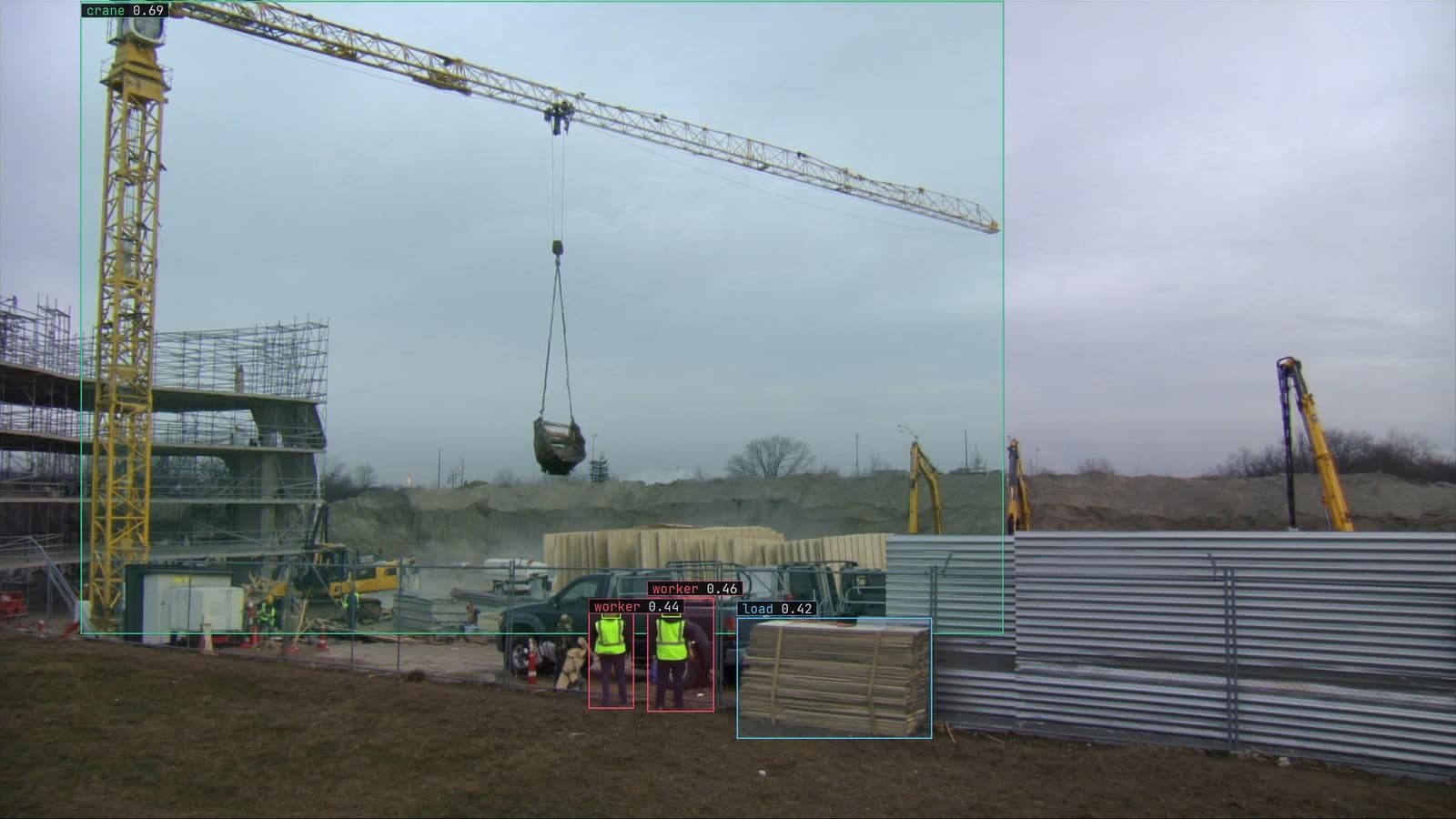
Industries · 8 min read
Computer vision for construction site safety, a warning before the worker and the excavator meet
A pole camera boxes people and machines, draws a danger zone that moves with the excavator, and sends the frame when someone walks into it.
Ayman Quadir · Sep 23, 2026
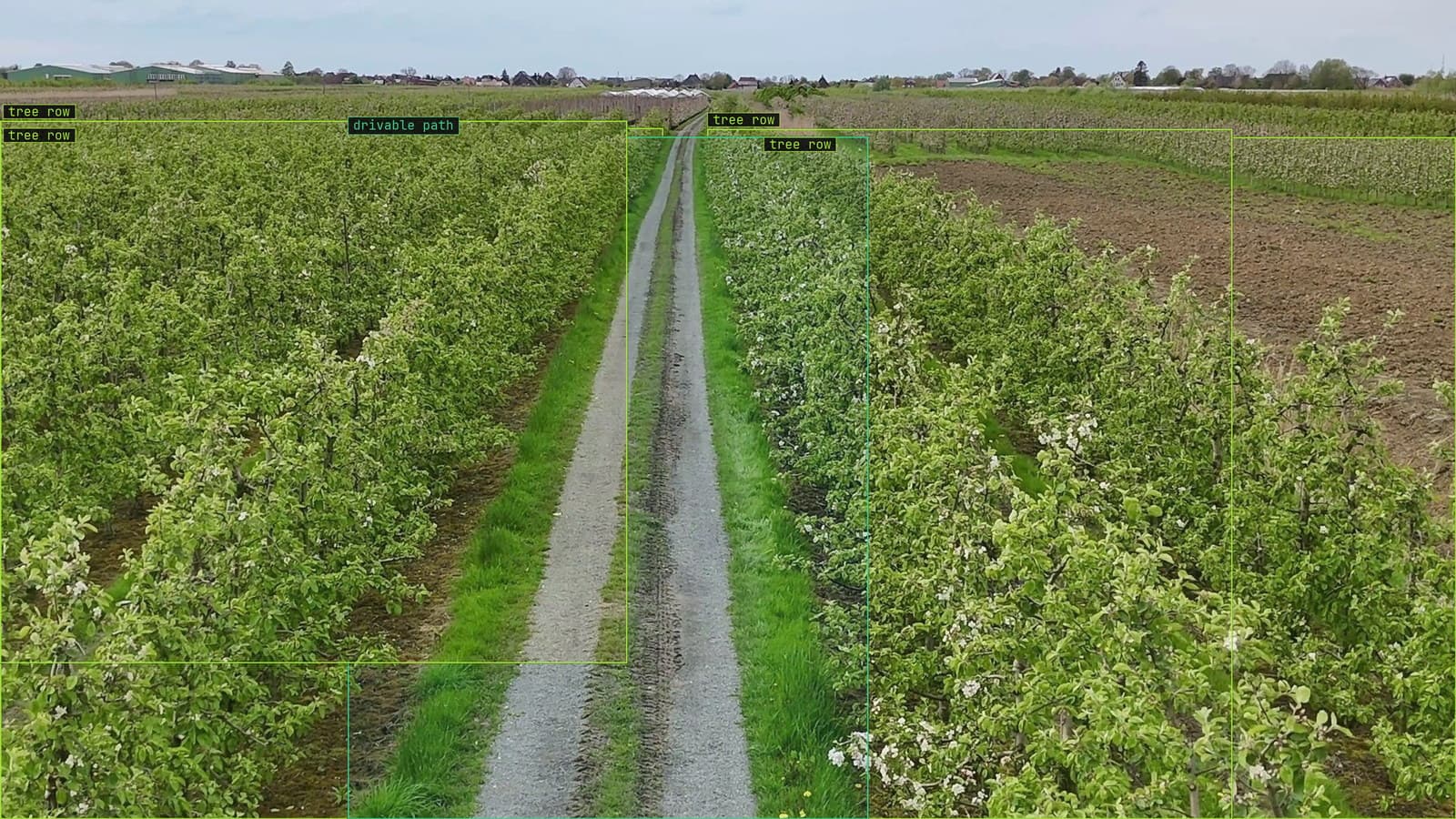
Industries · 7 min read
Computer vision in agriculture, from the sprayer boom to the packing line
Weeds against beet rows at dawn, lesions on a leaf, bruises on a packhouse belt, and labels that go stale as the season turns.
Ayman Quadir · Sep 23, 2026
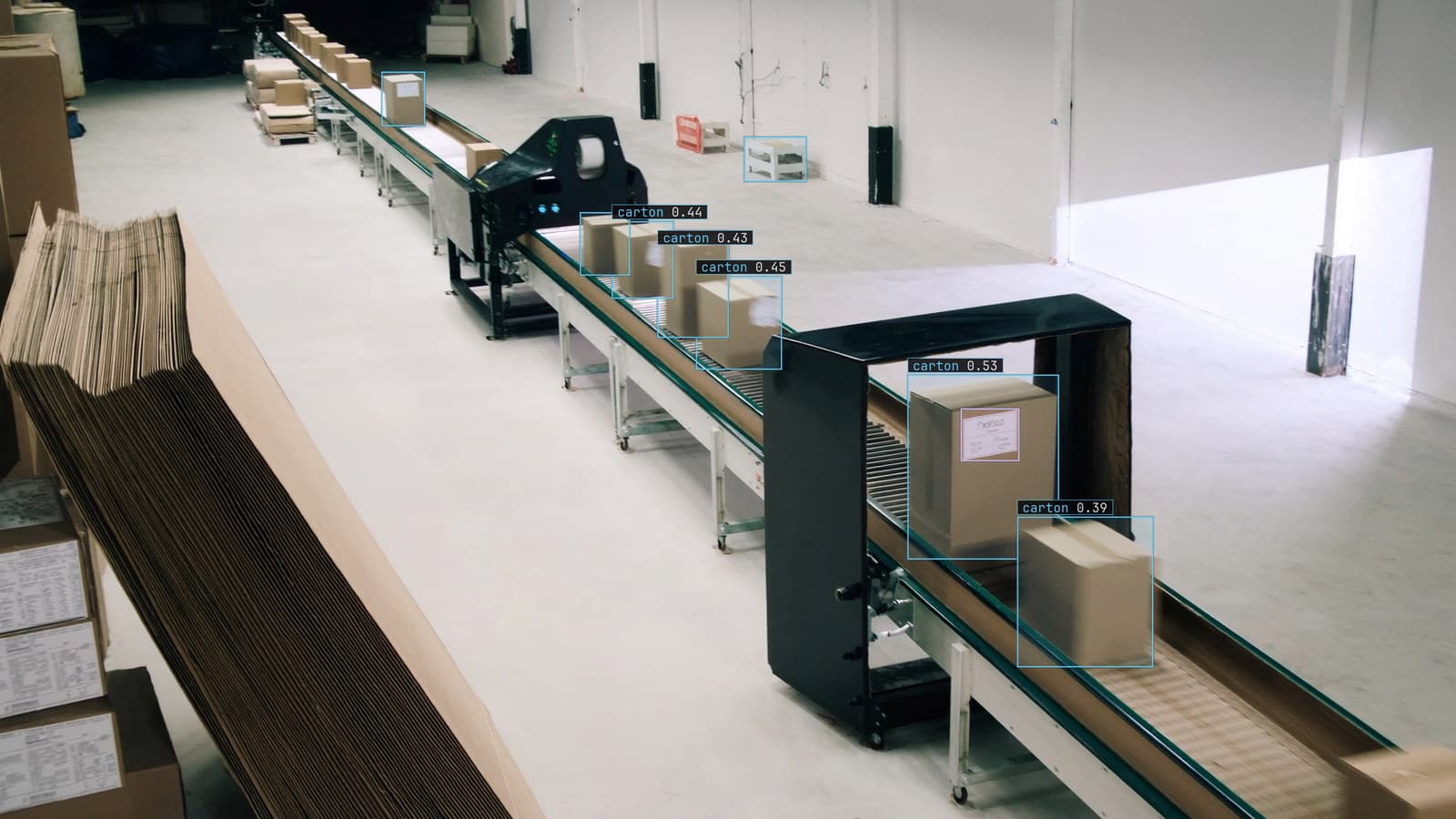
Industries · 6 min read
Computer vision applications on a factory floor, four jobs for the cameras already there
Defect detection, assembly verification, safety and inventory on one plant's cameras, with cosmetic against functional written into the labeling schema.
Ayman Quadir · Sep 23, 2026