

Industries · 7 min read
Shelf price verification with the aisle cameras a store already has
Box every shelf label, read the price, compare it with the till, and alert with the frame attached. A promotion change is a spec change for the rule.
Summary
This post describes shelf price verification from a fixed aisle camera, from boxing every label and reading the price into fields to matching it against the till and alerting with the frame attached. It concludes that the rule has to read the current price file every day, because a promotion change alters the right answer without changing a pixel. It is for store operations and retail technology teams.
Ayman Quadir · Head of Product · Sep 23, 2026
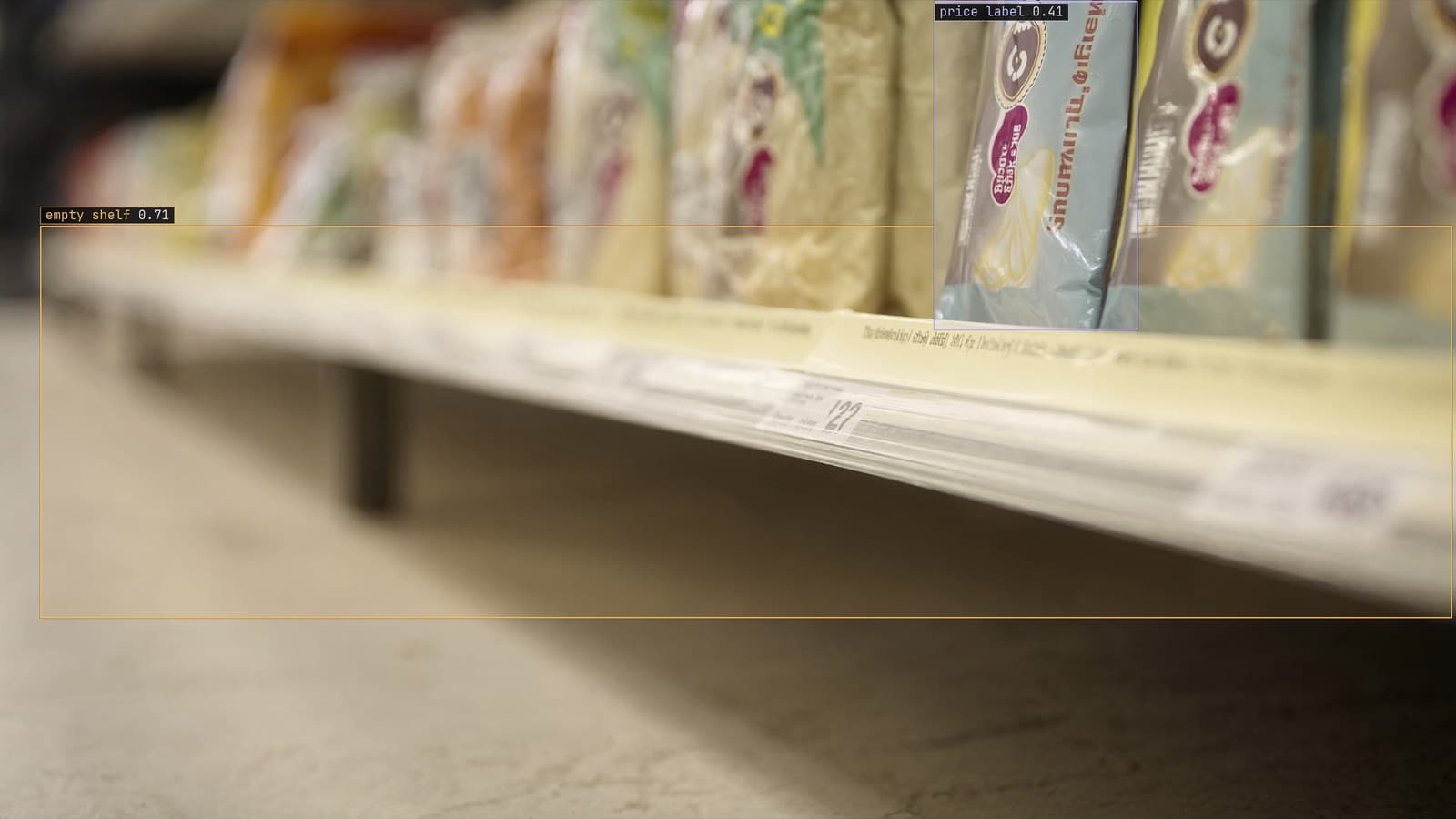
Shelf-edge price labels and an empty facing, generated scene with detections from our model
The promotion on the cereal end cap ended on Wednesday night. The till knows, because the price file was loaded overnight. The shelf does not, because the label printer ran on Thursday morning and somebody was called away before aisle 7 was done. At 10 am a customer picks up the box at the promotional price, gets charged the full price at the till, and the store has a complaint, a refund and, in some places, a fine.
Every price change is a new label, and every new label is a chance for the shelf and the till to disagree. A person walking the aisles checks a fraction of the labels in a shift and gets worse at it as the shift goes on. The aisle camera can look at every label every day.
Every label gets a box before anything gets read
The first job is finding the labels. On a frame from a fixed aisle camera, a shelf edge holds dozens of them, each a small rectangle at an angle, some half hidden by a hanging promotional tag, some on a curved end cap. Detection has to be tuned for small, dense objects, which mostly means training on frames from that camera at that distance rather than on a general set, and capturing a bay at a time rather than the whole of aisle 7 in one wide shot.
The labeling is boxes. You type "shelf label" once, Lexi proposes a box on every label in every frame, and a person checks them. The person's job is the misses at the edges of the frame and the labels on the curved ends, because a label that is never boxed is a price that is never checked.
The price has to become fields the till can be matched against
Inside each box on the Thursday frame is a small printed layout: product name, price, unit price, barcode, sometimes a promotional sticker over the top. Reading the characters is the easy part on a clean label and the hard part on a faded one, and either way the reading has to become fields. The price is a number. The product name is a key to look up.
The lookup is where most of the work goes. The label says one thing, the till's catalogue says the same thing in capitals with half the words abbreviated, and the match has to survive that. Lowercase everything, strip the punctuation, keep the size and the flavour, because the difference between the small bottle and the large one is often a single digit the reader can misread. Multi-buy offers and loyalty prices need their own rules, since a "two for" shelf price is not a mismatch against a single unit price at the till.
Precision and recall are set for a store that stops looking
The two ways to be wrong are unequal here. Flagging a label that was correct costs a person a walk to aisle 7. Confirming a label that was wrong is worse, because now the store believes the shelf is right and stops looking. Precision and recall get set with that asymmetry in mind: slow to confirm a match, quick to send a doubtful read to a person.
That is what the review queue is for. A label the reader could not make out, a product the lookup could not match, a price in a format the rules do not cover: none of these is silently passed as a match. They come back to a person with the frame, and the person's verdict is a label the next version learns from.
The alert carries the shelf price, the till price and the frame
The alert is a rule written as a sentence, with a severity and a cooldown, approved before it goes live: a shelf price that disagrees with the till in any aisle, routine, sent to the store's morning list. What arrives is the frame with the label boxed, the price the camera read, the price the till holds, and the aisle. A person with that in hand fixes the label in a minute; a person with a list of product codes spends the morning finding them.
My own view is that nobody should be paged for a price label. The morning list is the right place for it. A wrong label at 10 am is a refund; a manager woken at 2 am for a label is a manager who turns the alerts off by Friday.
This is the same footage the store already records, on cameras it already owns. The retail work behind our numbers, 4M+ annotations and validations, comes from stores where the cameras were already on the ceiling and the question was what to do with the frames.
A promotion change is a spec change the footage cannot show
The frames on Thursday look exactly like the frames on Wednesday. The label has not changed; the till has. The drift catalog calls this a spec change: the footage did not move, and the correct answer for every label on the end cap changed overnight. A model cannot see it, and no monitor of the footage will catch it. What catches it is the rule reading the current price file, every day, before it compares.
The same thing happens in the other direction. A packaging refresh ships and the new box is correct on the shelf and unknown to the model, so a full facing reads as an out-of-stock. Staff override the alert, and the override rate is the signal that the model needs to see the new pack. Corrections at review retrain it. Asking a question about the footage does not.
Somebody in the store keeps the old promotional labels in a shoebox under the customer service desk, in case the promotion comes back. It usually does.
The fiftieth store needs its own frames like the first one did
LexData takes the shelf model through its whole life. You type what to look for, Lexi puts a box on every frame, and a person checks each label before anything trains on it. The model then watches the aisle cameras a store already has, in the cloud, on your servers, or on a runner beside the recorder. Frames it is unsure of come back to a person, the corrections retrain it, and the new version replaces the old one with no downtime. The accuracy the first store launched with is the accuracy the fiftieth keeps, provided the fiftieth is treated as a new site.
That last part is where fleets go wrong. Every store has different shelving, different label holders and different light, and a model that has seen one store does not transfer. The shelf and planogram compliance use case has the same problem in its own words, and the fix is the same: a window of frames from each new store, labeled and folded in before the store goes live. Compare each store against its own history rather than a fleet average, because the good stores carry the bad one and the average hides it. The wider retail picture, from queue length to open doors, is built the same way, one camera and one rule at a time.
See it on your own footage.
Start with your footageMore in Industries
Industries · 8 min read
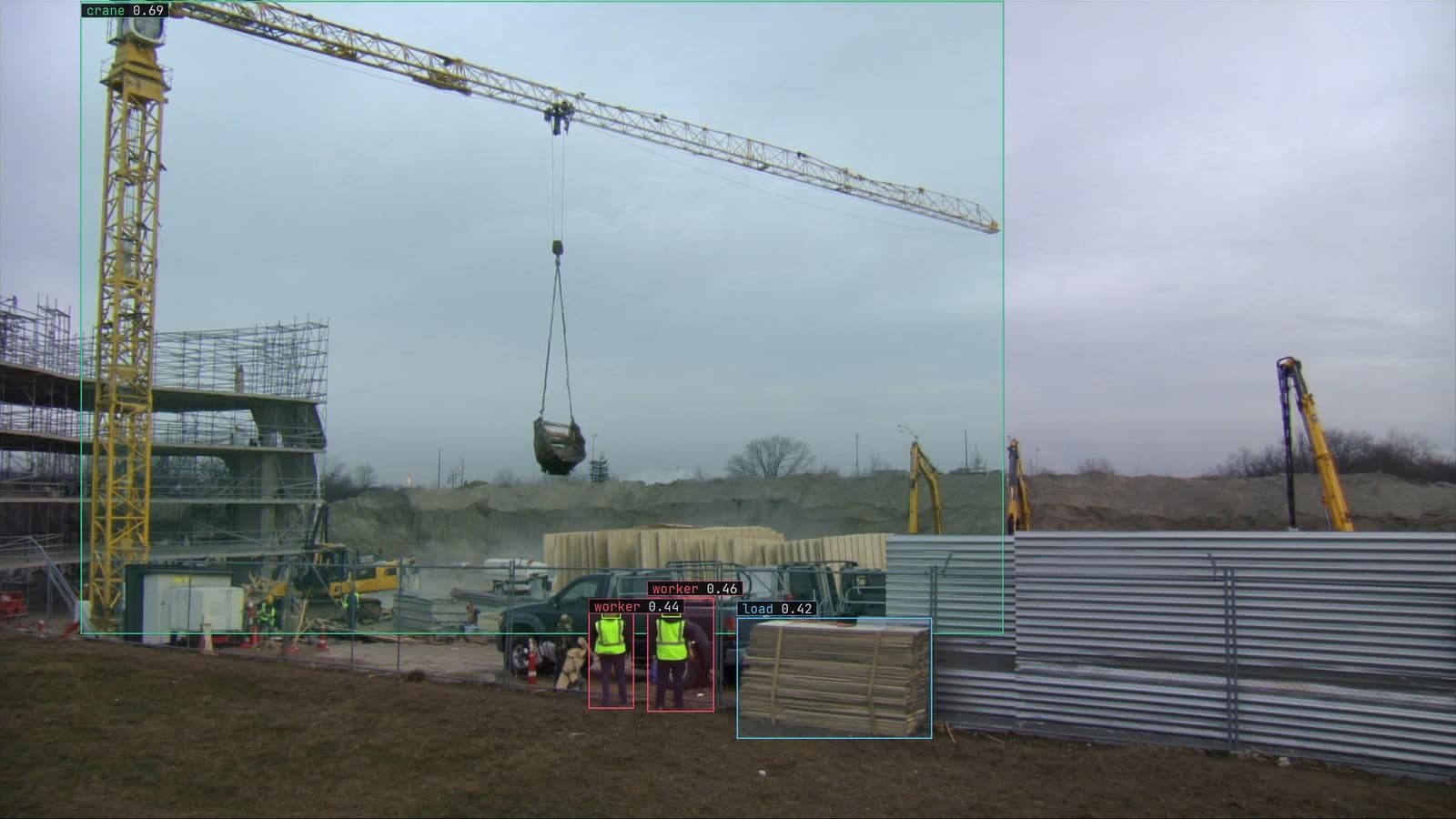
Computer vision for construction site safety, a warning before the worker and the excavator meet
A pole camera boxes people and machines, draws a danger zone that moves with the excavator, and sends the frame when someone walks into it.
Ayman Quadir · Sep 23, 2026
Industries · 7 min read
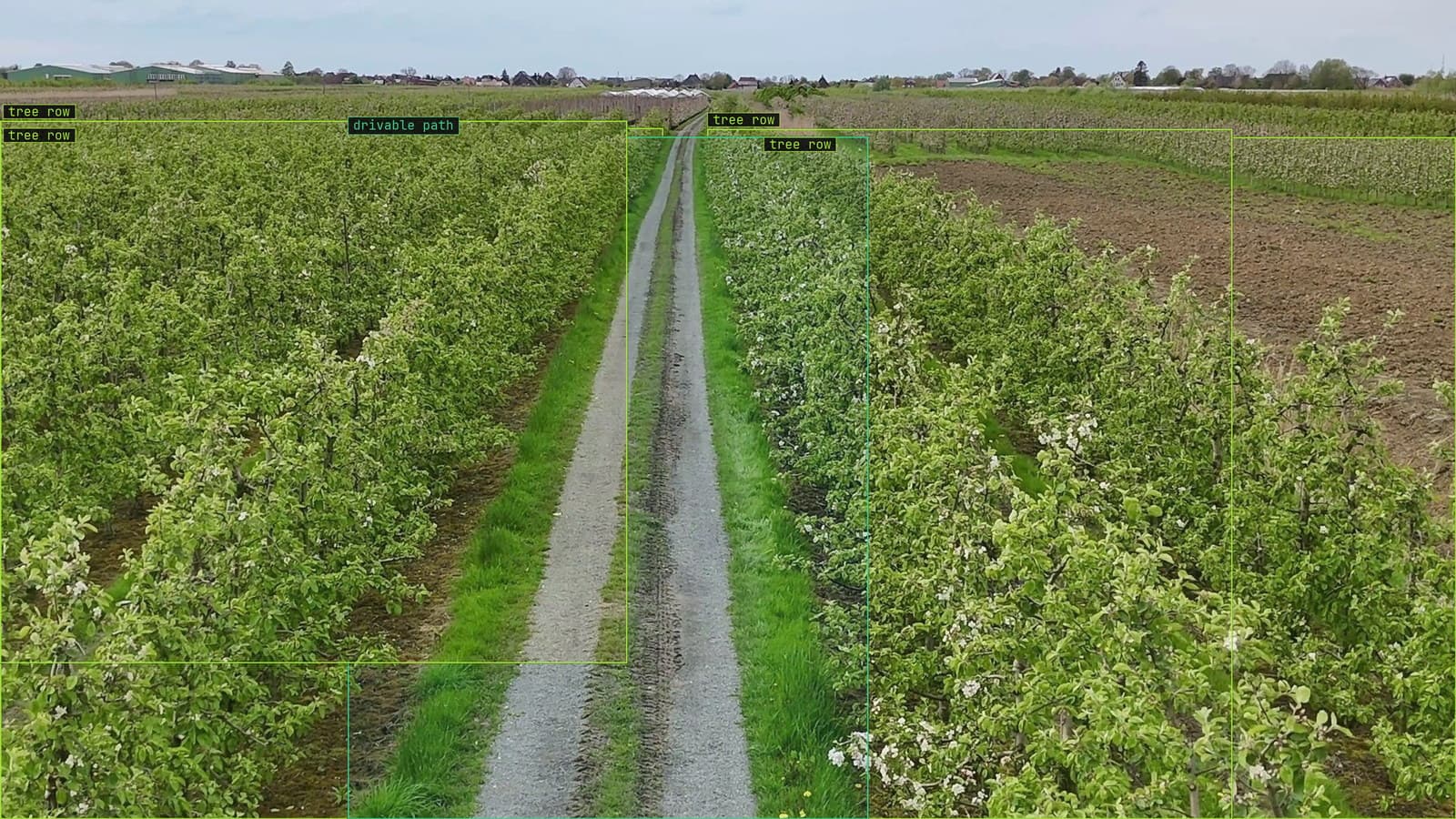
Computer vision in agriculture, from the sprayer boom to the packing line
Weeds against beet rows at dawn, lesions on a leaf, bruises on a packhouse belt, and labels that go stale as the season turns.
Ayman Quadir · Sep 23, 2026
Industries · 6 min read
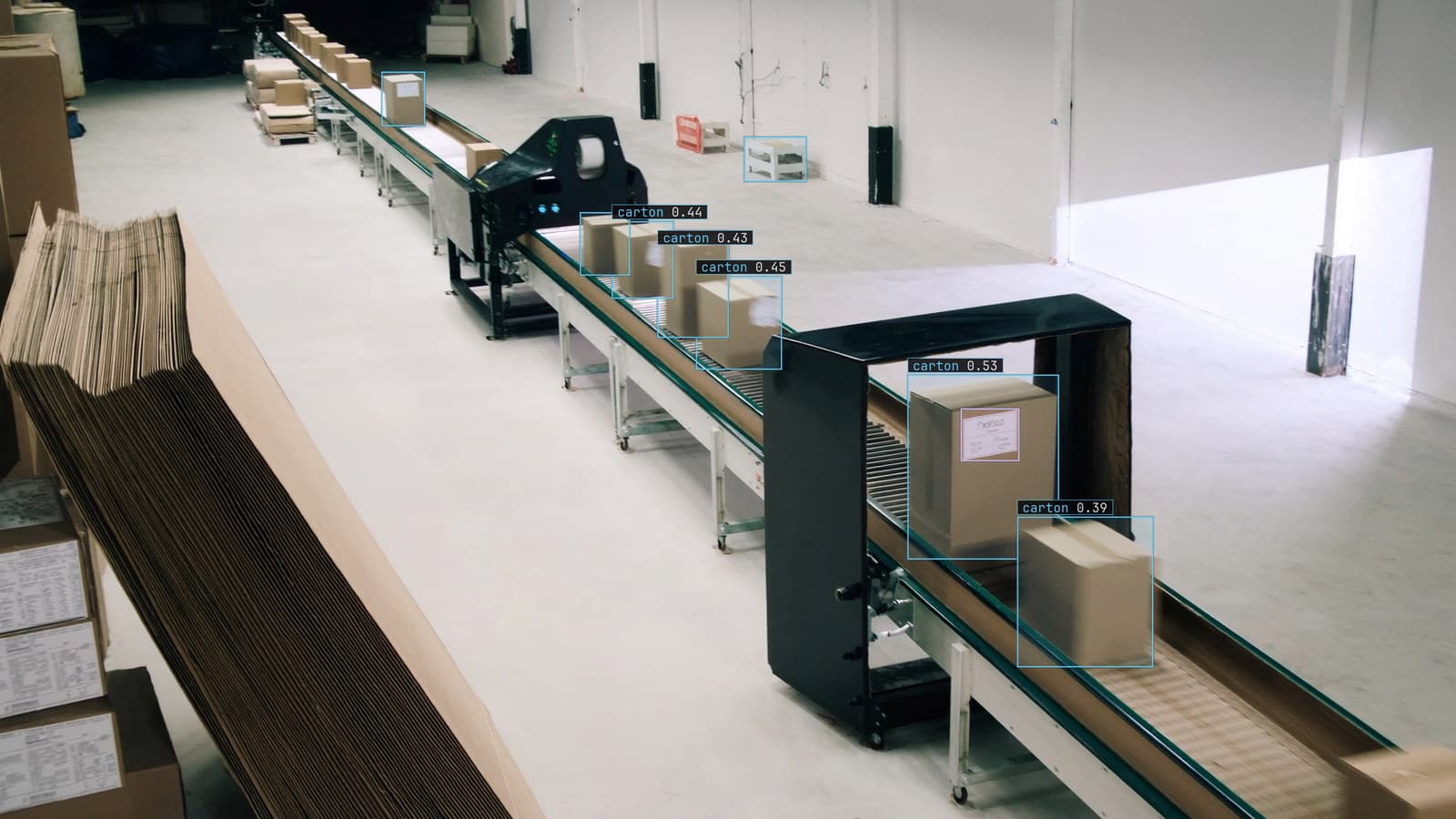
Computer vision applications on a factory floor, four jobs for the cameras already there
Defect detection, assembly verification, safety and inventory on one plant's cameras, with cosmetic against functional written into the labeling schema.
Ayman Quadir · Sep 23, 2026