

Industries · 7 min read
Traditional sensors vs AI cameras on the line, and why the camera answers the questions the eye cannot
The photoelectric eye at the capper counts every bottle and cannot see a crooked cap. The camera can, and its verdict reaches the PLC without a wire.
Summary
This post sets a photoelectric eye and a fixed camera side by side at a capper on a bottling line, and works through which questions each one answers. It concludes that the eye keeps every presence question, the camera takes the judgment questions written as sentences, and the camera's verdict reaches the PLC by webhook and broker rather than a wire. It is for controls engineers and plant operations leads.
Ayman Quadir · Head of Product · Sep 26, 2026
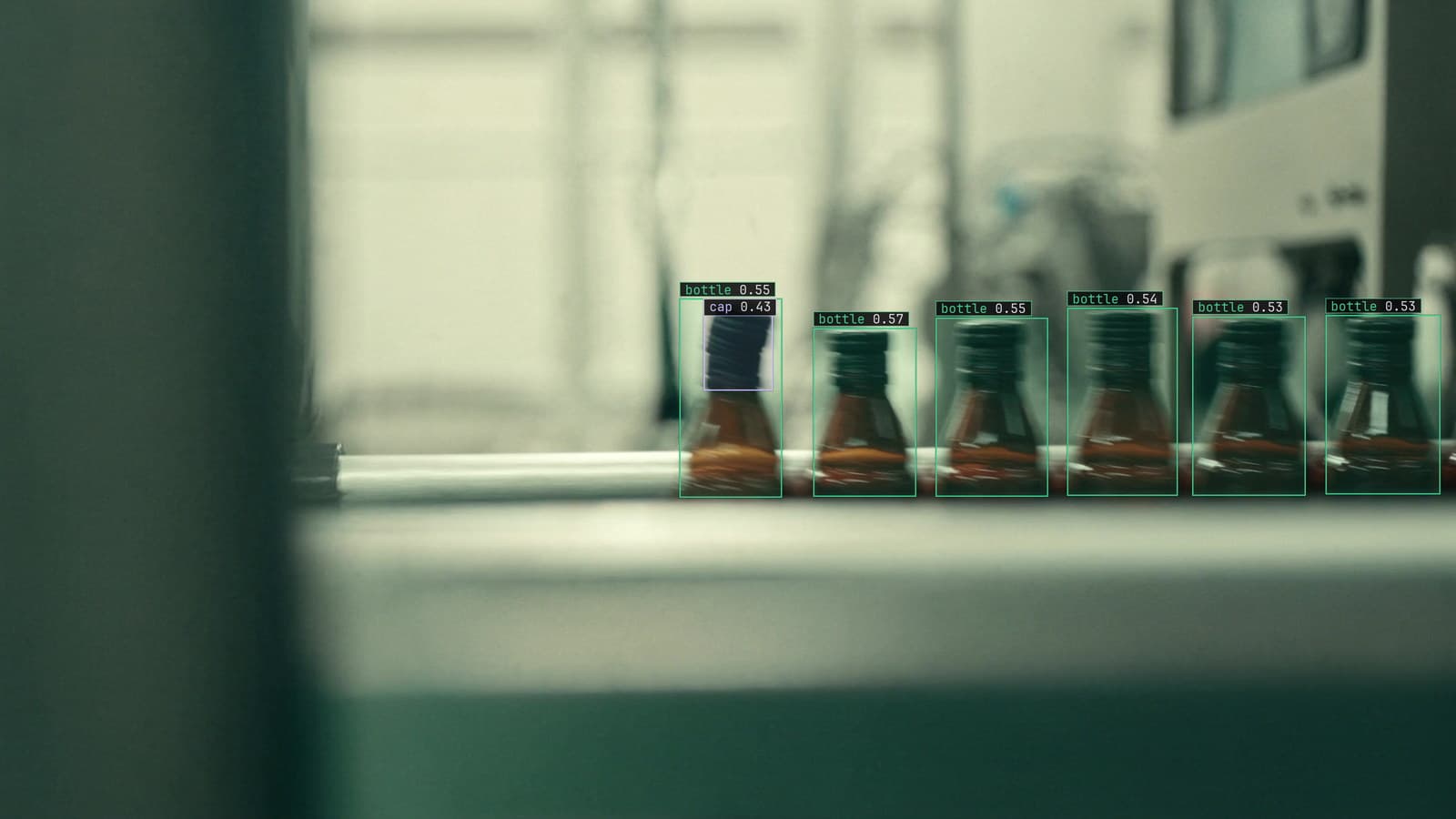
Bottling line under the fill head, one bottle without its cap, generated scene with detections from our model
The photoelectric eye at the capper on line 2 has counted every bottle since before anyone on the shift was hired. A bottle breaks the beam, the PLC increments, the capper fires. It has never missed one and it has never been asked to do anything else. This morning it counted a bottle whose cap went on crooked, because a crooked cap breaks a beam exactly as well as a straight one. The bottle went into a case, the case went onto a pallet, and the pallet is now on a truck.
The camera over the same capper saw the cap. The difference between the two devices is not that one is old and one is new. It is the shape of the question each can be asked.
A photoelectric eye answers one question in a millisecond and never a second one
Is something here. That is the whole question, and the eye answers it with a wire that goes high or low, faster than any frame could be captured, without a model, without training and without a review queue. The inductive proximity switch on the conveyor and the limit switch on the guard door are the same kind of device with the same kind of answer.
That answer is deterministic, which is why the safety circuit and the count are built on it. A capper that fires off a camera's guess is a capper that will one day fire into nothing, and no controls engineer should be asked to accept that. The eye keeps every presence question on the line, and nothing in this post argues otherwise.
The eye on line 2 was fitted in a year nobody remembers and has not been touched since.
Vision AI is a sensor whose question is written in a sentence
Is the cap seated. Is the label straight and legible. Is the fastener in the housing and the right way round. These are questions of judgment, and a beam cannot hold a judgment. A camera can, once a model has been shown what seated looks like on the line 2 capper under these lights, and the question is typed in a sentence rather than wired.
That is what vision AI adds to the station, and it is the whole of what it adds. The assembly verification use case puts the same questions in a housing rather than a bottle: whether each part is present, whether it sits where it should, and whether it faces the right way, all read from a box and its shape. The eye tells the line a bottle arrived. The camera tells the line whether the bottle can ship.
The question can also be changed. A new cap colour, a new label, a new customer's tolerance for a tilted cap are a new sentence and a window of frames, where the equivalent change to a hard-wired inspection is a fitter and an afternoon.
Neither replaces the other, and the good station has both
The tidy version of this station uses the eye to gate and the camera to judge. The beam breaks, the PLC knows a bottle is under the head, and that pulse is the moment the frame should be taken, so the camera never has to guess whether a bottle is present and never has to look at an empty conveyor. The camera then answers the sentence, and the answer goes back as a verdict on that bottle.
The plants that struggle are the ones that tried to make one device do the other's job. A camera asked to count at capper speed is slower and less certain than a beam that costs almost nothing. An eye asked to catch a crooked cap is an eye that will be replaced by a person with a torch at the end of the line, which is where the plant started.
The camera's verdict reaches the PLC by webhook and broker rather than a wire
A verdict is a message, and the plant's controls already speak messages. An alert is a rule written as a sentence, with a severity and a cooldown, approved before it goes live. A cap not seated on line 2 is critical and goes to a webhook. The plant's broker turns the webhook into a tag the PLC reads, the reject arm at the end of the conveyor fires on that tag, and the bottle with the crooked cap never reaches the case. The monitoring and alerts doc covers the delivery paths, and a webhook is the one the controls engineer will ask for.
The frame goes with the verdict. When the line lead wants to know why the reject arm fired eleven times between 6 am and 7 am, the answer is eleven frames with the cap boxed, rather than a counter and an argument.
With a runner beside the recorder the verdict is raised on site, which is where the PLC is, and the footage stays there.
The eye needs no training and the camera needs the line's own frames
The eye works on the day it is fitted. The camera works on the day a model has seen enough of this capper under this lighting with these caps, and the frames for that come from the camera on the line rather than from a sample photographed on a bench. A crooked cap on a bench is not a crooked cap under a sodium lamp with a wet bottle turning past.
LexData takes the capper model through its whole life. You type what to look for, Lexi puts a box on every cap on every frame, and a person checks each label before anything trains on it. The model then watches the camera over the capper, in the cloud, on your servers, or on a runner beside the recorder. Frames it is unsure of come back to a person, the corrections retrain it, and the new version replaces the old one with no downtime. That is how the 99%+ accuracy maintained in production on our manufacturing lines is held, by corrections that keep landing after the first week.
The cost of the camera is on the other side of the eye's certainty. It will occasionally reject a good bottle, and the line lead has to decide how many false rejects an hour the plant can carry against the crooked cap on the truck.
Choose by the question, and by who has to change it
The selection for line 2 is short. If the question is whether something is present, in position or has passed, it is a sensor, and it should stay one. If the question needs a judgment a person would make by looking, it is a camera. If the question will change as products and customers change, it is a camera, because the camera's question is a sentence and the sensor's is a wire.
My own view is that a plant should buy the eye first for every question it can answer, and only then look at the camera. The plants that put vision AI on questions a beam could answer spend their first year learning that. The wider manufacturing work is built the same way: every station has its eyes already, and the camera is fitted for the questions they were never asked.
See it on your own footage.
Start with your footageMore in Industries
Industries · 6 min read
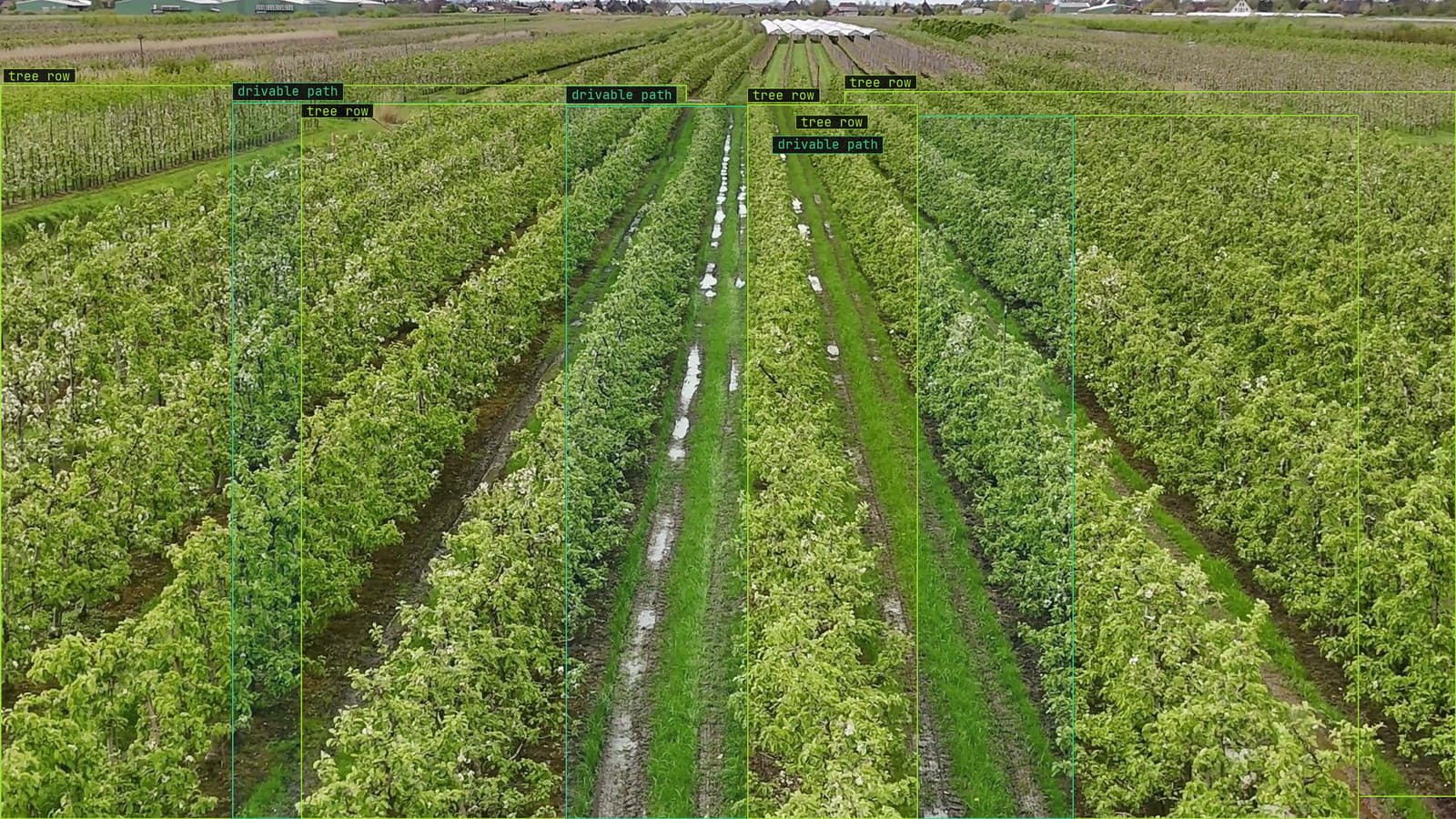
AI crop analysis in the greenhouse, catching tomato disease before it spreads down the row
Lesions boxed by disease with a healthy class, a question of the footage about how far a patch spread since last week, and a model that turns with the season.
Rob Hickey · Sep 26, 2026
Industries · 6 min read
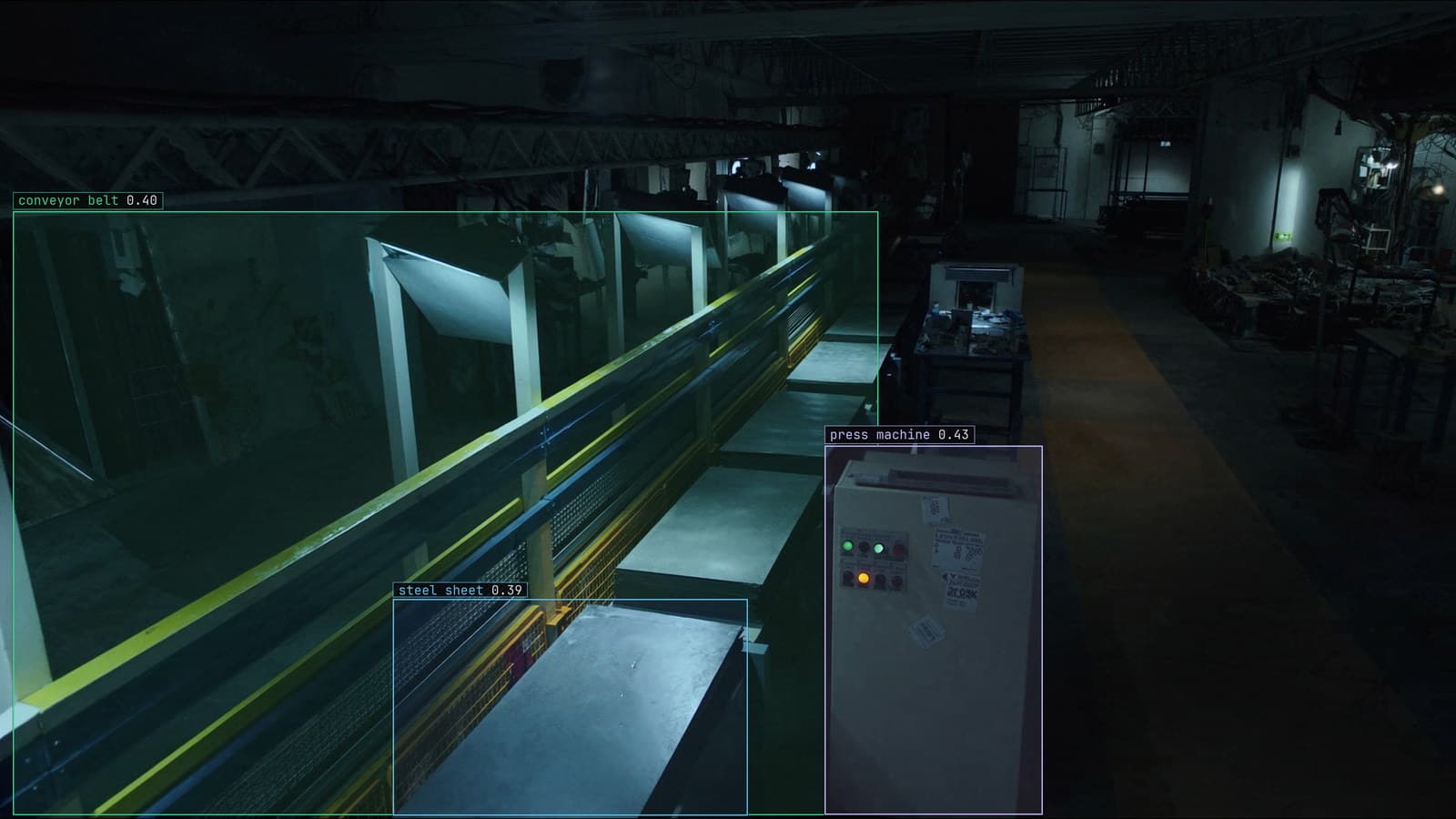
Ceramic defect detection for hairline cracks a fixed-rule camera cannot learn
Edge chips, hairline cracks and pinholes on the tile line after the kiln, masks where the area sets the grade, and the new glaze as the day to relabel.
Esdras Ntuyenabo · Sep 26, 2026
Industries · 6 min read
Chocolate box inspection with a camera over the tray line
Each piece boxed by type, a plain check against the box template, damage as its own class, and the new spring assortment as the day the labels go stale.
Stephen Biswas · Sep 26, 2026