

Industries · 7 min read
Discrete vs process manufacturing, and where the camera earns its keep in each
Upstream the plant cooks a batch nobody can count. Downstream it fills jars anyone can. The camera does a different job on each side of the changeover.
Summary
This post walks through a plant that mixes and cooks a batch upstream and fills and labels units downstream, and shows what a camera can watch on each side: the batch and the people around it where nothing is countable, and a pass or fail per jar where everything is. It concludes that the filling side should get the first camera, because a verdict per unit is what the quality record already wants. It is for plant and quality teams in food, chemicals and any hybrid operation.
Ayman Quadir · Head of Product · Sep 29, 2026
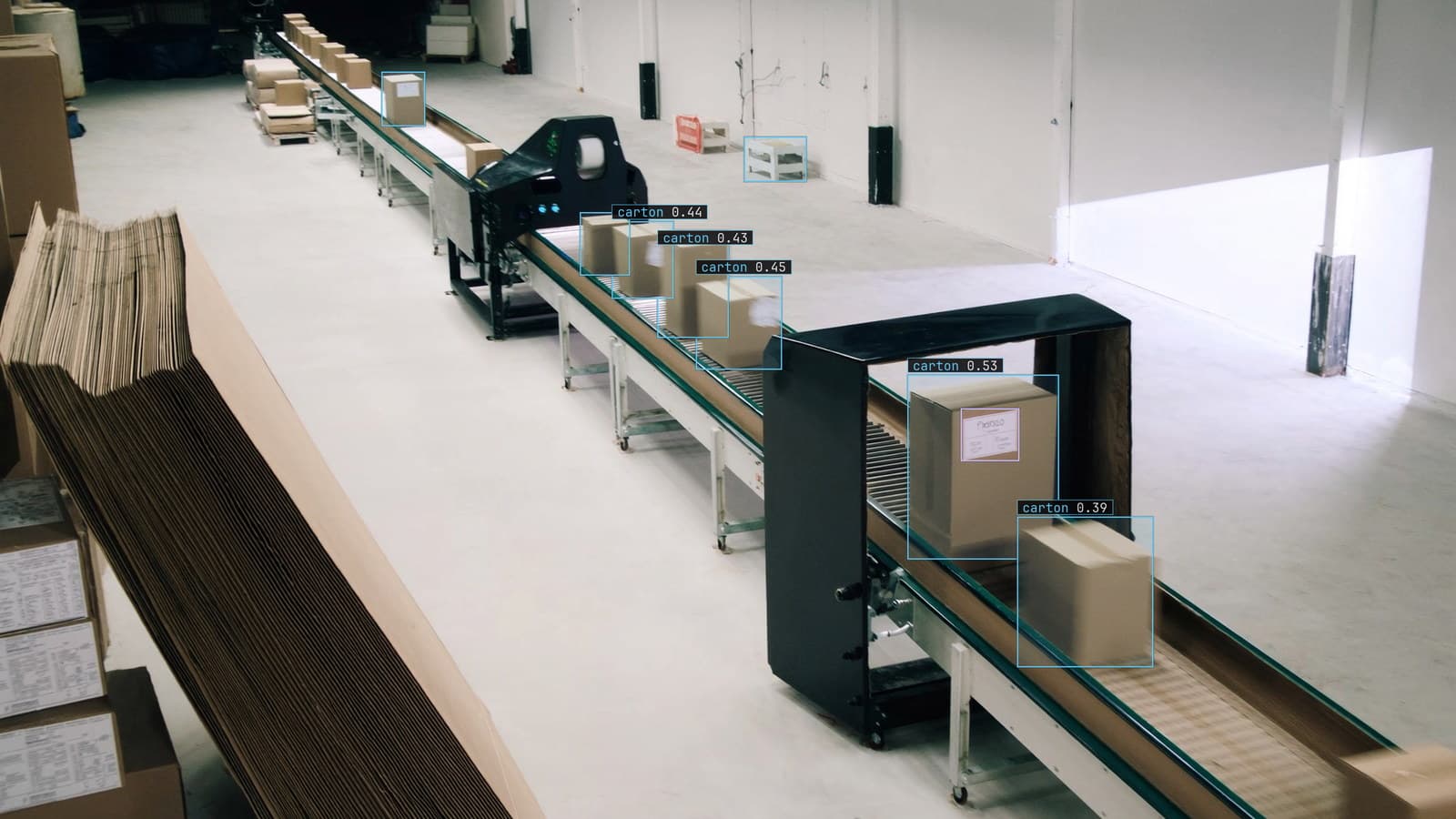
Packaging line, cartons with labels passing a scanner, generated scene with detections from our model
At 6 am the sauce plant is two plants. On the kettle side, a batch started at 5:10 is being brought up to temperature, and what exists is a volume of something with a recipe number and a pH the operator will check at the end of the cook. On the filling side, jars come off the depalletiser one at a time, get filled, capped, labeled and coded, and each one is a thing that can be picked up, turned over and rejected on its own.
The plant's quality system already treats the two sides differently, and a camera has to as well. The question of whether an operation is discrete or process is really the question of what a unit is, and the camera's job follows from the answer.
Discrete manufacturing counts units and process manufacturing measures batches
A discrete operation makes things you can count: a jar, a housing, a printed board. Each unit has an identity, passes through stations in an order, and can be judged on its own. A process operation makes quantities: a batch of sauce, a run of resin, a coil of strip. The unit is the batch, the recipe is the bill of materials, and quality is a property of the whole rather than a verdict on a piece.
Most plants are both. The sauce plant is process until the filler and discrete after it, and the changeover between recipes on a Monday morning is the seam where the two halves meet. The manufacturing work we do spans both sides, and the first decision on any site is which side of the seam the camera is looking at.
Upstream the camera watches the batch and the people around it
There are no units to inspect on the kettle side, so a camera there is not an inspector. It is a witness to the batch and to the process around it. The lid on the mixing vessel that was left open through a cook. Foam over the sight glass that means the batch is running hot. A drum of concentrate at the wrong station for the recipe being cooked. A person inside the hot zone without the face shield the procedure calls for.
Each of these is a class on a fixed camera, boxed per sampled frame, and the output is a rule rather than a verdict. The alert is a sentence, "a person in the kettle zone without a face shield", with a severity and a cooldown, approved before it goes live, and the frame arrives while the person is still there. The batch is not passed or failed by the camera. The record of what happened around it is what the camera adds, and it is the record the batch's release paperwork could never hold before.
An aside from the kettle floor: the operators refer to a batch by the time it was started rather than by its number, and the alert sentence should say "the 5:10 batch" if it wants to be understood at the kettle.
Downstream every jar is a unit the camera can pass or fail
After the filler, the plant becomes the kind of line a camera was built for. At 7:30 a jar passes the fill camera at the level check, the capper at the torque check, the labeler at the placement check, and the coder at the date check, and at each one the question is a region and a rule. Is the fill line between the marks. Is the cap seated. Is the label inside its window and straight. Does the code read.
Boxes localise the regions and the rules do the rest, and the package and label inspection use case sets out why this stays a box problem even at line speed. A false reject stops the line, a false accept lets a bad jar through, and the decision has to be made in the gap between jars on frames with motion blur in them. That constraint is what makes the filling side the one where a camera runs on a runner beside the recorder, close to the line, with the verdict going to the reject gate before the jar reaches it.
The jars that the model doubts, a label at an angle the rule does not cover or a code half-smudged, are not silently passed. They come back to a person, and the person's verdict is a label the next version learns from.
The changeover is where a good jar starts failing
Every recipe change on the kettle side is a label change on the filling side, and the label change arrives on a marketing schedule nobody tells the model about. A new artwork ships in October, the first jars carry it, and the placement model that learned the old label reports every one as wrong. The pixels of the new label are correct and the model has never seen them.
The drift catalog calls this a spec change, and the signal is the operator on the labeler overriding the reject in a consistent direction on the morning of the changeover. That override rate is what tells the model it needs the new label. Corrections at review retrain it. The changeover date is usually known a fortnight ahead, and the cheapest version of this is a short window of the new label's frames labeled before the run starts.
Yield is a ratio on one side and a count on the other
The kettle side reports yield as a ratio: what came out of the cook against what went in, measured at the end of the batch, hours after anything could have been done about it. The filling side reports it as a count: jars started against jars packed, with the rejects between them, per shift. The two numbers live in different columns of the quality system and are trusted differently, and the camera moves the second one from an end-of-shift tally to a running count with a reason attached to each reject.
That reason is the part a tally never had. A count of forty rejects on the Tuesday night shift is a number. Forty rejects of which thirty were label placement on the same labeler is a maintenance ticket.
A hybrid plant scopes the camera one station at a time
LexData takes the model through its whole life on either side of the seam. You type what to look for, Lexi puts a box on every frame, and a person checks each label before anything trains on it. The model then watches the cameras the plant already has, in the cloud, on your servers, or on a runner beside the recorder. Frames it is unsure of come back to a person, the corrections retrain it, and the new version replaces the old one with no downtime. That review loop is how the lines in our manufacturing work hold 99%+ accuracy maintained in production across the label changes and recipe changes a year brings.
My own view is that the filling side should get the first camera. A jar is a unit, a verdict per unit is what the quality record already wants, and the labeler is the station every plant manager can already name as the one that costs them a shift a month. The kettle side comes second, and it comes as rules about people and lids rather than verdicts about sauce, which is the honest shape of what a camera can say about a batch.
The 5:10 batch finishes its cook at 7:30. The jars it fills start failing the label check at 8:15, because the new artwork went on the roll overnight, and the operator's overrides are the first anyone hears of it.
See it on your own footage.
Start with your footageMore in Industries
Industries · 7 min read
Aerial fire detection from a drone patrol, smoke before the flame reaches the line
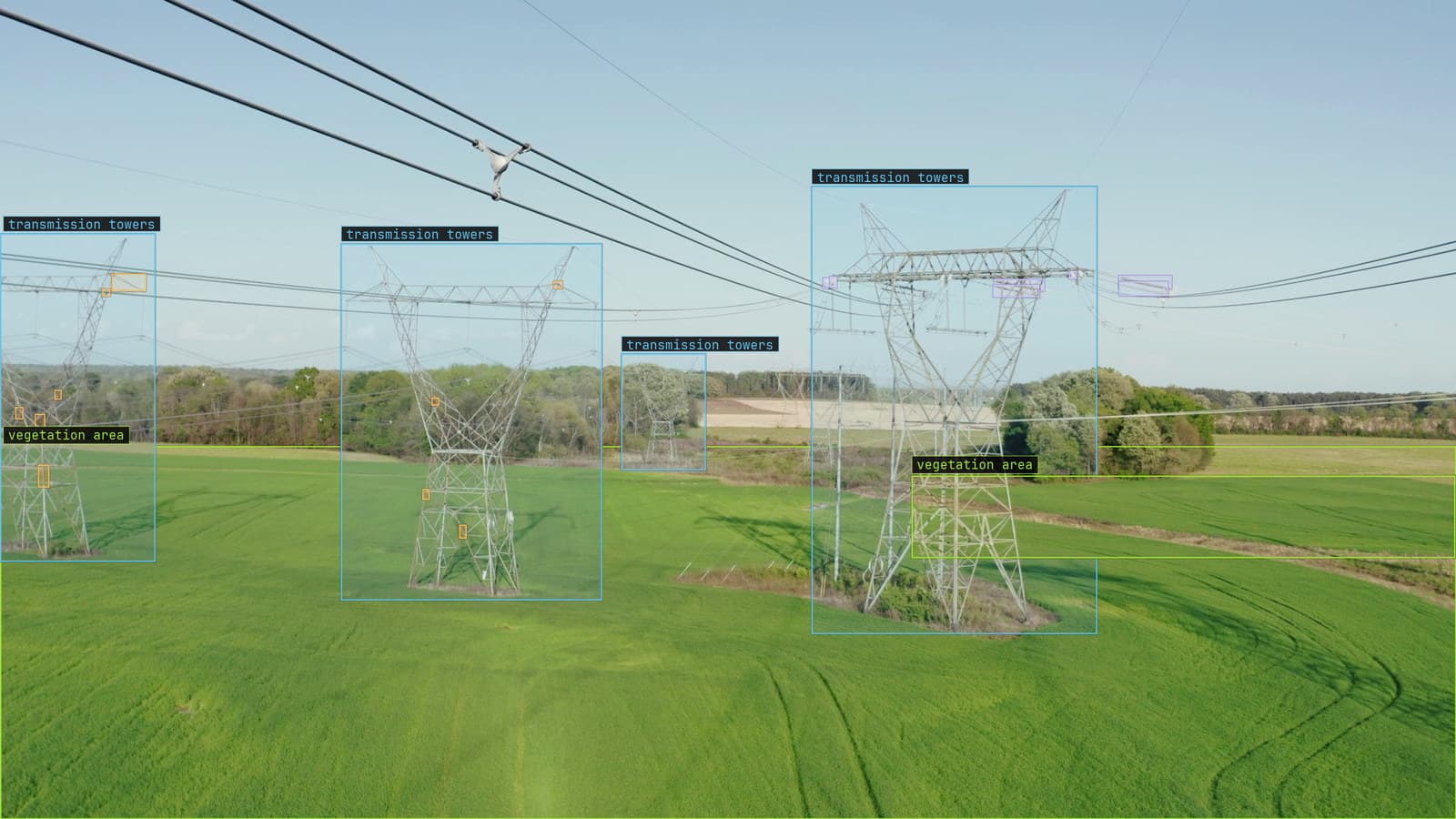
On a right-of-way patrol, smoke is a few dozen grey pixels that look like haze. Two boxed classes, an alert with a cooldown, and the bad-weather days kept.
Rob Hickey · Sep 29, 2026
Industries · 6 min read
AI in robotics after the robot ships, what the warehouse cameras keep learning
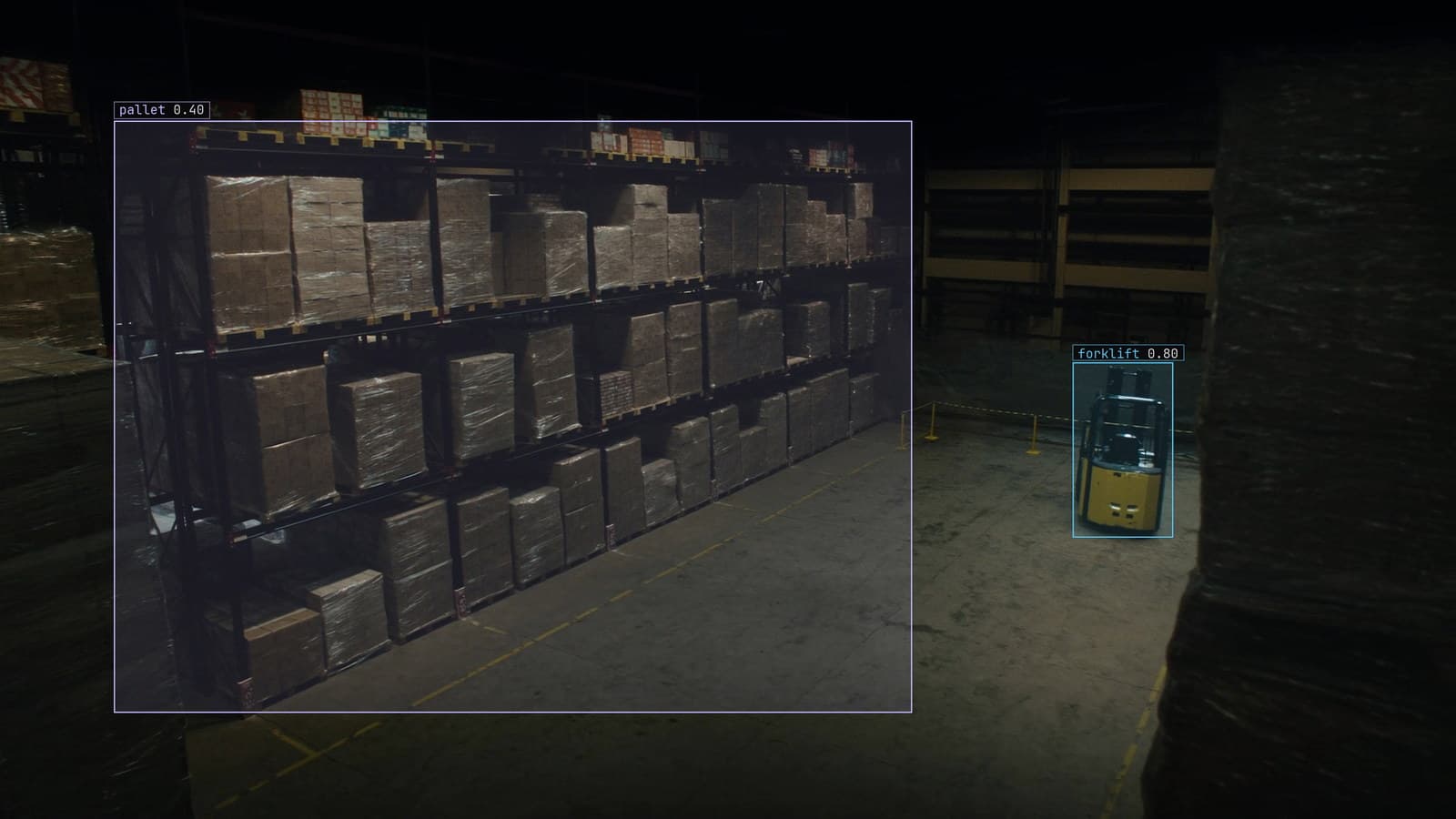
The forward camera boxed pallets and people well at the pilot site. Then the racking moved, and the edge cases the planner never saw came back for review.
Andreas Ohrvall · Sep 29, 2026
Industries · 6 min read
Automated sorting with computer vision, from the camera over the conveyor to the diverter
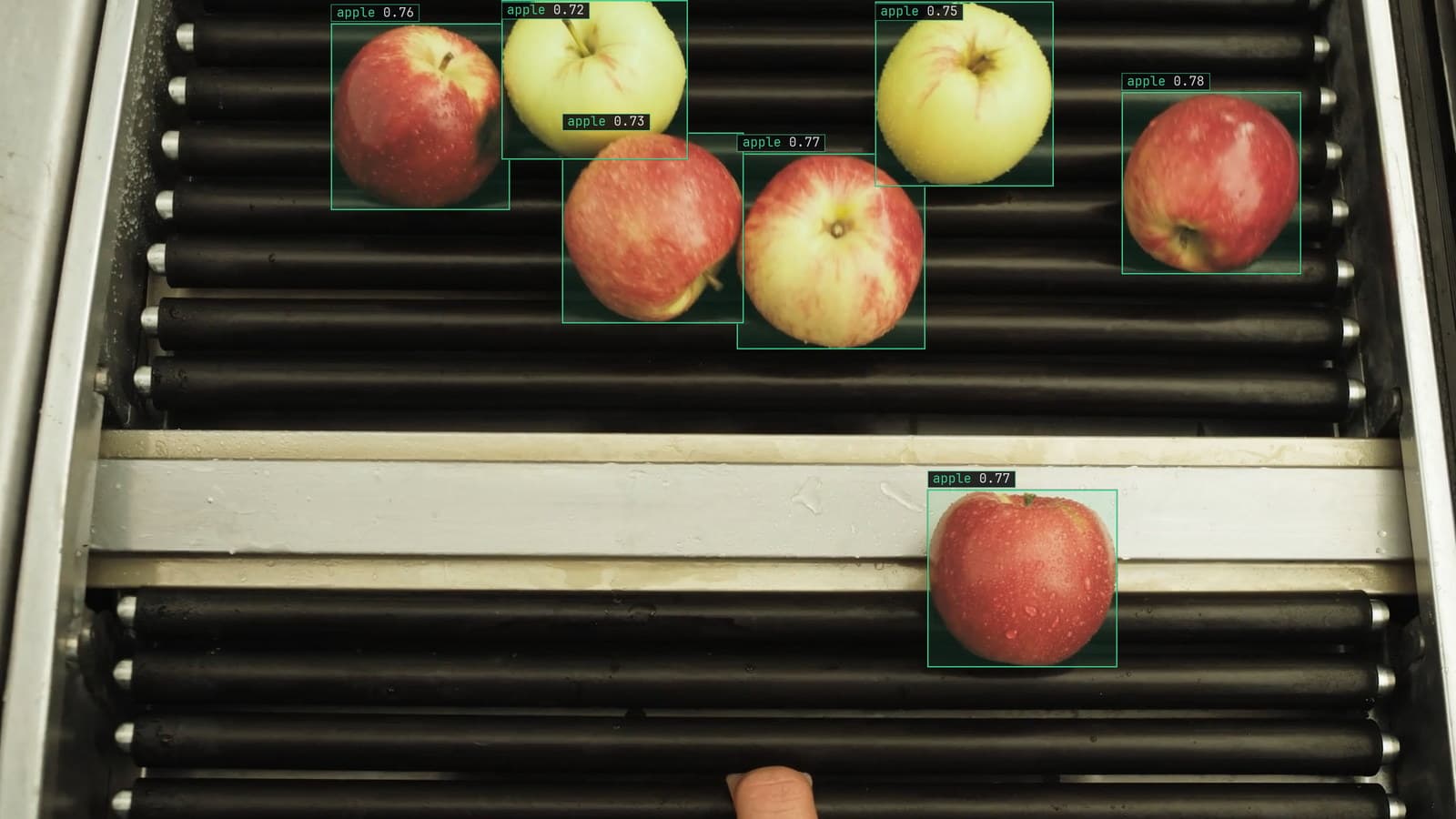
A box on every apple, a grade from the box, and an air jet that acts on it before the belt moves on. The new cultivar is when the model needs the graders again.
Rob Hickey · Sep 29, 2026