

Industries · 6 min read
Six Sigma with a camera on the line for the measure and analyze phases
Defect counts and cycle observations from the station camera instead of a sample, and a Control phase that treats a moving base rate as a finding.
Summary
This post follows a Six Sigma project on a machining cell through Measure, Analyze and Control with a camera over the station instead of a tally sheet, so the defect count and the cycle observations cover every part rather than a sample. It concludes that the Analyze phase finds its cause in the frames, and that a base rate which moves during Control is a threshold finding before it is anything else. It is written for Green Belts, Black Belts and the plant managers who sponsor them.
Ayman Quadir · Head of Product · Sep 25, 2026
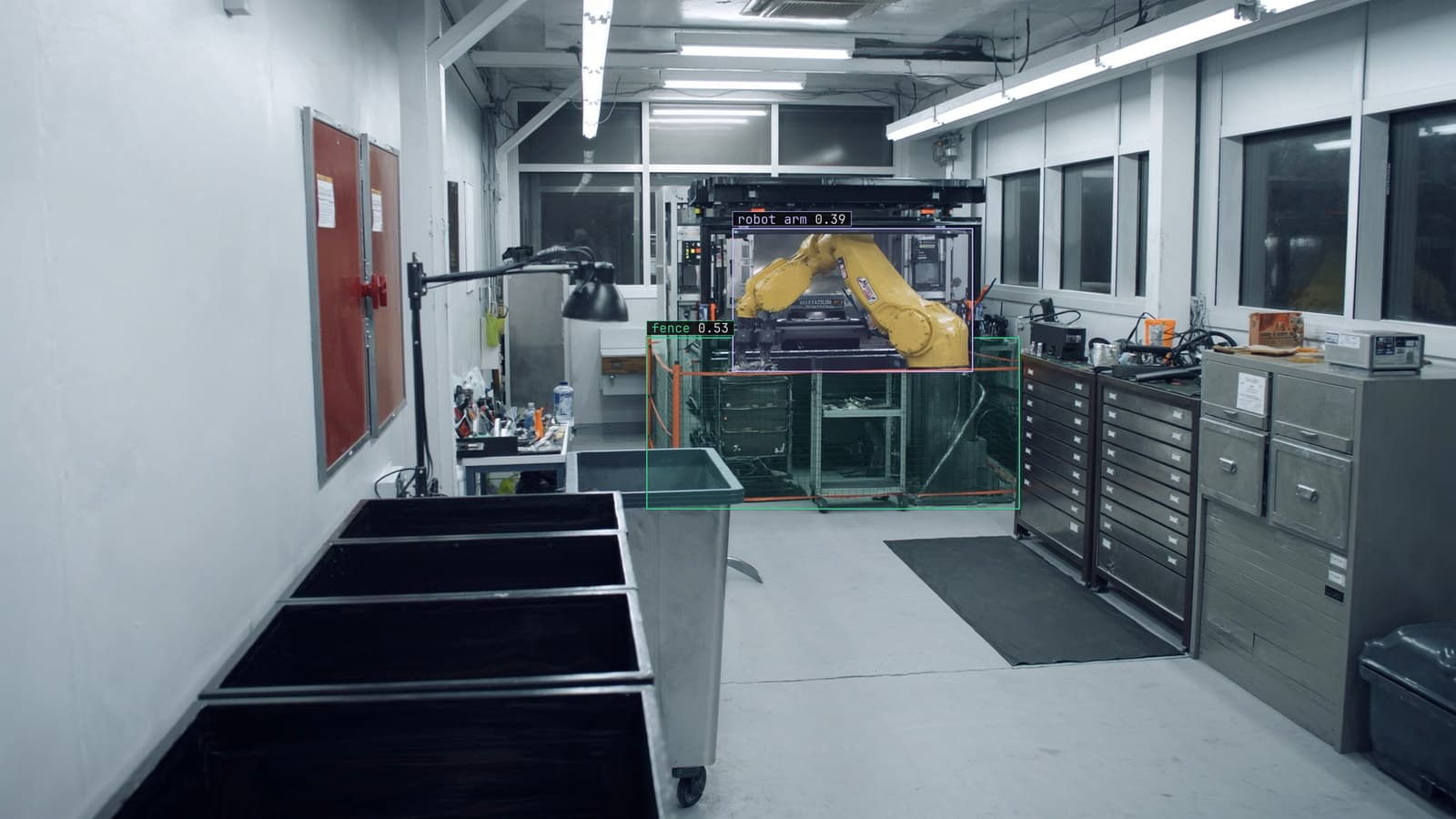
Machining cell, a robot loading the CNC behind the fence, generated scene with detections from our model
The Green Belt on the bracket cell has a tally sheet on the wall by the gauge station, five-bar gates in pencil, one row per defect type, one column per hour. She fills it in for two hours a shift, three shifts a week, because that is the sample the project charter could afford, and the Measure phase of her DMAIC project rests on it. The cell makes a bracket every four minutes and she sees perhaps one in twenty. The night shift, which everyone suspects is where the burr problem lives, is a row she has never filled in.
The station camera has been over the gauge station since the cell was built. It records the burr problem every night.
The sample is where the Measure phase is weakest
Every DMAIC project starts by measuring, and every measurement on a manual line is a sample, because a person cannot watch every part. A sample of one part in twenty from a stable process is fine. The same sample of a process that misbehaves on Tuesday nights, or on the first hour after a tool change, or only on the second machine, measures the process on the days the sampler happened to be there and says nothing about the rest.
The Green Belt's charter says the burr rate is one in forty. That number came from the tally sheet, from the day shift, from the hours she could stand there, and nobody on the project can say whether it is the cell's rate or the day shift's.
The station camera counts every defect and every cycle
A camera over the gauge station sees every bracket, and a model trained on the cell's own frames boxes every burr, every scratch and every chip on every one. The classes are typed once, Lexi proposes the boxes on frames the cell has already recorded, and the Green Belt checks them, which is the first time her tally sheet categories have been written down as something other than a pencil mark. Manufacturing inspection built this way holds 99%+ accuracy in production, and for a Six Sigma project the accuracy matters less than the coverage: every part, every shift, every hour, with the frame kept.
The same camera gives the cycle observations. A bracket is tracked from the machine door to the gauge station to the rack, each zone crossing stamped with the time, and the assembly verification use case reads the same boxes for whether the bracket's insert is present and the right way round. One camera, two measurements, neither of them sampled.
Per shift and per machine breakdowns come from the frames
The Measure phase used to end with a spreadsheet. Now it ends with a question. LexInsight answers "burr rate by shift and by machine since the project started" with the frames behind the answer. On the bracket cell the answer is that the night shift's burr rate is three times the day shift's, and that almost all of it comes from the second machine in the first hour after the 10 pm tool change.
That finding was invisible to the tally sheet twice over, because the tally sheet was never filled in at night and never split by machine. It is a finding about the cell, and the Green Belt has it in the first week rather than the sixth.
Analyze finds the cause in the frames
The Analyze phase asks why. On a tally sheet, why is a fishbone diagram on a whiteboard, populated from memory. With the frames, why is watching the first hour after the 10 pm tool change on the second machine, bracket by bracket. The burr appears on the same edge every time, and the operator on nights is deburring by hand with the fixture lamp off, because the lamp's switch is behind the guard.
I have come to think the Analyze phase is where a camera changes a project most, more than Measure. Measurement gets better in degree. Analysis changes in kind, because the evidence for the cause is a set of frames the whole team can watch together, and a fishbone diagram becomes a video with the box on the burr.
The Control phase watches a base rate that moves
Most Six Sigma projects die in Control, which is the phase where the Green Belt goes back to her day job and the tally sheet stops being filled in. The camera does not go back to its day job. The burr rule is written as a sentence, with a severity and a cooldown, approved before it goes live: burr rate on either machine above the project's control limit over an hour, routine, sent to the cell lead with the frames. The control chart draws itself from every part rather than from a sample.
The what model drift actually is lesson is a reasonable primer for the Green Belt on what can happen to the camera's own measurement over a year.
The base rate will move. In March a new casting supplier sends brackets with a harder skin and the burr rate halves; in June the tool supplier changes grades and it climbs. The drift catalog calls this the defect rate changed, the mode most often mistaken for a model problem when it is a threshold problem, and on a Six Sigma project it is a finding worth surfacing on its own. Per-bracket the model is as accurate as it was. The control limit set in January is wrong for June, and the rate having moved is exactly what the Control phase exists to notice.
LexData takes the cell's model through its whole life. You type what to look for, Lexi puts a box on every frame, and a person checks each label before anything trains on it. The model then watches the station camera, in the cloud, on your servers or on a runner beside the recorder. Frames it is unsure of come back to a person, the corrections retrain it, and the new version replaces the old one with no downtime. The Green Belt's project closes; the measurement does not.
The tally sheet stays on the wall
The Green Belt still fills in the tally sheet for an hour on Wednesdays. Her reason is the right one. A person counting burrs by hand once a week is the reference the camera's count is checked against. When the pencil count and the camera count part in a consistent direction, that is the signal that the model needs to see the new castings, before any chart moves. The sheet is cheaper than any monitor she could buy, and it was on the wall already.
See it on your own footage.
Start with your footageMore in Industries
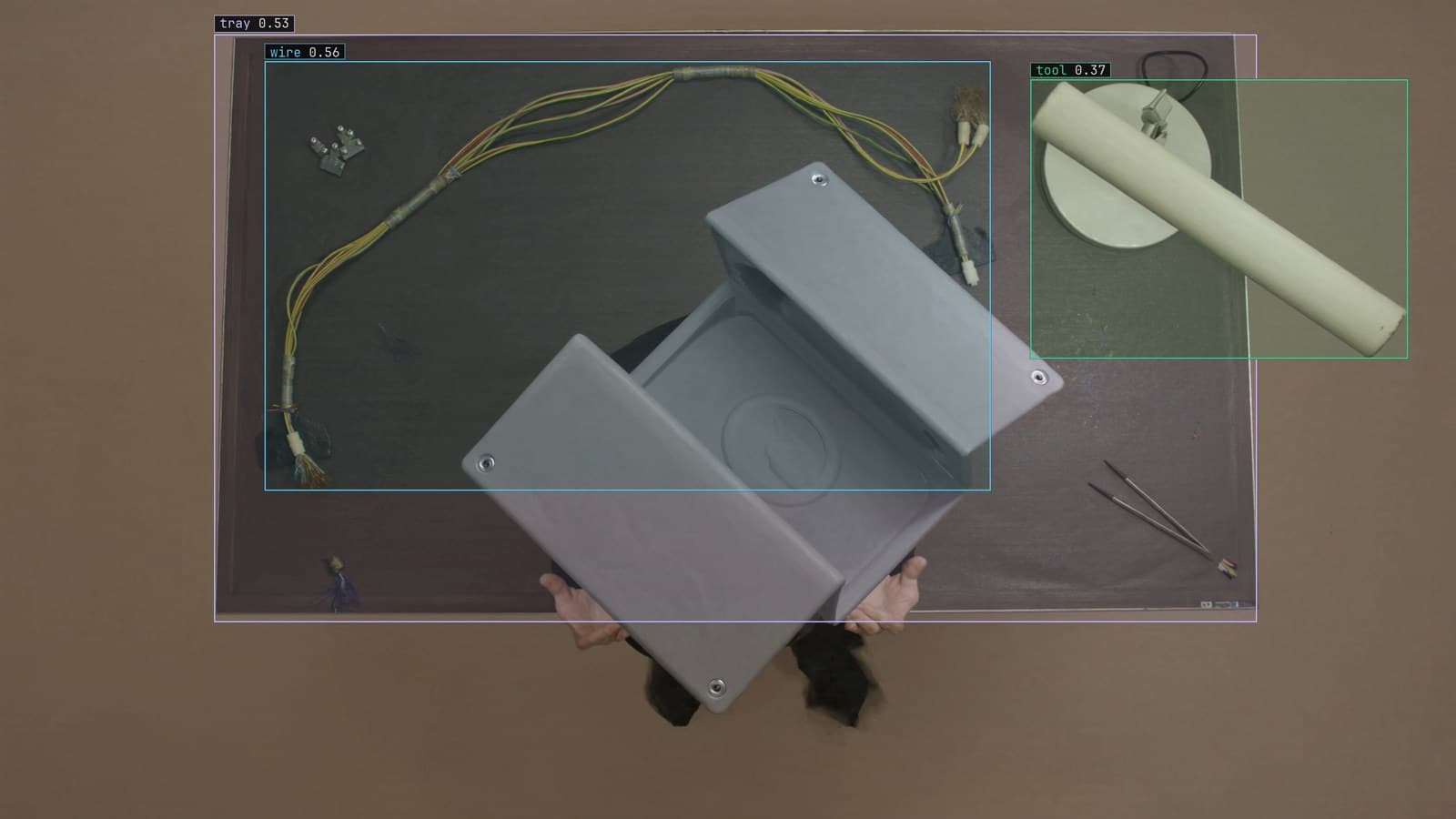
Industries · 7 min read
Counting the screws in a kit with object detection over the bench
A camera over the kitting bench counts every screw and bottle one box at a time. Exact for kits, a band for cases, and a half-hidden item is a written rule.
Rajiya Sultana · Sep 25, 2026
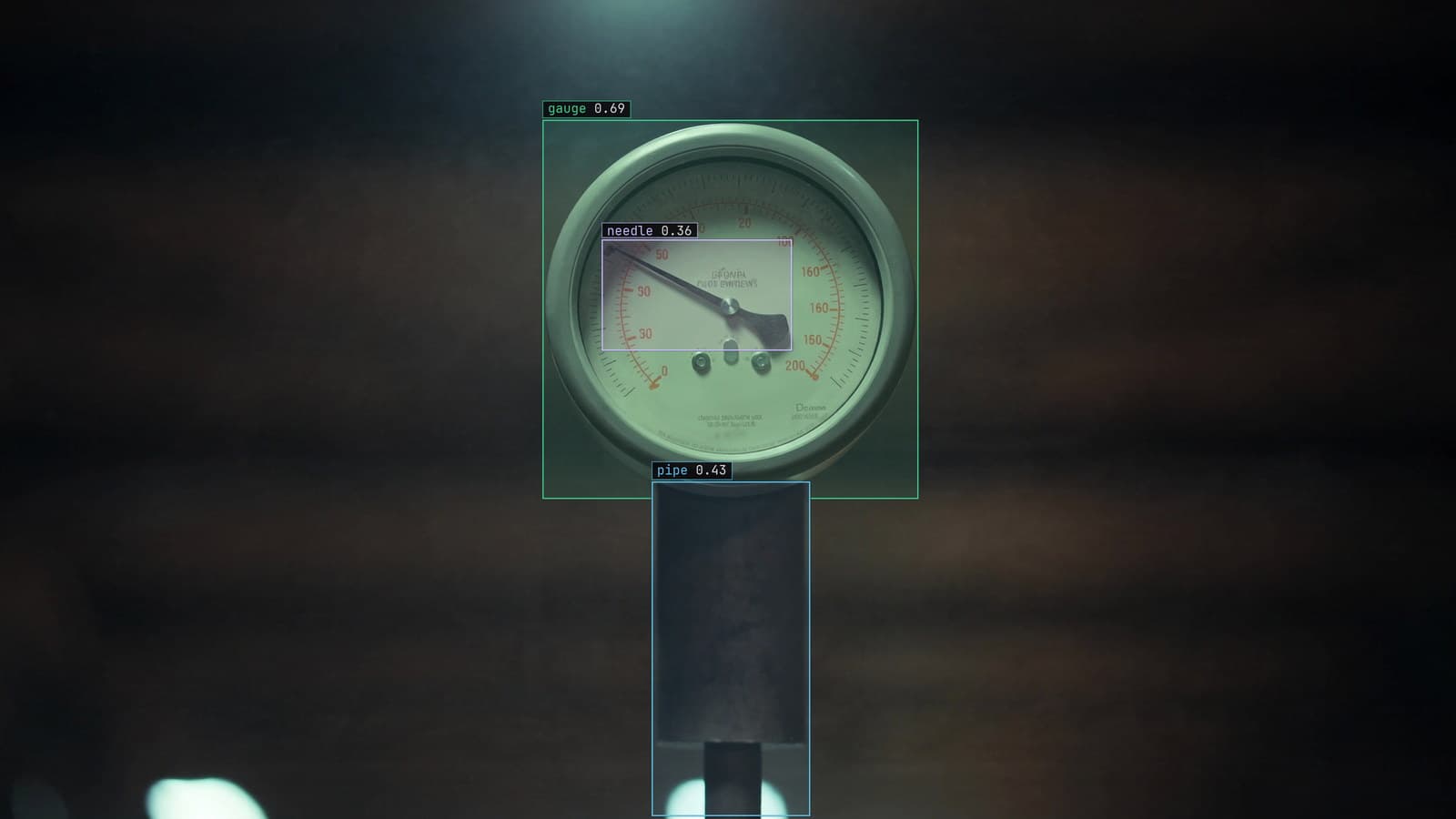
Industries · 7 min read
Automated water meter reading with a camera in the vault
Ten digit classes in a fixed row turn a truck roll into a frame. A rolling digit and condensation on the glass are the frames that come back to a person.
Stephen Biswas · Sep 25, 2026
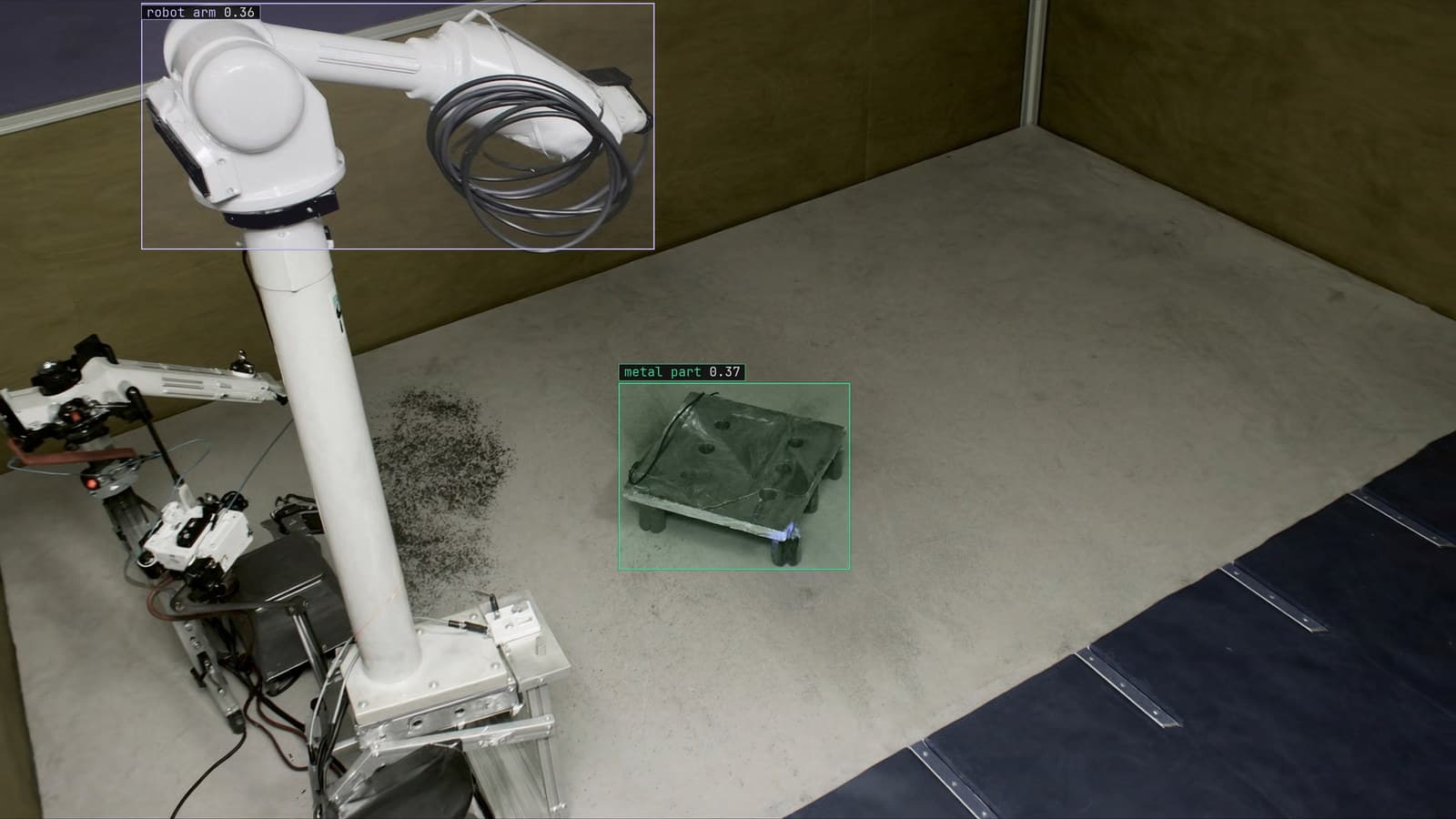
Industries · 7 min read
Body-in-white inspection with a station camera on unpainted steel
Dents on a bare body shell hide in the reflections. Masks give the extent, a second pass decides reportable, and a tightened tolerance is a spec change.
Finn Ellingwood · Sep 25, 2026