

Industries · 6 min read
Takt time vs cycle time, measured with the camera already over the station
Takt comes from demand and cycle time comes from the floor. A camera timing each unit through station 5 shows the gap per shift instead of once a quarter.
Summary
This post separates takt time, the rate the schedule demands, from cycle time, the rate a station actually runs at, and shows a camera over the station timing each unit from entry to exit. It concludes that a time study captures one good afternoon while the camera captures every shift, and that the station whose cycle drifts above takt can be flagged before the schedule slips. It is for production and industrial engineering teams on assembly lines.
Ayman Quadir · Head of Product · Sep 29, 2026
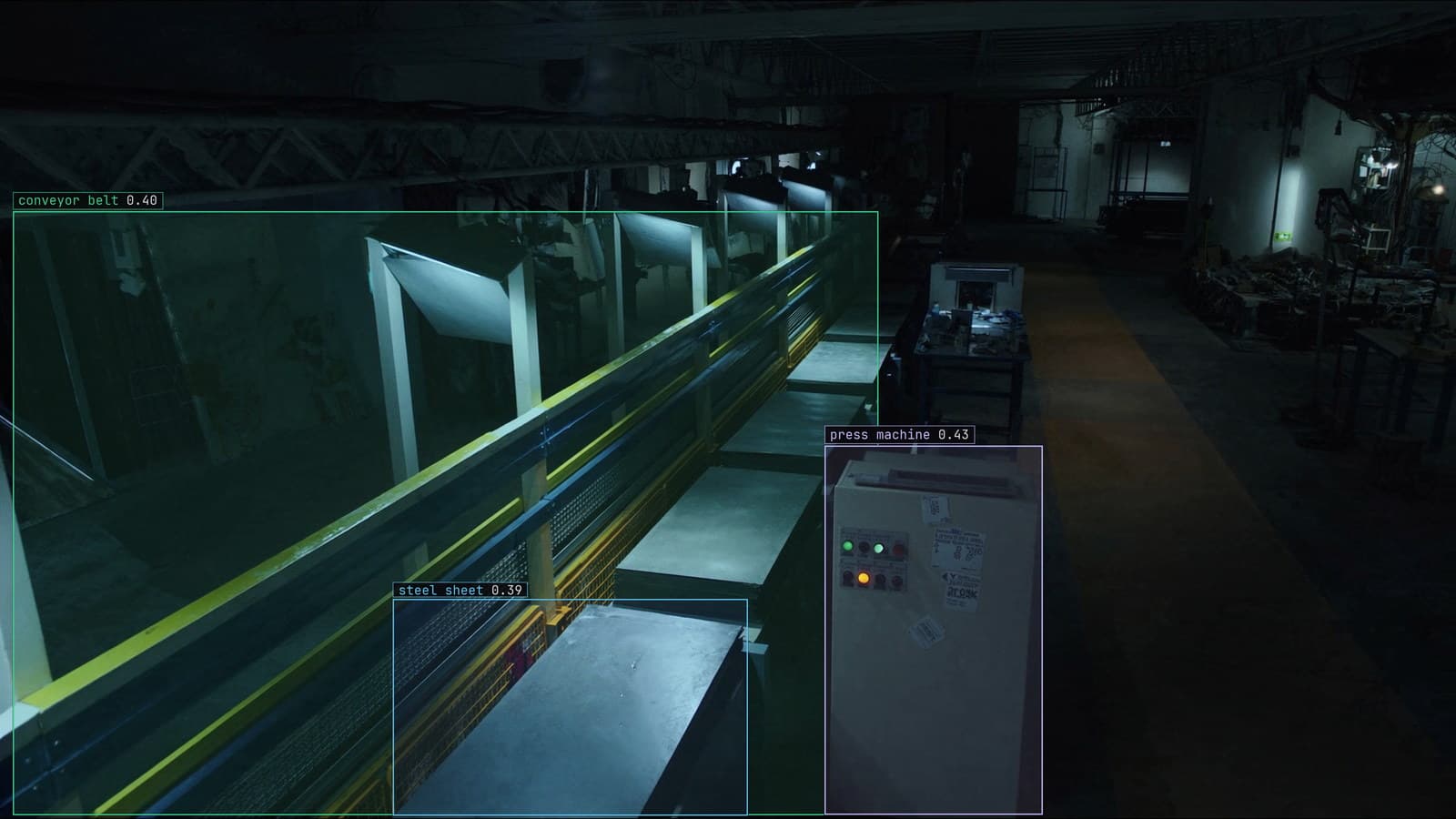
Stamping line, steel panels on a conveyor passing an inspection station, generated scene with detections from our model
The whiteboard at the head of the pump housing line says takt is fifty-two seconds. That number came from the planner: the shift's available minutes divided by the housings the schedule needs, worked out on Monday and written up in green. Beside it, the cycle time for station 5 says forty-eight seconds, written in March by the industrial engineer with a stopwatch, on an afternoon when the fixture had just been serviced and the assembler on the station was the fastest on the line.
It is September. The number on the board is still forty-eight, and the line is missing its schedule by a housing an hour, and nobody can say which station is doing it.
Takt time comes from demand and cycle time comes from the floor
The two numbers are different kinds of thing. Takt is a target, calculated from outside the line: if the customer needs this many housings in this many minutes, each station has to hand one on this often. Cycle time is a measurement, taken on the line: how long a unit actually takes to pass through station 5, from the moment it lands on the fixture to the moment it leaves. A line is balanced when every station's cycle sits just under takt. A station whose cycle sits above it is the bottleneck, and every station downstream of it is waiting.
The problem with the whiteboard is that one number is recalculated whenever demand changes and the other is remeasured whenever someone finds the stopwatch.
The camera times each unit from entering the station to leaving it
A camera over station 5 sees the housing arrive on the fixture, sees the assembler's hands on it, and sees it lift off toward station 6. Two events per unit, a box on the housing in the fixture area appearing and disappearing, and the time between them is the cycle for that unit rather than an average from a study. That unit, at 10:14, forty-seven seconds.
The model behind it is the same one the assembly verification use case describes: a box on the housing, boxes on the parts that have to be present, and presence read off the frame. The cycle timer is a by-product of the presence check, which is why it costs nothing extra to run. The box on the housing enters the fixture region, a clock starts; the box leaves, the clock stops; the interval is written against the unit and the shift.
The assembler does nothing different. The stopwatch stays in the drawer.
The gap is shown per shift rather than once a quarter
Every unit's cycle goes into LexInsight as a value per station, and the question "what was station 5's cycle on the night shift" has an answer with the frames behind it. Plotted against takt, the gap is visible per shift and per assembler rather than as a single number from March. The night shift's cycle on station 5 sits at fifty-five seconds, three over takt, and has done since the fixture clamp started sticking in July.
That is the figure the line lead needed and did not have. A time study would have found it eventually, on the next afternoon the engineer was free, and by then the schedule would have been missed for a quarter.
An aside from the line: the industrial engineer's stopwatch has a lanyard with the plant's old name on it, and it has been used on station 5 three times since the line was commissioned. The camera has been there the whole time.
The station whose cycle drifts above takt is flagged before the schedule slips
The alert is a rule written as a sentence, "station 5 cycle above takt for the last twenty units", with a severity and a cooldown, approved before it goes live, delivered to the line lead's Slack with the frame of the unit that tipped it. Twenty units is the window because one slow unit is an assembler reaching for a dropped bolt and twenty is a station with a problem.
On the lines we run, that rule goes to the line lead first and to the maintenance channel second, because most of what pushes a cycle over takt is a fixture, a tool or a part presentation problem rather than a person. The monitoring guide covers how the rule and the severity are set and where they land.
A time study captures one good afternoon
The March number was not wrong. It was true of that afternoon: serviced fixture, fastest assembler, a bin of housings that had been deburred properly. A stopwatch measures the line as it is when somebody is standing beside it with a stopwatch, and lines behave differently under observation, in the first hour after a break, and on the night shift when the tool crib is closed.
A camera measures every unit on every shift, including the ones nobody would have chosen to time. The value is in the units that were never going to make it into a study. The one after the clamp stuck. The one where the parts bin ran low and the assembler walked to the crib. The run at 3 am when the temperature in the hall dropped and the sealant stiffened.
The camera is honest only for as long as it is checked
LexData takes the station model through its whole life. You type what to look for, Lexi puts a box on every frame, and a person checks each label before anything trains on it. The model then watches the station camera the line already has, in the cloud, on your servers, or on a runner beside the recorder. Frames it is unsure of come back to a person, the corrections retrain it, and the new version replaces the old one with no downtime. That review loop is how the lines in our manufacturing work hold 99%+ accuracy maintained in production, and a cycle timer that stops finding the housing when the fixture is repainted is a timer nobody should trust.
My own view is that takt belongs on the whiteboard and cycle time does not, because one is a decision the plant made and the other is a measurement that changes every shift. A measurement written in marker in March is a decision pretending to be a fact.
The green number stays. The number beside it comes off the camera, and on the night the clamp finally gets replaced, station 5's cycle drops back under takt at 2:40 am, and the chart shows it before the maintenance ticket is closed.
See it on your own footage.
Start with your footageMore in Industries
Industries · 7 min read
Aerial fire detection from a drone patrol, smoke before the flame reaches the line
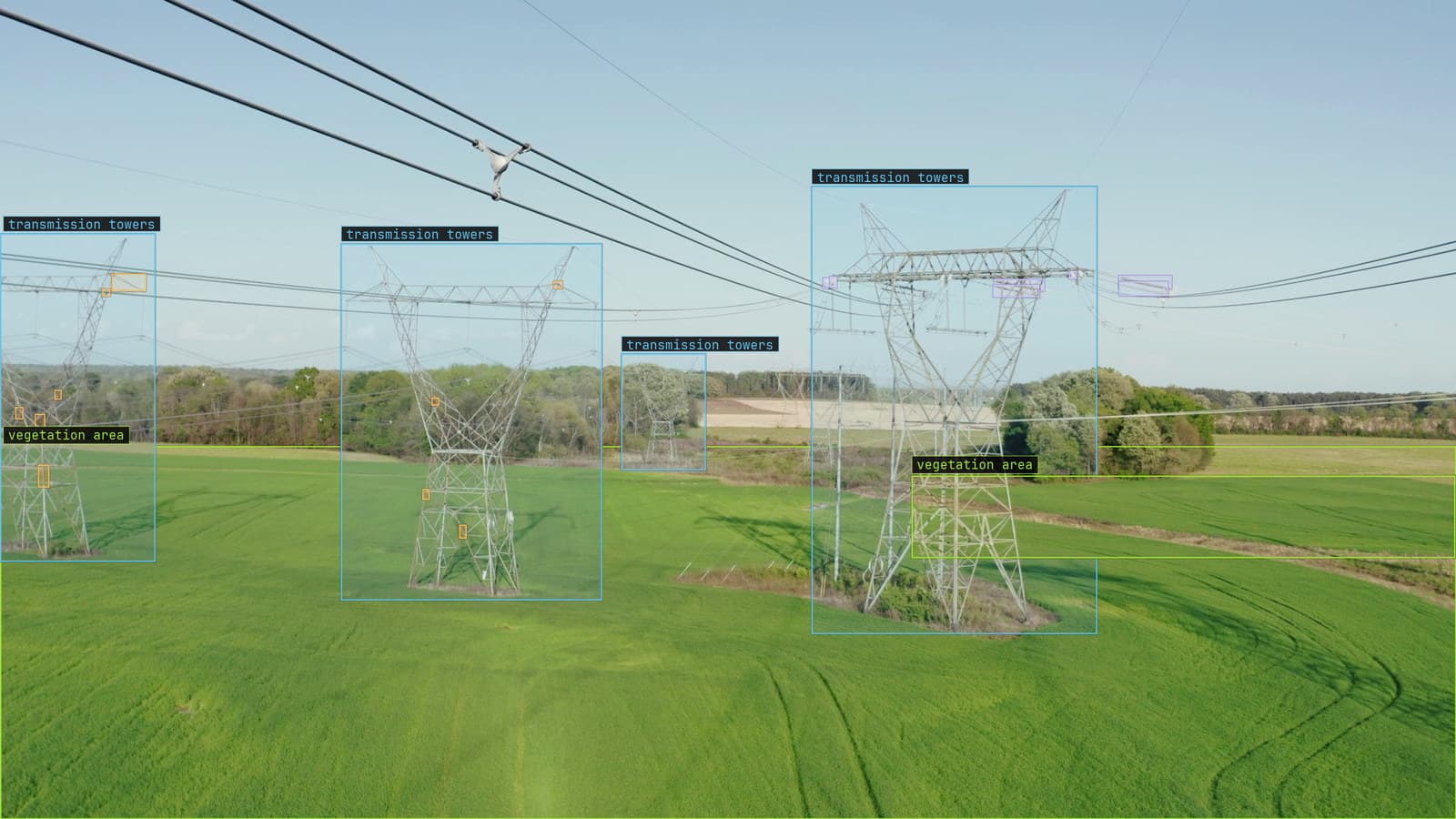
On a right-of-way patrol, smoke is a few dozen grey pixels that look like haze. Two boxed classes, an alert with a cooldown, and the bad-weather days kept.
Rob Hickey · Sep 29, 2026
Industries · 6 min read
AI in robotics after the robot ships, what the warehouse cameras keep learning
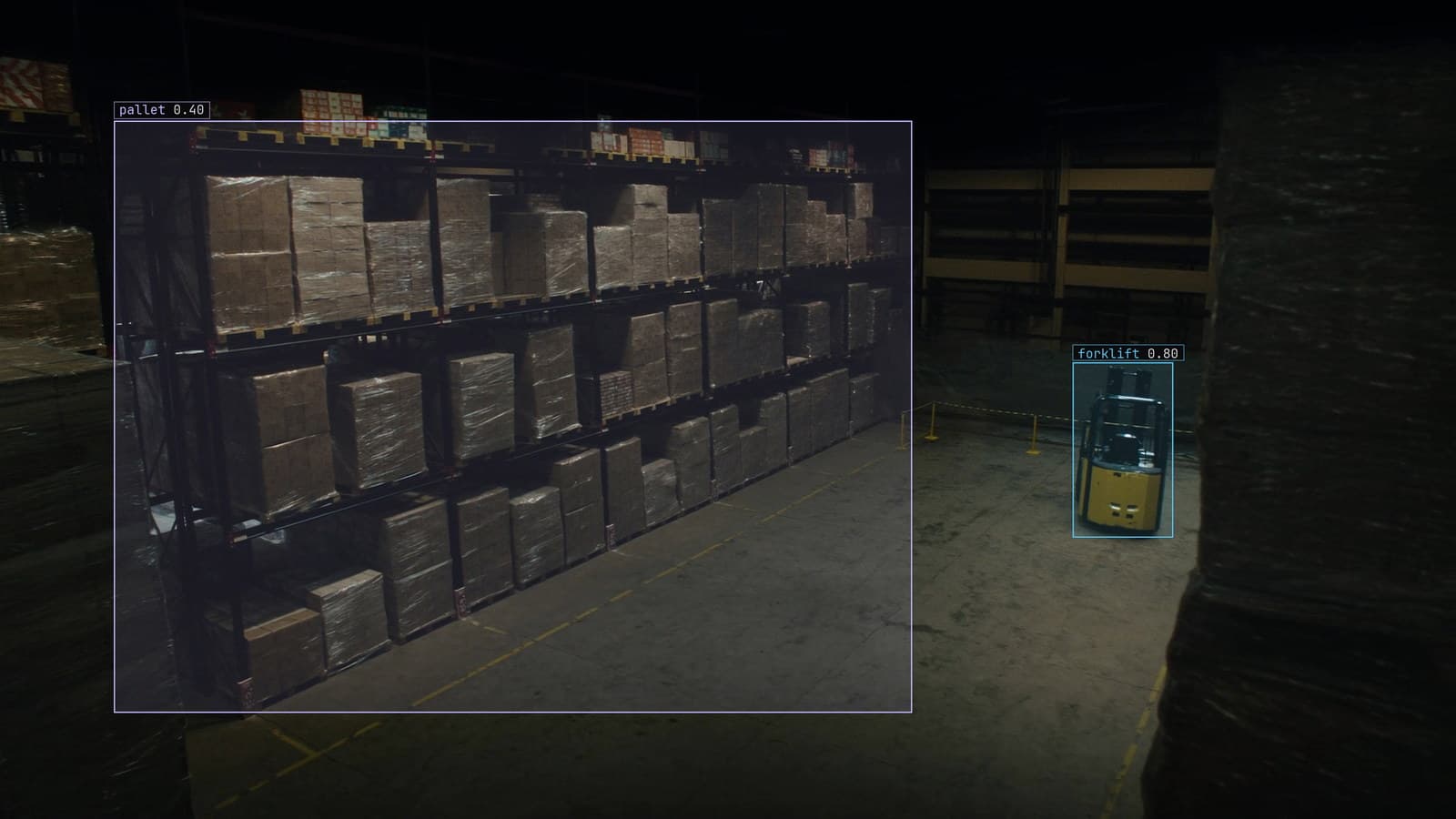
The forward camera boxed pallets and people well at the pilot site. Then the racking moved, and the edge cases the planner never saw came back for review.
Andreas Ohrvall · Sep 29, 2026
Industries · 6 min read
Automated sorting with computer vision, from the camera over the conveyor to the diverter
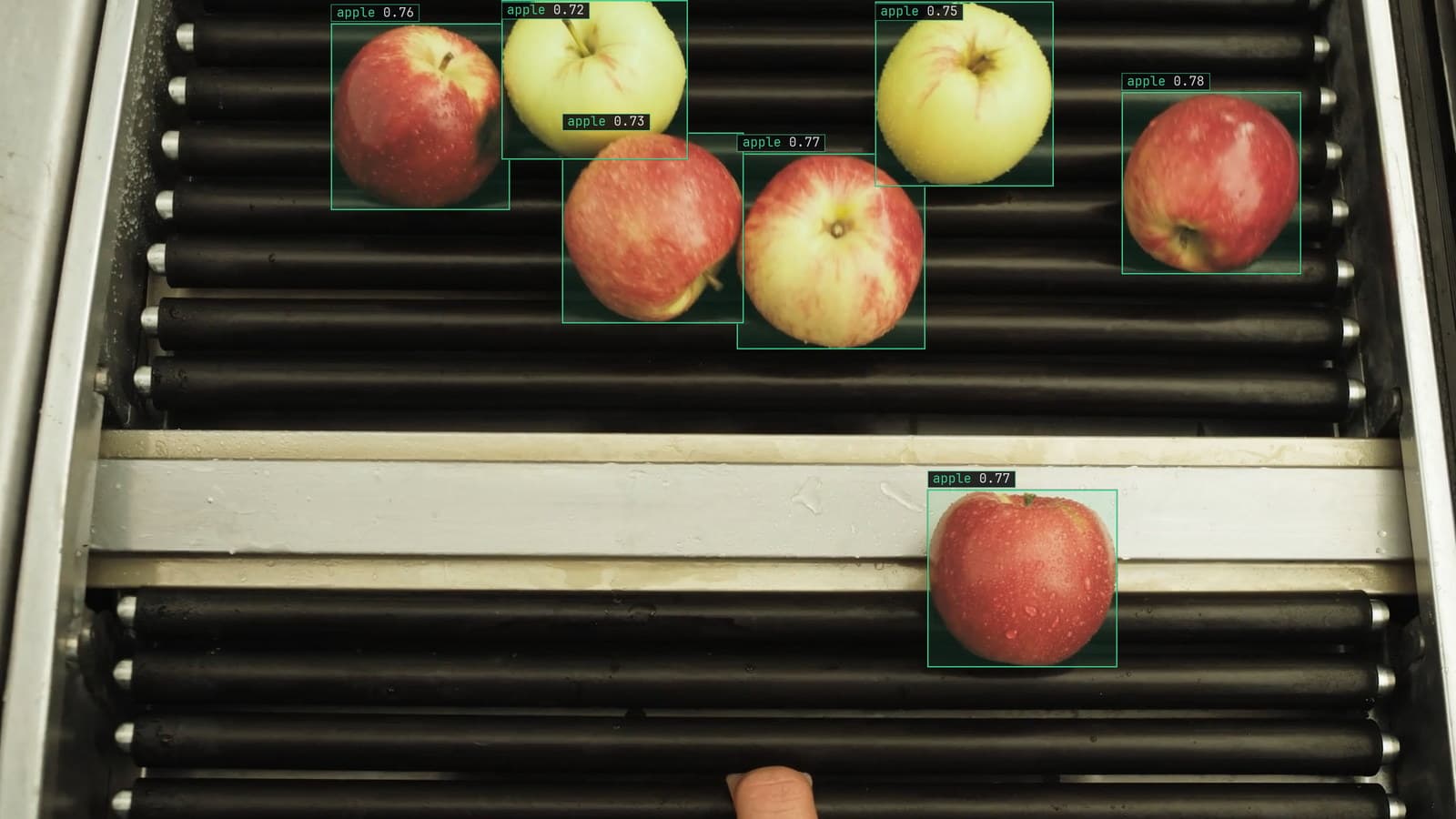
A box on every apple, a grade from the box, and an air jet that acts on it before the belt moves on. The new cultivar is when the model needs the graders again.
Rob Hickey · Sep 29, 2026