

Industries · 7 min read
Manual assembly QA with a camera that catches the wrong part in the assembler's hand
A camera over the bench boxes and names the part in hand, checks it against the next step, and lights a lamp before the next screw goes in.
Summary
This post puts a camera over a manual bench where a pump is assembled in twelve steps and follows the part in the assembler's hand from the bin to the housing. It covers boxing and naming the part, comparing it to the next expected step, alerting the operator with a lamp before the next screw, and labeling a new variant's parts from the bench's own frames before the first unit is built. It is written for production and quality engineers on manual assembly lines.
Finn Ellingwood · Engineer · Sep 25, 2026
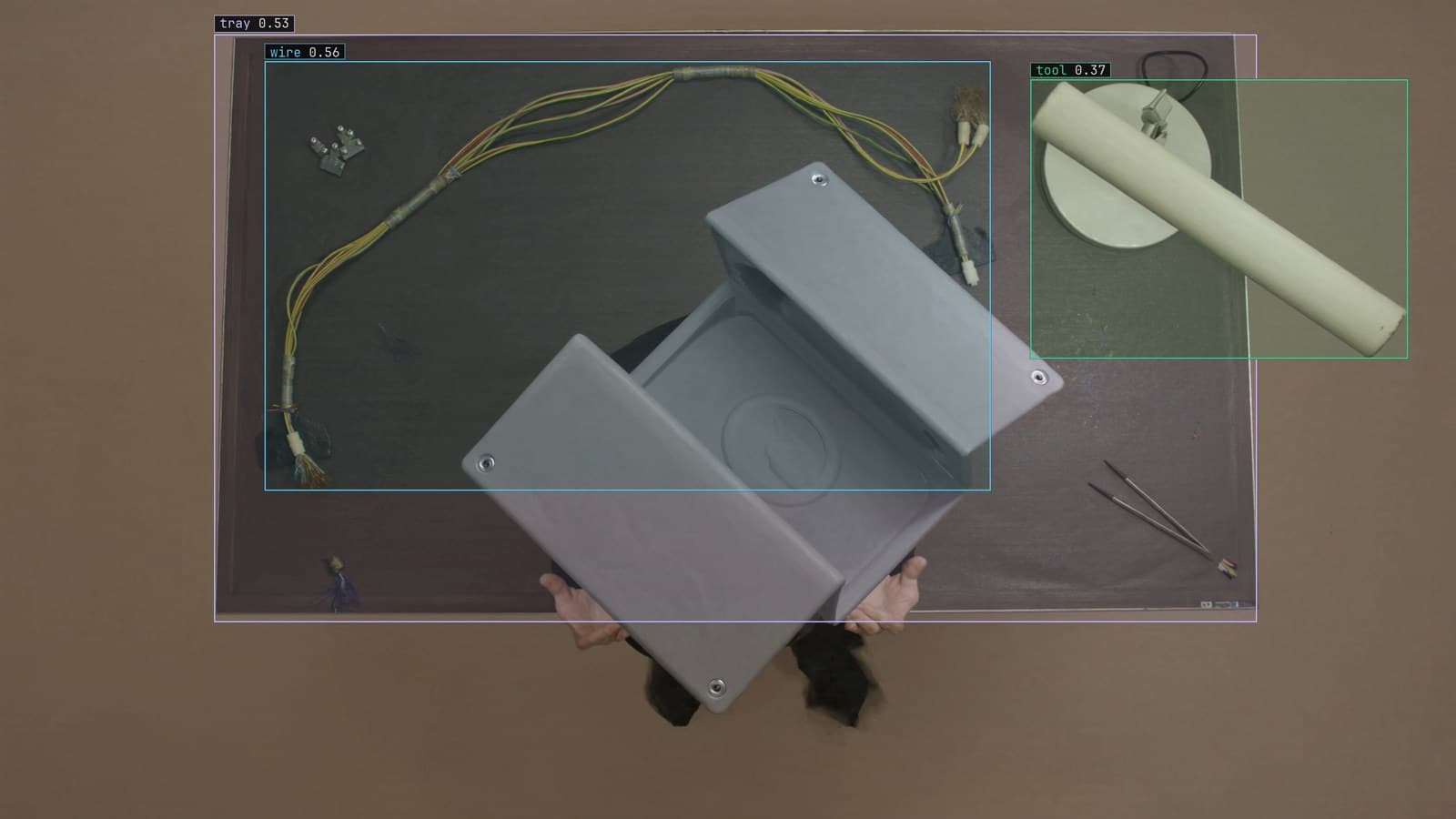
Assembly bench with a tool, a tray and wiring boxed, generated scene with detections from our model
The pump bench at the end of the line builds two versions of the same unit, and the only difference an assembler can see between the two impellers is a stamped letter on the hub. The assemblers tell them apart by weight, mostly, and mostly is the problem. On a Wednesday in April a batch of forty pumps went to the test rig with the wrong impeller, and the test rig caught all forty. The rework took the rest of the shift, because the impeller goes in at step three of twelve and everything after it had to come off.
The test rig is the right place to catch a bad pump and the wrong place to catch a wrong impeller. The wrong impeller was catchable at step three, in the assembler's hand, with nine steps still to go.
The wrong part looks right until the test rig
Manual assembly fails quietly, and the April batch is the shape of it. The assembler picks from a bin, the part goes in, the next screw goes in over it, and the mistake is sealed inside the housing until the end of the line. A checklist on a screen catches the steps the assembler forgot to tick, which is a different failure from the one where the tick was honest and the part was wrong.
The assembly verification use case frames the question as presence, position and orientation, is every part present and the right way round. On a manual bench there is a prior question: is the part about to go in the part the step calls for.
Object detection names the part in the assembler's hand
The camera over the bench sees the assembler's hands, the bins and the housing on the fixture. On every frame the part in hand is boxed and named: impeller A, impeller B, seal, bearing, housing screw. That is object detection with a class per part, and the list of parts is the class list, typed once. Lexi proposes the boxes on frames the bench has already recorded, and the line lead checks each one before anything trains on it.
The two impellers are where the checking earns its keep. They are the same size and the same colour, and the letter on the hub is a few pixels wide from the camera's height. The box has to sit on the hub, where the letter is, rather than on the whole impeller, and the frames have to include the hub from the angles a hand actually holds it at. The line lead un-boxing every impeller box that sits on a hand rather than a hub is a morning's work, and it is the morning that decides whether the model can tell A from B.
The camera checks each pick against the next step
The assembly sequence is written down already, on the work instruction taped to the bench. Step one, housing on fixture. Step two, bearing. Step three, impeller A or impeller B depending on the order. The camera does not need to understand the pump. It needs the list, the current step, and the name of the part in hand, and a comparison between the last two.
When the part in hand matches the next expected part, the step advances as the part goes into the housing. When it does not, the mismatch is the finding. A seal in hand at step three is a skipped step; impeller B in hand on an order for A is the April batch, caught at the bin instead of the rig.
A lamp on the bench alerts before the next screw
The rule is written as a sentence, with a severity and a cooldown, and approved before it goes live. A part in hand that does not match the next step on this bench, critical, the lamp on the bench lit and the frame logged to the unit's serial. The monitoring and alerts guide describes the same rule delivered to Slack or a phone, and on a bench neither is right.
My view is that the operator's alert has to be a lamp or a tone at the bench and nothing else. The assembler's eyes are on the part and both hands are full. A message on a screen at the end of the bench is read after the screw is in, which is the moment the alert was supposed to prevent. The lamp goes on, the assembler looks at the part in their hand, and the step is corrected in the time it takes to put the impeller back in the bin.
The line lead's alert is different. A bench that lights its lamp more than a few times an hour, routine, sent to the lead with the frames, because that pattern means a bin was filled with the wrong part at the last changeover.
The training frames come from the bench, hands included
Every part in the training set is in a hand, half covered by fingers, at an angle no product photo shows. That is the condition the model runs in, so it is the condition the frames come from: the bench camera at its mounted height, both shifts, every assembler, because each assembler holds an impeller differently. A frame of an impeller lying flat on a tray teaches the model an impeller that is never in hand.
The frames from the April batch are in the set too, all forty picks of the wrong impeller, because they are the only forty frames of the exact mistake the camera is there to catch. Manufacturing inspection run on the line's own frames is what holds 99%+ accuracy in production, and on a bench the line's own frames have fingers in them.
Doubted picks go to the line lead's queue
A part half out of the bin, a hub turned away from the camera, a hand that covers the letter: these are the frames the model should not decide alone, and they should not light the lamp either. A lamp that lights on doubt is a lamp assemblers learn to ignore by Friday. Doubted frames go to the line lead's queue with the box drawn on them, the lead's verdict is a label, and the next version has seen that grip.
LexData takes the bench model through its whole life. You type what to look for, Lexi puts a box on every frame, and a person checks each label before anything trains on it. The model then watches the bench camera, in the cloud, on your servers or on a runner beside the recorder. Frames it is unsure of come back to a person, the corrections retrain it, and the new version replaces the old one with no downtime. The grips the first version could not read are the second version's evidence.
A new variant's parts are labeled before the first unit
In September the pump gets a third variant with a ceramic seal that looks nothing like the rubber one. To the model the new seal is not a wrong part; it is no part at all, and a part that is never detected lights no lamp. Worse, the work instruction for the new variant reorders two steps, so a correct pick on the new order would be flagged as wrong on the old one. The frames from the bench have not changed and the right answer for step five has.
The drift catalog calls that a spec change, and its first signal is the line lead overriding the lamp in one direction, week after week. The better path is the one with a date on it. The variant is announced months ahead, so a trial batch is built on the bench before launch, the camera records it, the line lead labels a window of frames with the ceramic seal in hand, and the sequence list is updated with the new order. The version that watches the first real unit has seen the seal and knows the order it goes in.
See it on your own footage.
Start with your footageMore in Industries
Industries · 7 min read
Counting the screws in a kit with object detection over the bench
A camera over the kitting bench counts every screw and bottle one box at a time. Exact for kits, a band for cases, and a half-hidden item is a written rule.
Rajiya Sultana · Sep 25, 2026
Industries · 7 min read
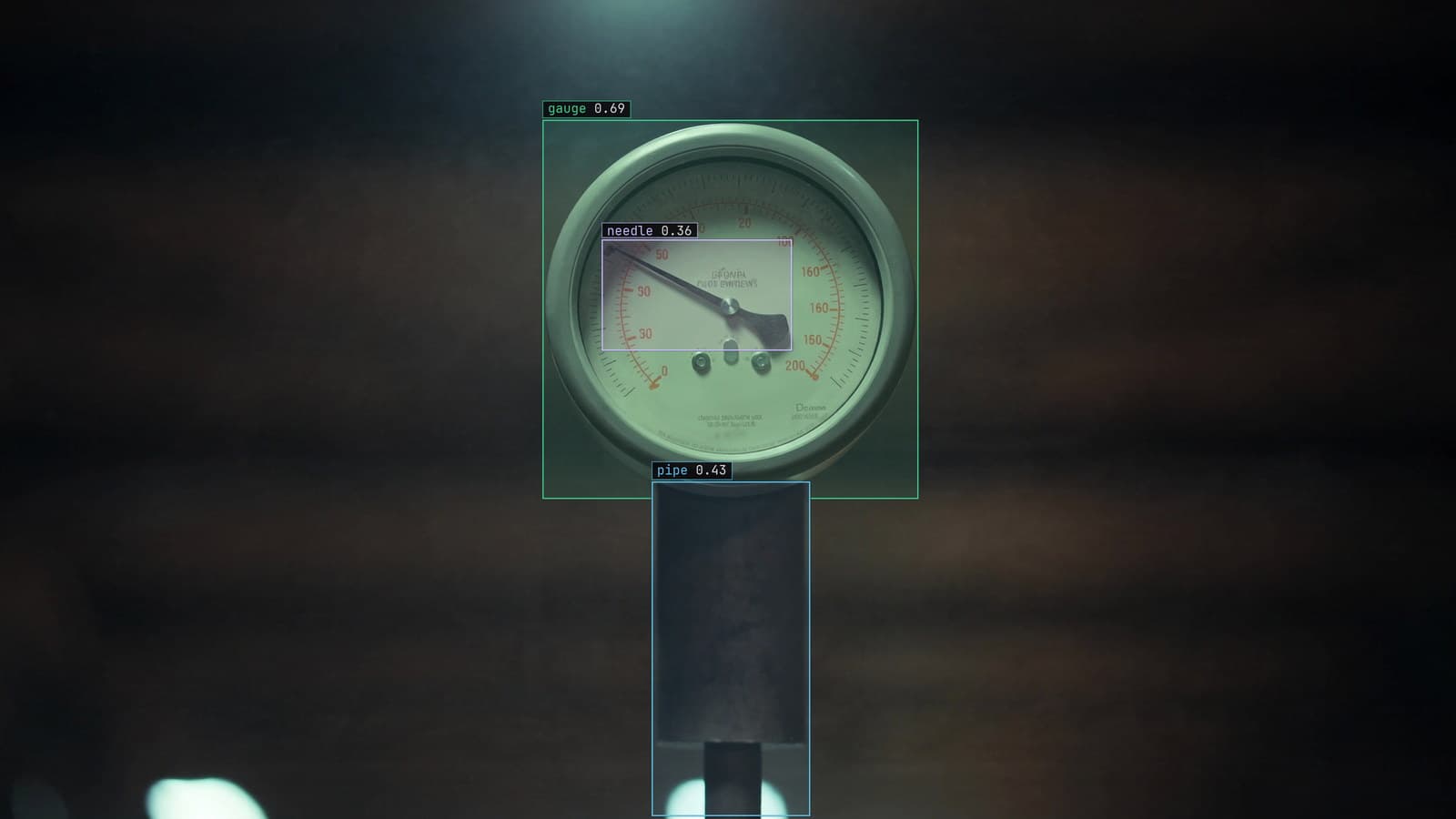
Automated water meter reading with a camera in the vault
Ten digit classes in a fixed row turn a truck roll into a frame. A rolling digit and condensation on the glass are the frames that come back to a person.
Stephen Biswas · Sep 25, 2026
Industries · 7 min read
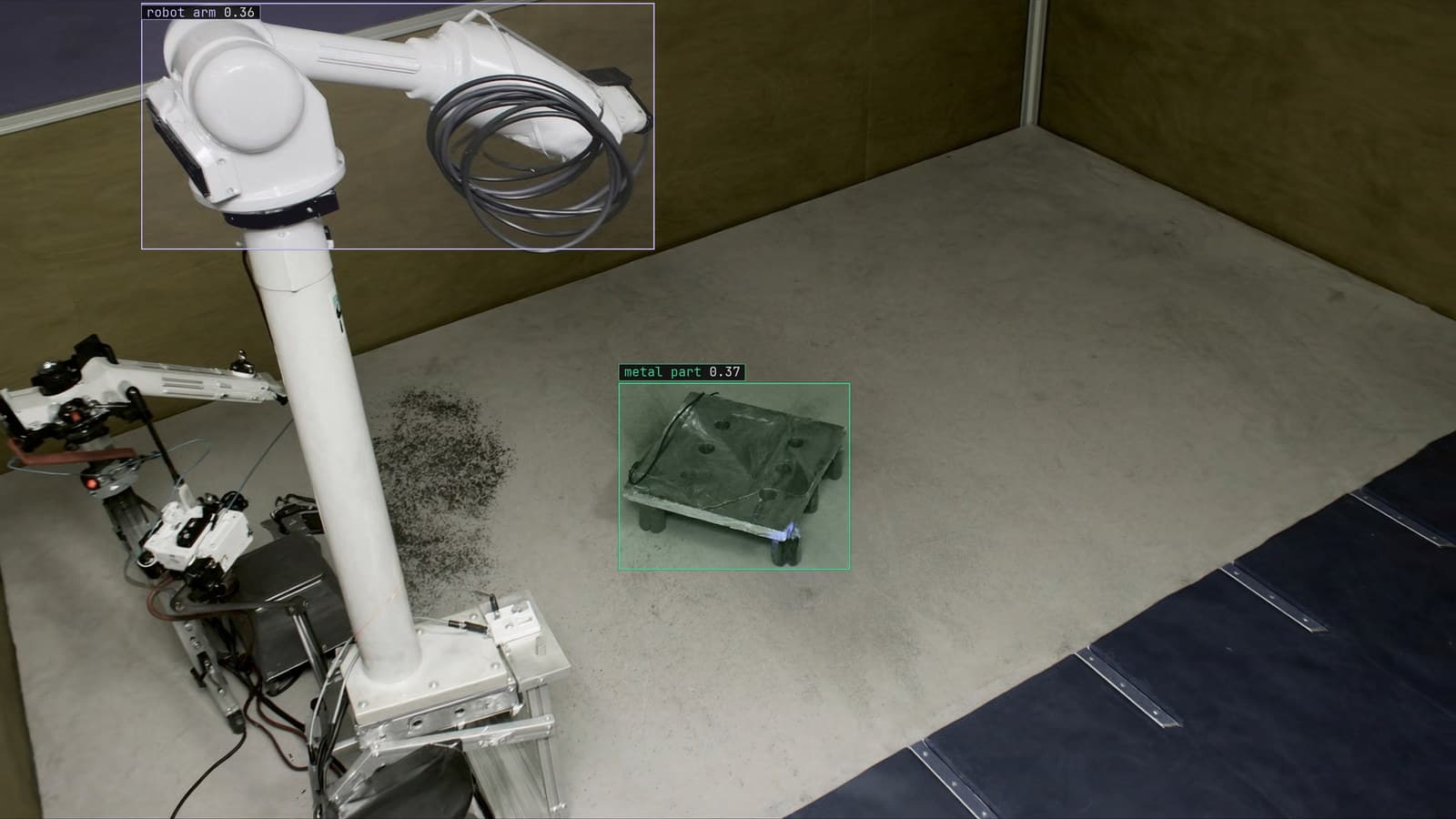
Body-in-white inspection with a station camera on unpainted steel
Dents on a bare body shell hide in the reflections. Masks give the extent, a second pass decides reportable, and a tightened tolerance is a spec change.
Finn Ellingwood · Sep 25, 2026