

Industries · 6 min read
Part inspection with computer vision, the six questions a station camera answers
Present, how many, which way round, what colour, damaged and aligned each need a different label. A component revision means labeling the new part first.
Summary
This post takes one camera over a board assembly station and works through the six questions it answers about each part, present, how many, which way round, what colour, damaged and aligned, and says which kind of label each one needs. It ends with a component revision as the change that dates every label, handled by labeling the new part before its changeover. It is for quality and test engineers.
Rajiya Sultana · Engineering Manager · Sep 23, 2026
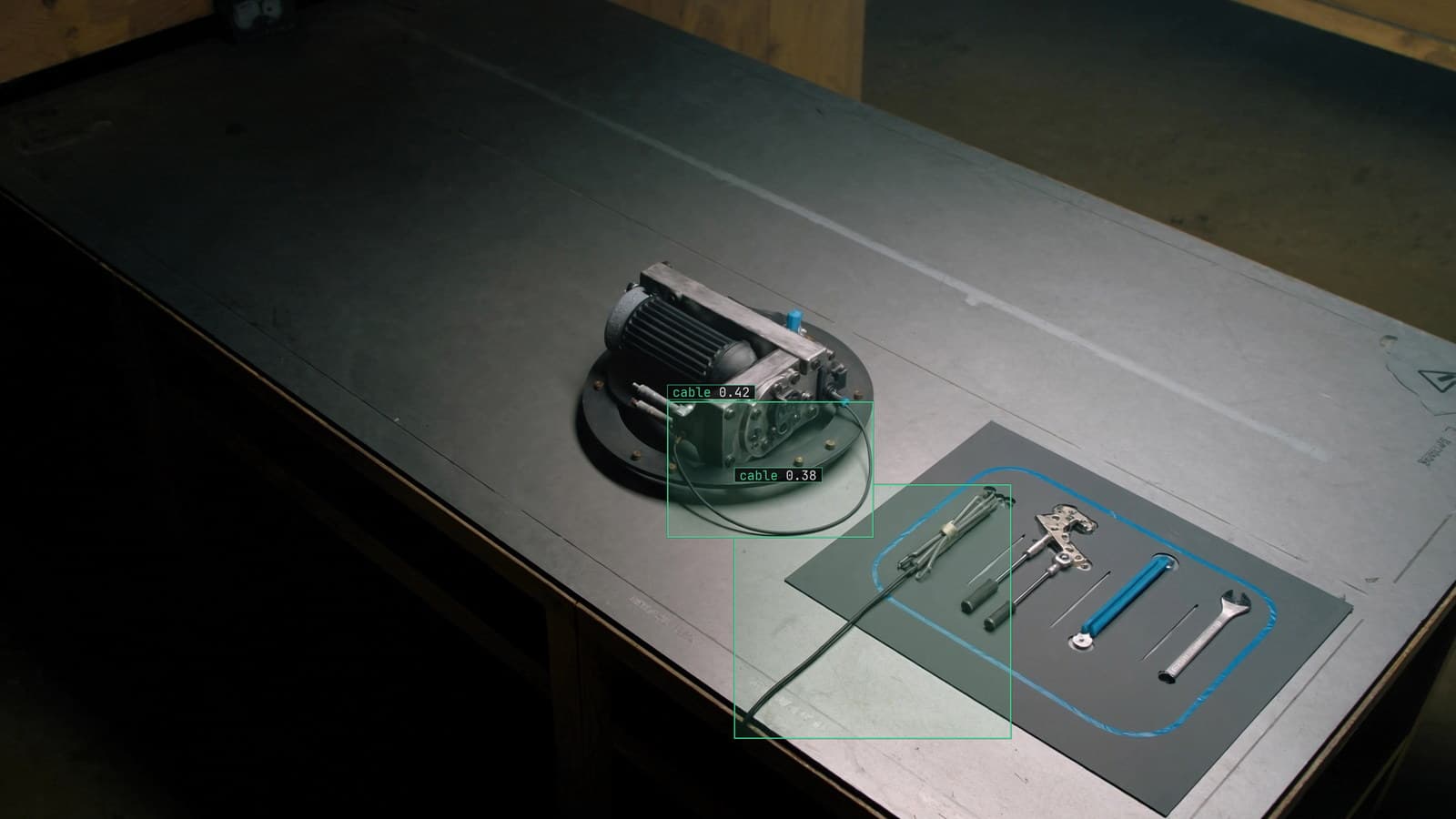
Assembly station with the housing, fasteners and the cable boxed, generated scene with detections from our model
The camera over the final station on the board line sees each populated board for about four seconds before the conveyor moves it to the tester. Twelve components sit on the board, and the station's job is to catch what the tester will catch later, only sooner. It also catches the things the tester never sees: a capacitor with the right value in backwards, a connector at a slight angle, a scratch across the silkscreen. At 7 am on a Monday the station has already seen a hundred boards.
Part inspection sounds like one job. On this station it is six questions, and each wants a different label.
Present and how many are object detection questions
Is the capacitor at C7 there, and are there four screws in the shield can. Both are answered by boxes: a class per component, a box per instance, and a count of boxes inside the region where the drawing says they should be. Object detection is the right tool and a bounding box is the right label, because nothing about the decision needs the component's outline.
The hard version is absence. A board with three screws looks nearly identical to a board with four, and a model trained mostly on complete boards has thin evidence for the missing one. The assembly verification use case makes this point for every completeness check: the absence of a small part in a cluttered assembly is the signal, and absence is harder to score than presence. The labeled boards that matter are the incomplete ones, and a person goes looking for them.
Which way round is the box's aspect and a mark
The electrolytic capacitor at C7 has a stripe down one side that marks its negative leg, and a board with that stripe on the wrong side will pass the count and fail in the field. Orientation on a part with a mark like that is a class in its own right, capacitor correct and capacitor reversed, labeled from the station's own frames so the model learns the stripe under the station's light. For a connector, the box's aspect ratio does most of the work: a connector seated the right way is wider than it is tall from above, and one inserted sideways is the reverse.
The stripe is small. The camera and lens are chosen so it occupies enough pixels to be a stripe rather than a smudge, and that choice is made before any board is labeled.
What colour is a class checked against the light
A blue jumper where a red one belongs is a colour question, and colour is the question most sensitive to the station's light. The label is a class, red jumper and blue jumper, drawn from frames taken under the station's own enclosure, and the enclosure is what keeps the colour the same at 7 am and at 4 pm. A model that learned red under a warm lamp will doubt it under a cool one.
The reviewer's job on colour labels is the borderline: the jumper in shadow, the faded one, the one whose colour is right and whose position is wrong.
Damaged is a severity call and wants a mask
A scratch on the silkscreen beside C7 is cosmetic. A scratch that crosses a trace is a scrapped board. Both are scratches, and a box around either tells the model the rough extent and none of the length or the path. Damage on this station is a severity call, and severity is size and where it sits, so the label is a mask that traces the scratch and a rule that checks the trace against the board's copper layer. It costs more to draw and it carries the measurement the decision needs.
My view is that the six questions should be six rules on one model, never one pass or fail class. A single pass or fail label collapses the reasons together, and the day the reasons need separating, when the reversed capacitors spike after a reel change, the labels cannot say why.
Aligned is a distance between two boxes
The connector at J2 has to sit square to the board edge within a tolerance, and a box around the connector and a box around the fiducial mark beside it give a distance and an angle. No mask, no keypoint, just two boxes and arithmetic. The tolerance lives in the rule, so when the drawing tightens it the rule changes and the labels do not.
An alert in LexAlert is a rule written as a sentence, with a severity and a cooldown, approved before it goes live. For this station it reads: a board leaving with a reversed capacitor, a missing screw or a connector outside tolerance, to the line lead, with the frame.
The frame shows the board with the boxes drawn on it and the failing question named. On the manufacturing lines we run, 99%+ accuracy maintained in production is measured per question rather than per board.
A component revision means labeling the new part first
In the autumn the capacitor at C7 is replaced by a different supplier's part: same value, taller can, stripe in a different place. From the day the new reel is loaded, every board with the new part is correct and the model, trained on a summer of the old one, calls it wrong at C7. The pixels of the old part never changed, and every label that says the old part is the correct one is now out of date.
The drift catalog files this under the spec changed: the definition of correct moved and the footage did not signal it. The changeover date is known weeks ahead, so the new part is labeled from sample boards before the reel is loaded, and the version that runs on changeover day has seen both. The line lead's overrides in the first hour, if the new part was not labeled in time, are the signal that it was missed.
LexData takes the station model through its whole life. You type what to look for, Lexi puts a box on every frame, and a person checks each label before anything trains on it. The model then watches the station camera, in the cloud, on your servers, or on a runner beside the recorder. Frames it is unsure of come back to a person, the corrections retrain it, and the new version replaces the old one with no downtime.
The tester at the end of the line still runs. It just has less to find.
See it on your own footage.
Start with your footageMore in Industries
Industries · 8 min read
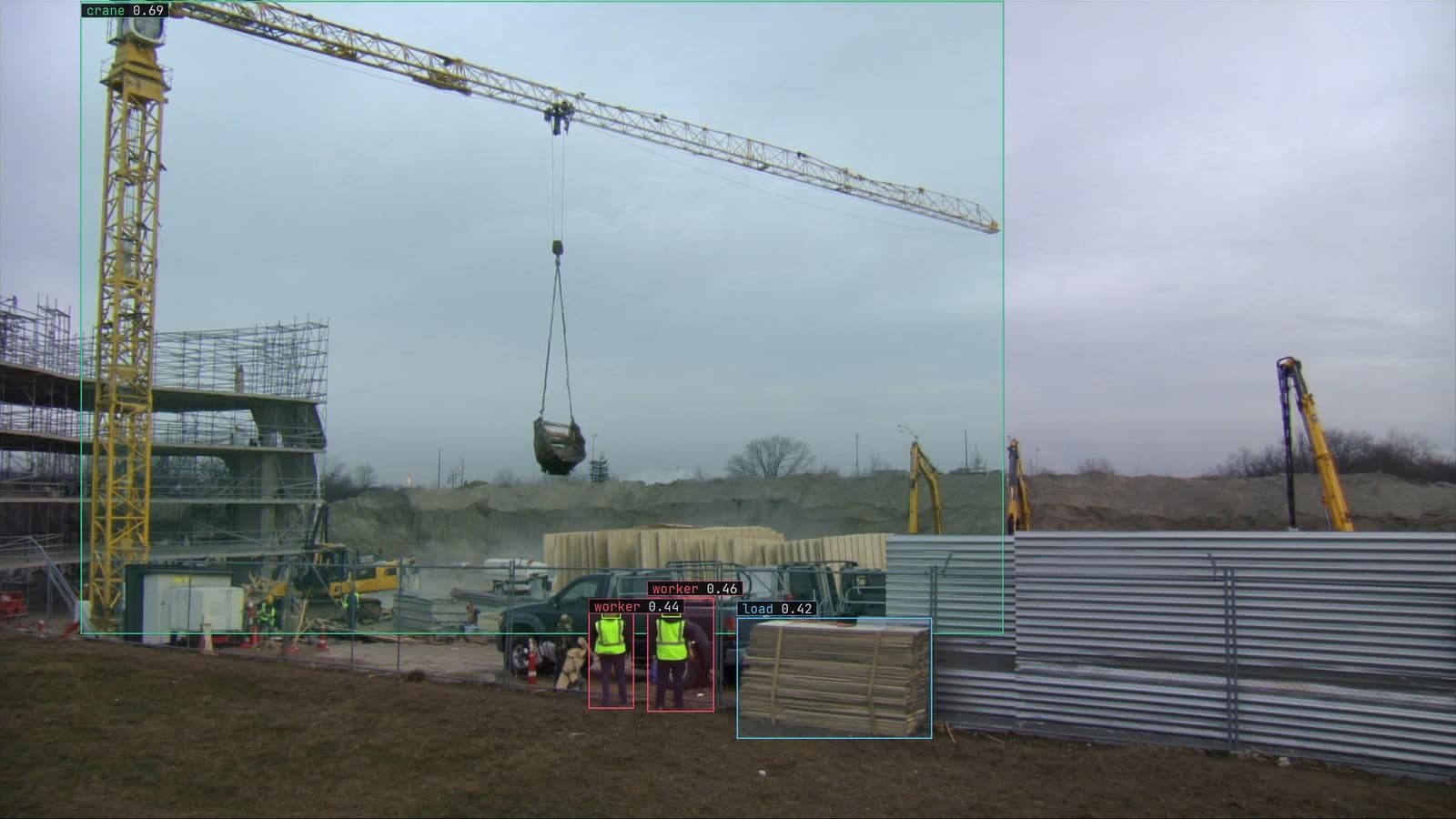
Computer vision for construction site safety, a warning before the worker and the excavator meet
A pole camera boxes people and machines, draws a danger zone that moves with the excavator, and sends the frame when someone walks into it.
Ayman Quadir · Sep 23, 2026
Industries · 7 min read
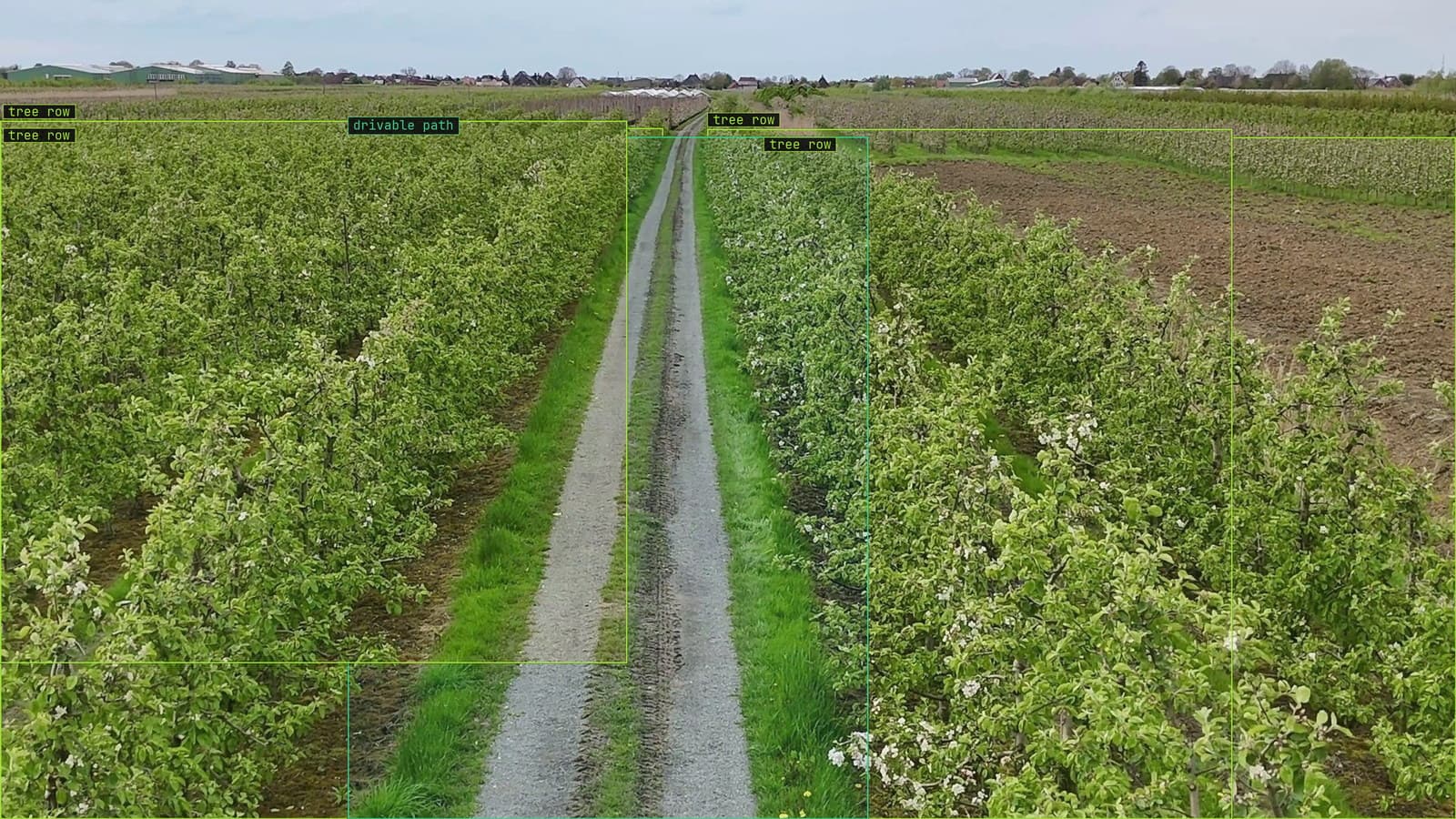
Computer vision in agriculture, from the sprayer boom to the packing line
Weeds against beet rows at dawn, lesions on a leaf, bruises on a packhouse belt, and labels that go stale as the season turns.
Ayman Quadir · Sep 23, 2026
Industries · 6 min read
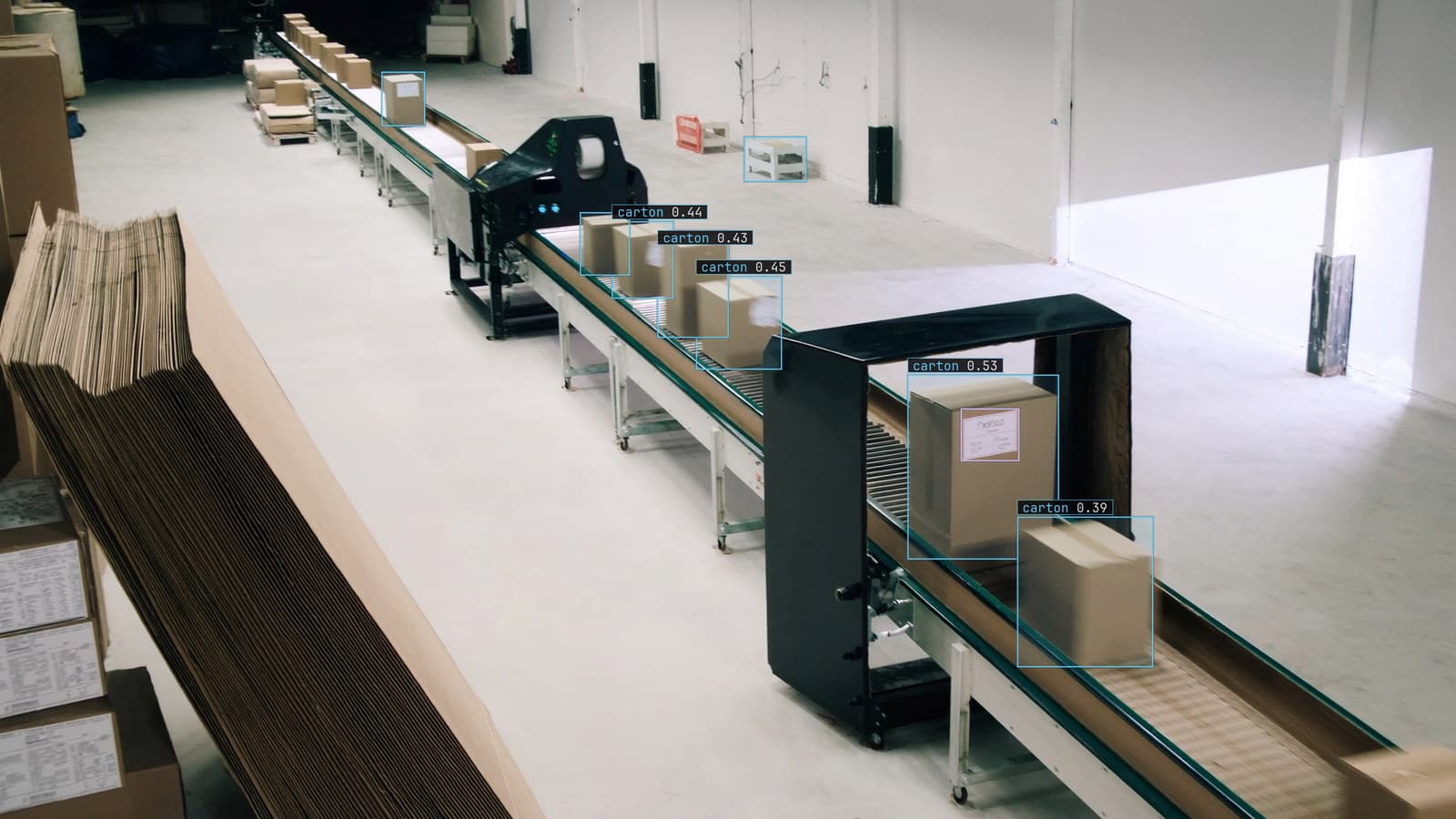
Computer vision applications on a factory floor, four jobs for the cameras already there
Defect detection, assembly verification, safety and inventory on one plant's cameras, with cosmetic against functional written into the labeling schema.
Ayman Quadir · Sep 23, 2026