

Industries · 6 min read
Triaging a storm-damaged neighborhood by the share of each roof that is gone
A mask on the missing shingles and a mask on the roof plane beneath it, so the property worth an adjuster first is the one the percentage names.
Summary
This post follows the two days after a wind event, when an aerial pass over a neighborhood produces more claims than an adjuster can walk in a month, and the number that orders the queue is the share of each roof's own area that the storm took. It covers why that figure needs a mask rather than a box, why a tarp reads as handled rather than missing, and why one peril's model is only a soft start on the next. It is for claims and catastrophe response teams reading imagery in the days after an event.
Rajiya Sultana · Engineering Manager ·
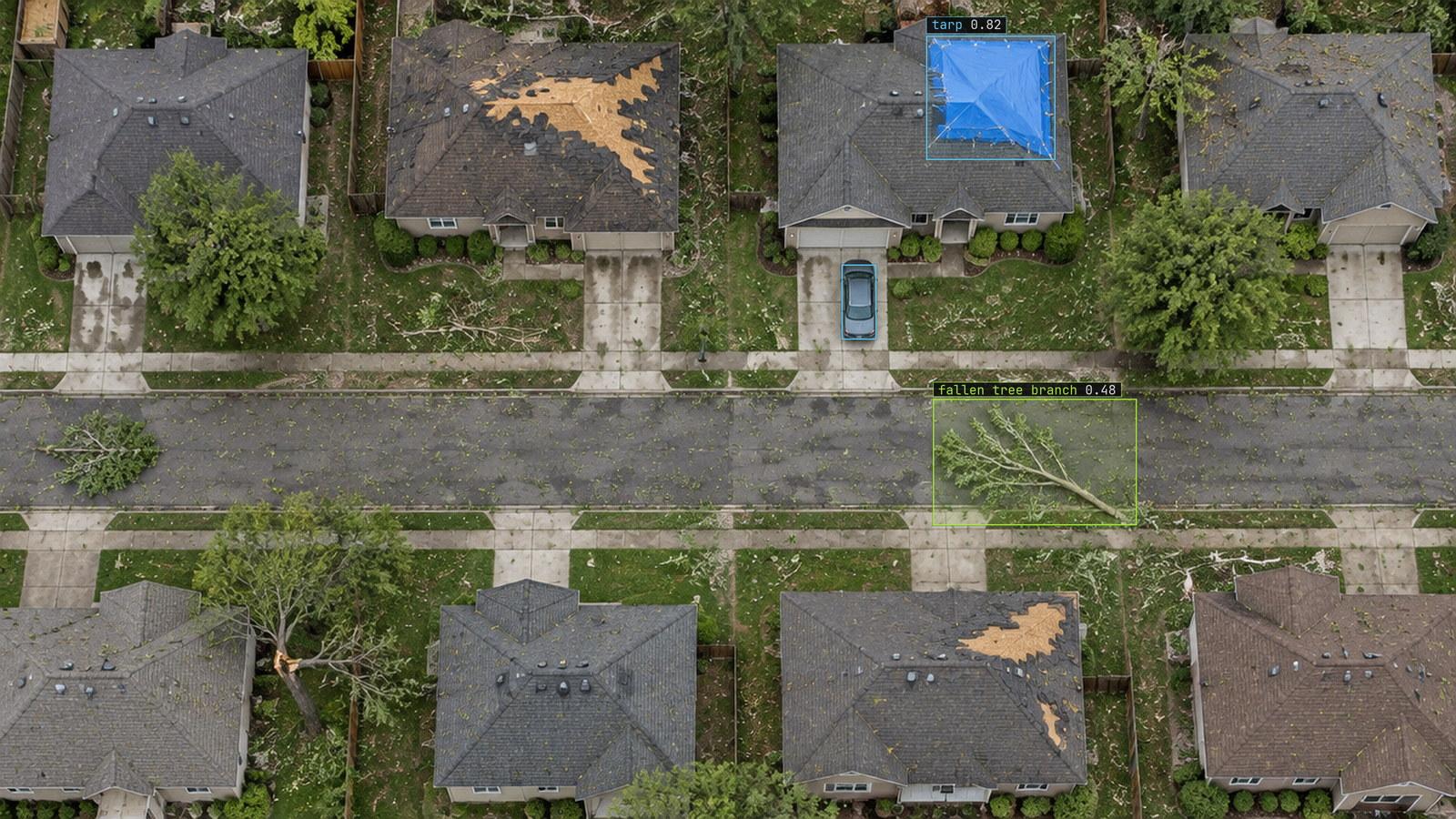
A neighborhood block after a storm, the tarp over a damaged roof and a fallen branch boxed, generated scene with detections from our model
The imagery lands two days after the wind event: one pass over a few hundred roofs, flown at whatever height and angle the aircraft that could get airborne first was able to manage. Behind it sit claims for most of those addresses, filed within hours of each other, and an adjuster who can walk perhaps a dozen of them before the week is out. The question the desk needs answered before anyone drives anywhere is which of those roofs lost the least, which lost the most, and which only looks bad from directly overhead.
A photo answers none of that on its own. Two roofs can look equally alarming in a single frame and be a full replacement and a two-shingle repair underneath.
A mask gives the share of the roof that is gone, a box only gives its location
A bounding box around the damaged patch on a roof says where the damage is. It does not say how much of the roof the damage covers, because the box is a rectangle and storm damage almost never is. A long diagonal strip of missing shingles, the kind a straight-line wind leaves, sits inside a box that is mostly undamaged roof, and a box drawn that way overstates the loss on every roof it touches.
So the label is two masks. The first outlines the roof plane itself, the same shape the property risk use case already draws for underwriting, before any storm. The second outlines the damage on top of it: missing shingles, exposed decking, a hole, a crushed vent. The damage mask read against the roof mask beneath it gives the one figure the desk is actually asking for, the percentage of this roof's own area that is affected.
That is the same arithmetic the fleet condition use case runs for a scratch against a vehicle panel: a mark means little on its own, and means something specific read against the surface it sits on. A roof is just a larger panel, and a storm leaves a larger mark.
The percentage is read off the roof's own area, not the whole parcel
Two houses of different sizes can show the same exposed patch and owe very different numbers, because the patch is the same area on a small roof and a large one. Reading damage against the roof plane rather than against the whole aerial frame is what keeps a modest house from reading worse than a large one simply for being smaller in the picture.
The figure the desk works from is a plain one: this roof, this share of it gone. Ordering the queue from that figure is the desk's own call, the same way a clipboard list would be ordered by hand if there were time for one. The model's job stops at the number, and the number is what lets a property near the top of the loss range get a call before a property near the bottom does.
A tarp over a damaged section reads as handled, not as missing
A roof with a blue tarp secured over a hole has already had somebody on it. The tarp mask sits inside the damage mask the same way the damage mask sits inside the roof plane. A property with a tarp drops out of the urgent end of the queue even though the hole underneath is still there, because the mitigation already happened and the next visit is about the repair, not the leak.
Treating a tarped roof the same as an open one would send an adjuster back to a property that does not need one yet, at the cost of a property that does.
Every peril leaves a different mark, so a model is a soft start on the next one
Hail leaves a speckled roof surface. Wind leaves a torn strip along one edge. Flood leaves nothing visible on a roof at all and everything visible at the foundation. A model built on one storm's damage pattern is being asked to read a different one on the next event, and a wind-trained model's first pass at a hailstorm should be read as a rough cut, not a finished queue.
That is the weather drift the catalog already describes for anything read off a camera during a storm front. It is why the first day's imagery on any new event gets checked harder than imagery from an event the model has already seen several times.
A shadow, a dark tile and a genuinely missing shingle are the review queue
A roof in hard shade, a dark tile roof where a missing section shows less contrast than a light asphalt one, and glare off a wet surface are the frames the model should doubt rather than guess on. A wrong percentage here does not just mislabel a photo, it changes where an adjuster drives first. Those frames go to a person with both masks drawn, the reviewer confirms or corrects the outlines, and the ruling is recorded against the exact roof rather than a fresh look days later when the light has changed again.
My own view, having watched a few of these events come through, is that the queue is only as good as the review desk that corrected the first day's worst frames. A fast model with an uncorrected shadow problem sends the first adjuster to the wrong house.
The catastrophe response use case sets out what the desk receives from this reading and how the schedule and severity on it are written. The docs on labeling with Lexi cover how a reviewer's queue gets sorted so the shadowed roofs above land in front of a person instead of the confident pile. The work behind our 6,000+ cases resolved per month in insurance runs this way: the model clears the roofs its masks agree on, and the desk's day goes to the ones that are not.
The NAIC's post-disaster claims guide describes the same ordering problem from the regulator's side, the volume that arrives in days and the properties that need a visit before the rest. The imagery is how that ordering happens before the first truck leaves the lot.
See it on your own footage.
Start with your footageRelated posts
Industries · 6 min read
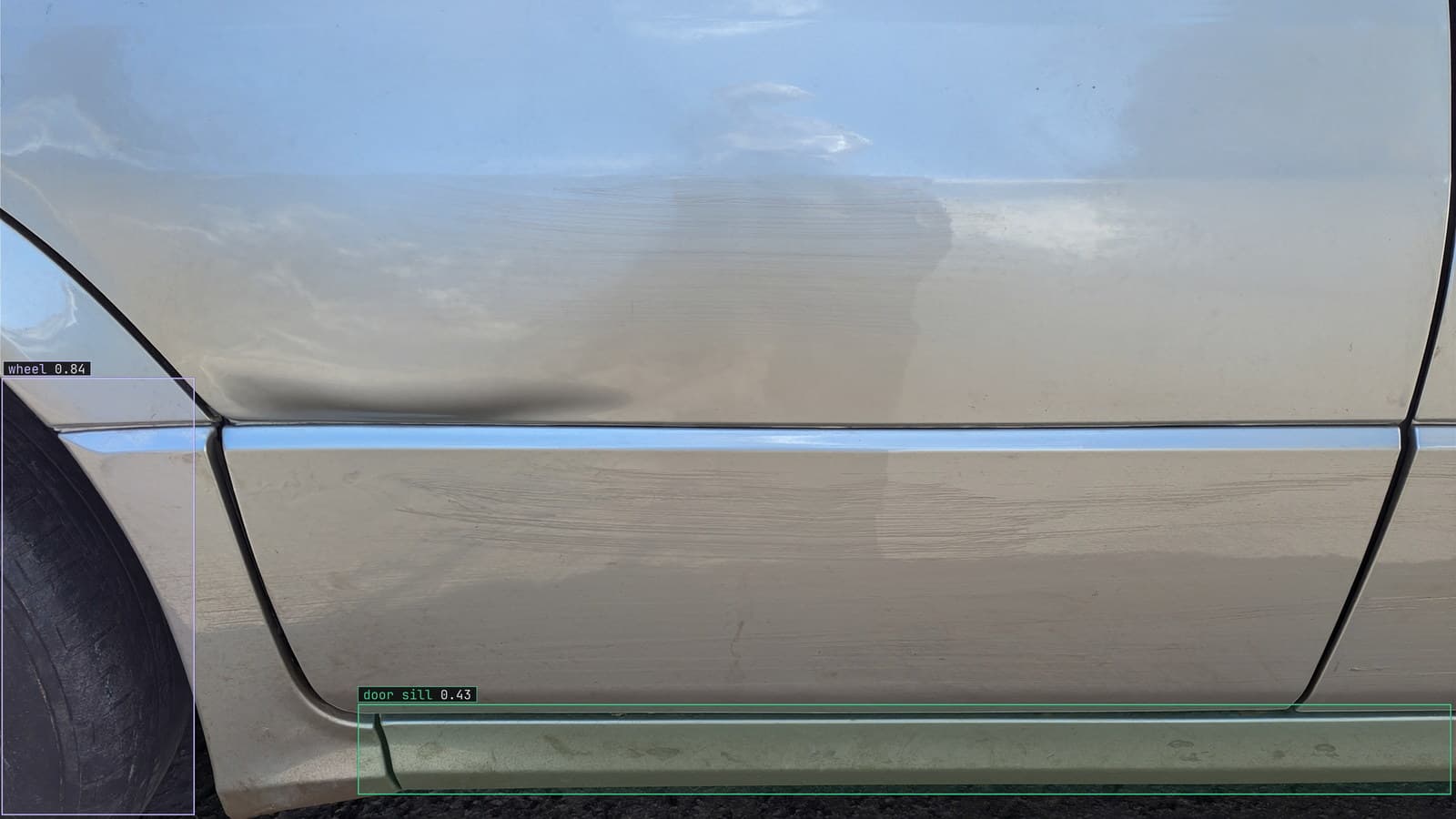
Vehicle damage localization with instance segmentation, so the estimate names the panel and the area on it
One mask for the dent and one for the panel it sits on, from the claimant's own phone photos, so the estimate says bumper and how much of it.
Sheikh Srijon · Sep 26, 2026
Industries · 6 min read
Tire sidewall OCR, reading the DOT code off a black tire in a dark bay
Box the sidewall, light it from the side, read the DOT date code and size from the crop, and log it against the vehicle. A swapped bay camera is a new sensor.
Stephen Biswas · Sep 29, 2026
Industries · 7 min read
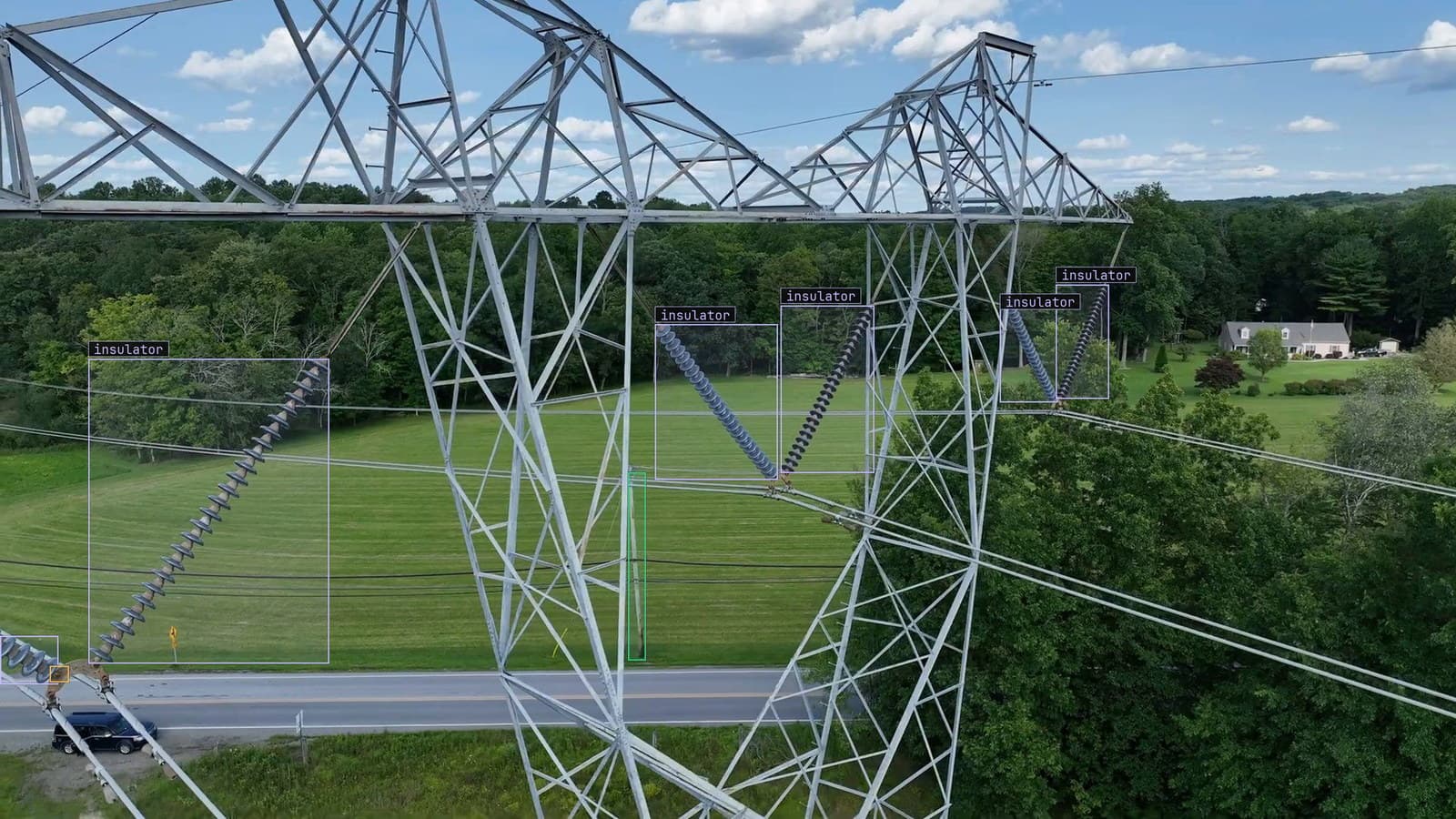
Object detection on aerial imagery and why the ground detector fails at four hundred feet
Insulators a few dozen pixels wide, pipelines at every angle, solar tables packed edge to edge, and why a re-planned flight path is a camera that moved.
Stephen Biswas · Sep 25, 2026