

Industries · 6 min read
Tire sidewall OCR, reading the DOT code off a black tire in a dark bay
Box the sidewall, light it from the side, read the DOT date code and size from the crop, and log it against the vehicle. A swapped bay camera is a new sensor.
Summary
This post covers reading the DOT date code and the size off a tire sidewall in a fleet service bay, from a box on the sidewall to a read from the crop to a record against the vehicle, with a person ruling on the doubtful reads. It concludes that raking light matters more than the model on black-on-black lettering, and that a swapped bay camera is a sensor replacement the model will notice before anyone else. It is for fleet, service and insurance inspection teams.
Stephen Biswas · Engineer · Sep 29, 2026
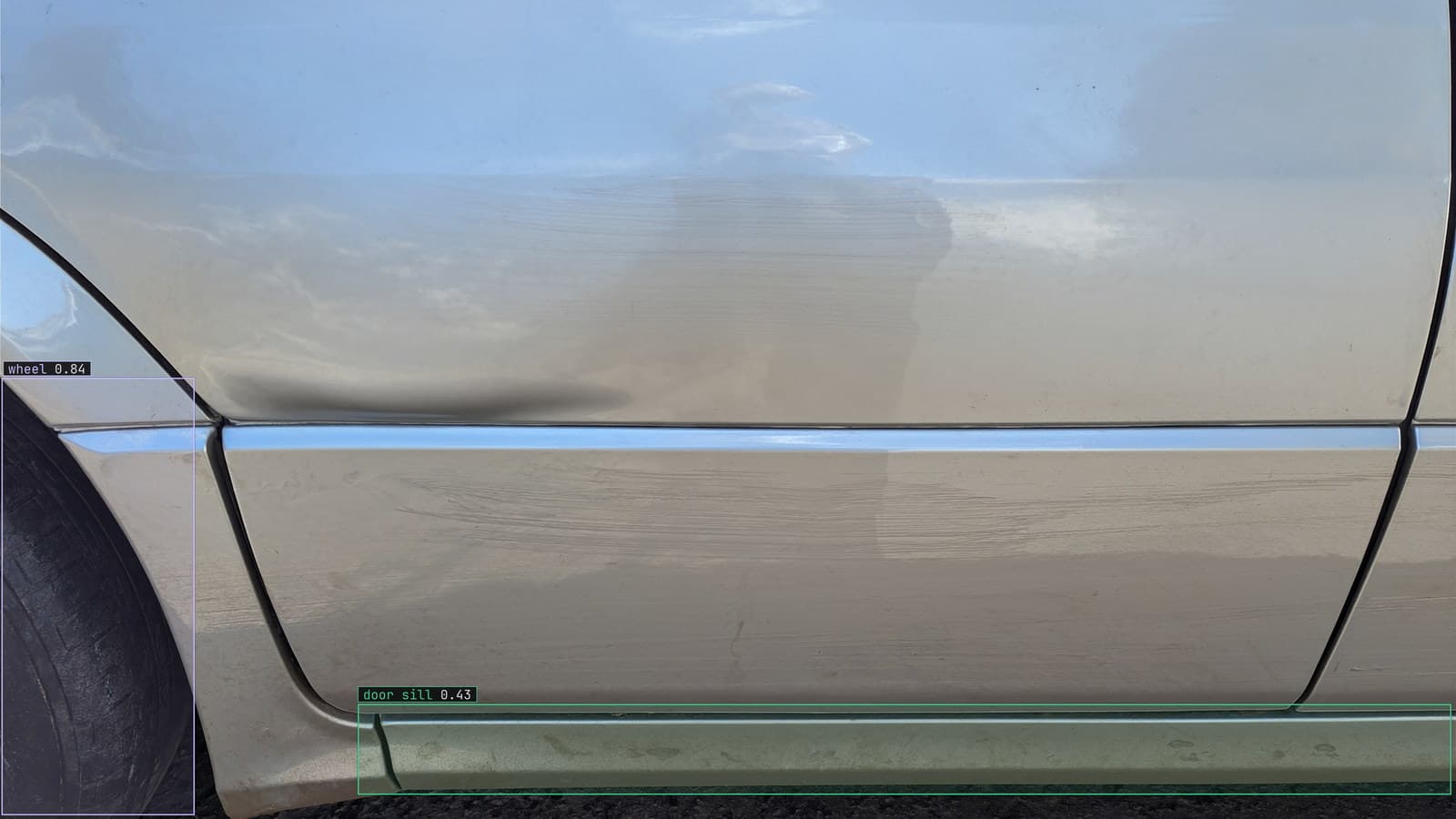
Vehicle door sill and wheel boxed in a claims photo, generated scene with detections from our model
At 6:30 am the service bay has a stack of tires from the overnight fleet against the back wall and a van on the lift with all four still on. The DOT code on each sidewall is moulded into the rubber, black on black, a line of letters and digits that ends with the week and year the tire was made. The fleet's inspection policy says every tire's age gets checked and logged against the vehicle. The technician does it with a torch held at an angle and a chalk mark on the tread, and the log is a column in a spreadsheet filled in at the end of the day from the chalk.
The camera over the lift sees every tire that comes through. Whether it can read them is a question about light before it is a question about a model.
Object detection boxes the sidewall before anything is read
The first job is finding the sidewall in the frame. At 6:30 a tire on a lift, a tire in a stack and a tire on a rim leaning against the wall each present the sidewall at a different angle. The model's first task is a box round the sidewall region rather than the whole wheel. Object detection with two classes, sidewall and the code band, gives a crop per tire that the reader can work on, and the tracking across frames as the lift rises picks the frame where the code band is most face-on.
On a stack, the boxes overlap and the crop of the top tire's sidewall includes the edge of the one below. The person checking the proposed boxes on the first few hundred frames is mostly ruling on stacks, and on wheels that are on the van at an angle where the code band is half hidden by the wheel arch.
The DOT code and the size are read from the crop
Each crop gets a question. The DOT code, the size, the load index, and for a fleet that cares, the brand. LexInsight answers a question about footage with the frames behind it, and asked per crop the question is small enough to answer well: this sidewall, this band, these characters. The read comes back as fields, the crop stays attached, and the week-and-year at the end of the code becomes an age the policy can be checked against.
Moulded lettering is harder than printed lettering because there is no colour contrast at all. The characters are relief, and relief reads only when light falls across it. A crop taken under the bay's overhead fluorescents shows a black band. The same crop taken with a lamp low and to one side shows every character as a shadow, and that is the first thing to fix in the bay.
Raking light is what makes a moulded code readable
My own view is that the light matters more than the model on this job, and that a team that spends a month on the reader before spending a Friday afternoon on a lamp has done it backwards. A cheap strip light mounted low beside the lift, at a shallow angle across the sidewall, turns a band nobody can read into a band anyone can. The camera does not move. The model gets a crop with shadows in it, and the reader's job becomes ordinary.
An aside from the bay: the technicians chalk the code on the tread as they read it, and the chalk marks are the check the camera's reads get compared against for the first month, which the technicians find funnier than the office does.
The read is logged against the vehicle and a doubtful read goes to a person
The fleet number on the van at 6:30 is read from the door, or scanned at the bay entrance, and the four tire reads are written against it with the date and the crops. The fleet's policy runs as a rule. A tire older than the policy allows on a vehicle going back out is an alert, a rule written as a sentence with a severity and a cooldown, approved before it goes live. It is delivered to the workshop lead with the crop attached. The fleet condition monitoring use case is the wider version of this question, what is new since this vehicle went out, and the tire age is one field in it.
A read the reader was unsure of, a character in shadow, a code partly under the wheel arch, a sidewall scuffed across the band, is not silently logged. It comes back to a person with the crop, the person reads it or sends the technician back with the torch, and the ruling is a label the next version learns from. The monitoring guide covers the rule and where the doubtful reads land.
A swapped bay camera is a sensor replacement
In March the camera over the lift fails and is replaced with whatever was in the stores. Same mount, same view, a different sensor with a different colour response and a sharper lens, and to the technician the picture looks better. To the model, the noise floor, the edge sharpness and the way the raking light renders relief have all shifted at once, and the reads on the day of the swap change character while the tires did not. The drift catalog covers this as a camera was replaced: a step on the day the unit was serviced, on one camera, while its neighbours hold.
The signal is the review queue. Doubtful reads rising from the morning of the swap, and a person correcting the reader in a consistent direction. The fix is a short window of frames from the new sensor, labeled by the person already ruling on them, and if the fleet's other bays are being re-equipped in phases, the first bay done properly means the rest inherit it.
The bay's corrections are the next version
LexData takes the sidewall model through its whole life. You type what to look for, Lexi puts a box on every frame, and a person checks each label before anything trains on it. The model then watches the bay camera the workshop already has, on a runner beside the recorder or in the cloud. Frames it is unsure of come back to a person, the corrections retrain it, and the new version replaces the old one with no downtime. The stack against the back wall at 6:30 is read before the technician has finished the first coffee, and the four the reader could not make out are the four with a chalk mark.
The spreadsheet column survives the year. It is filled from the camera's log now, and the technician checks it against the chalk on the days the light in the bay is wrong.
See it on your own footage.
Start with your footageMore in Industries
Industries · 7 min read
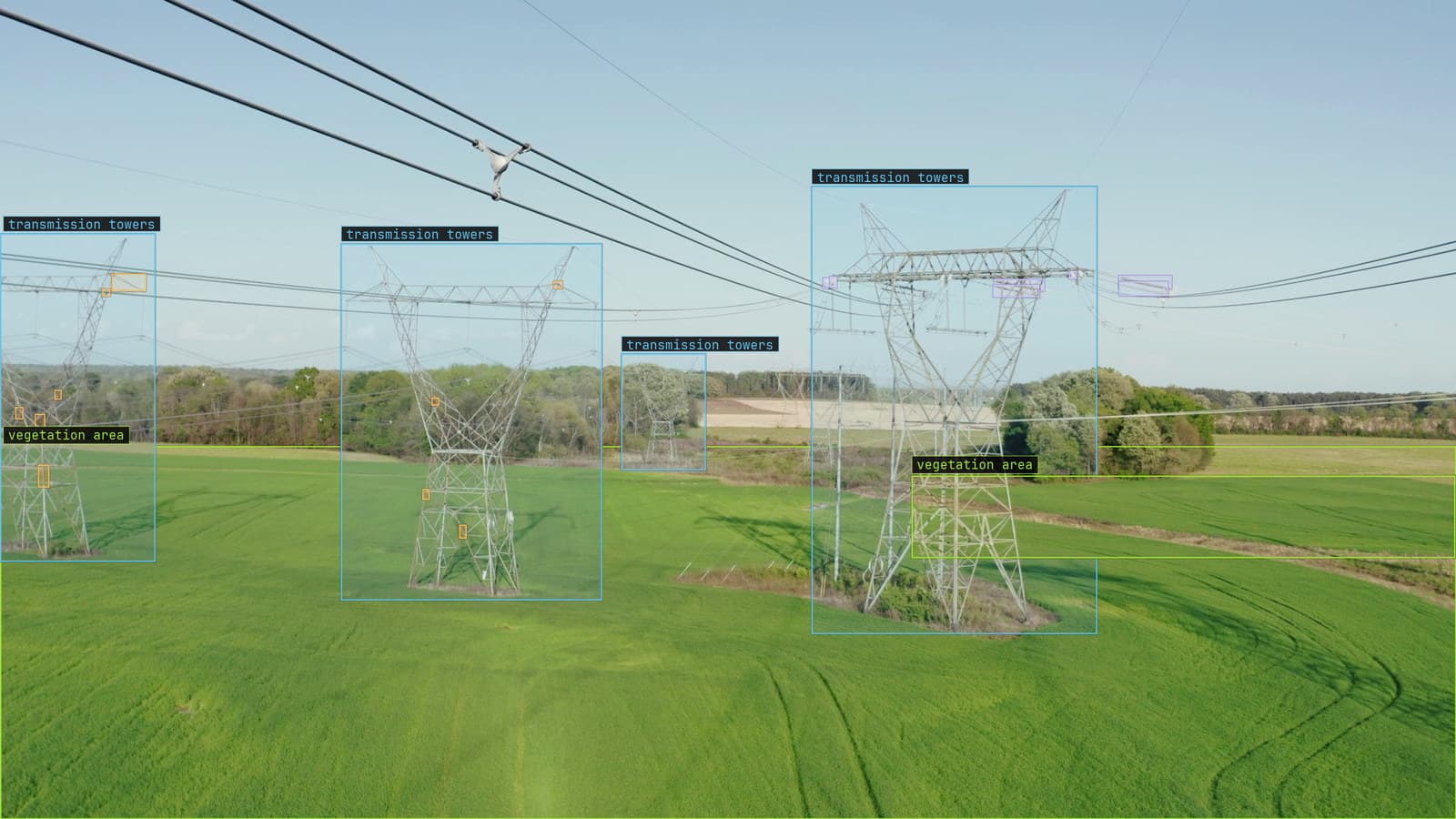
Aerial fire detection from a drone patrol, smoke before the flame reaches the line
On a right-of-way patrol, smoke is a few dozen grey pixels that look like haze. Two boxed classes, an alert with a cooldown, and the bad-weather days kept.
Rob Hickey · Sep 29, 2026
Industries · 6 min read
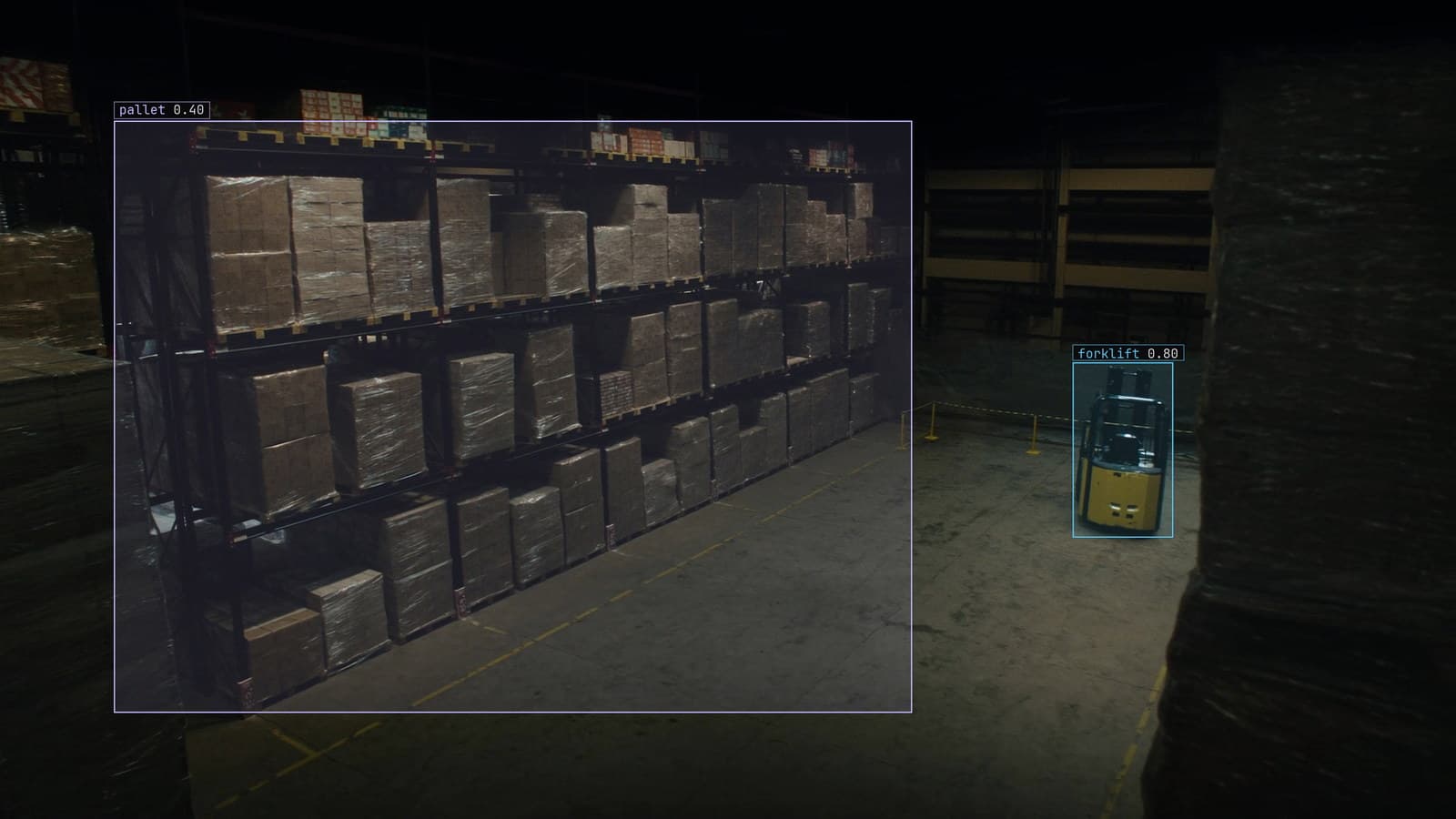
AI in robotics after the robot ships, what the warehouse cameras keep learning
The forward camera boxed pallets and people well at the pilot site. Then the racking moved, and the edge cases the planner never saw came back for review.
Andreas Ohrvall · Sep 29, 2026
Industries · 6 min read
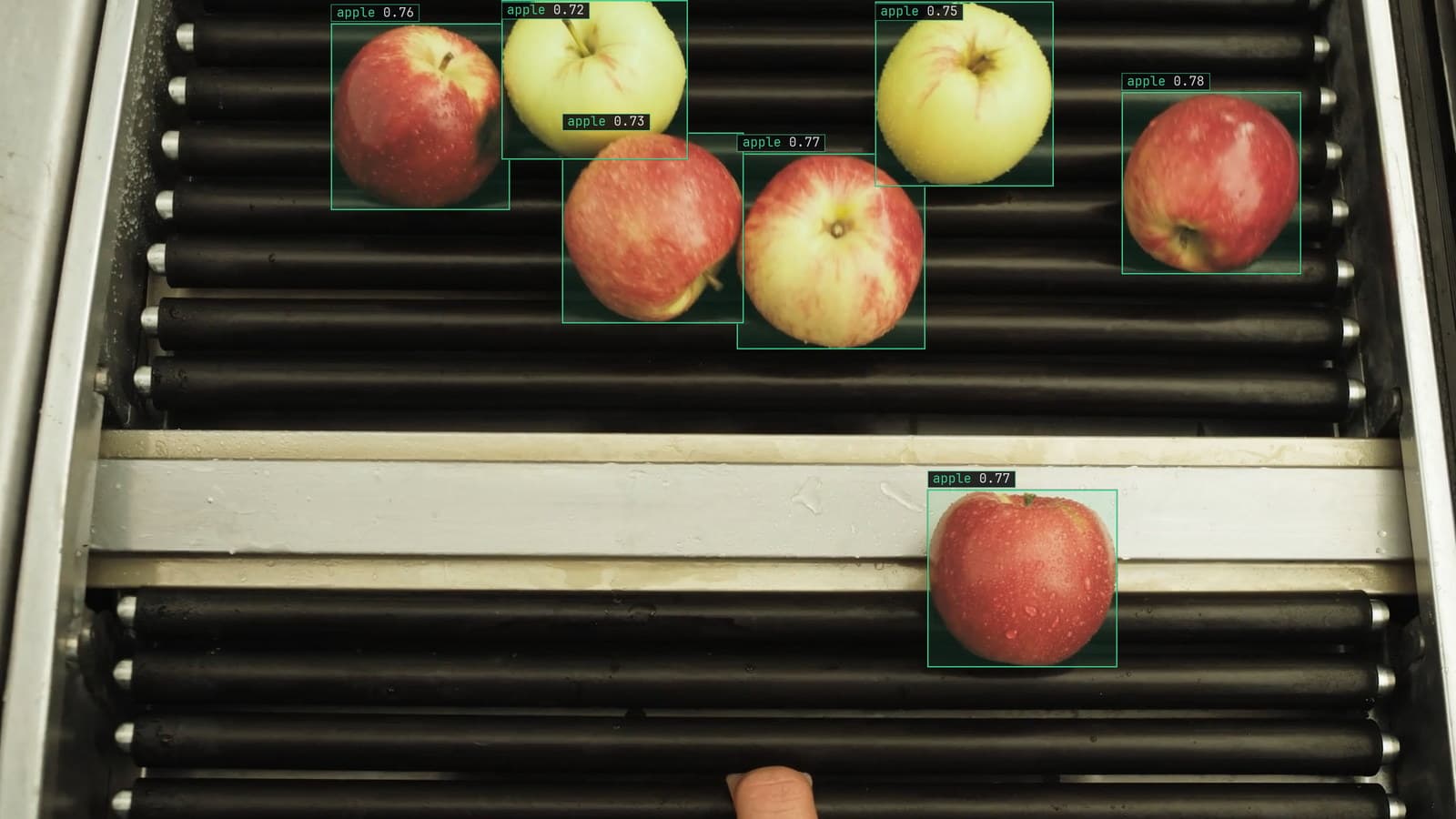
Automated sorting with computer vision, from the camera over the conveyor to the diverter
A box on every apple, a grade from the box, and an air jet that acts on it before the belt moves on. The new cultivar is when the model needs the graders again.
Rob Hickey · Sep 29, 2026