

Industries · 5 min read
Checking a well pad's own equipment list from a drone pass
A box on the separator, the scrubber and the pig launcher read against the pad's build plan, and the skid the correction rate catches first.
Summary
This post follows a well pad's own build plan compared against a drone pass over the pad, with a box drawn on every vessel, skid and valve the plan names. It covers why presence and position answer the question without a mask, why a dense pad is a matching problem before it is a detection problem, and why a new skid is the frame that comes back for review first. It is for completions and facilities teams checking a pad against its own plan.
Andreas Ohrvall · CTO ·
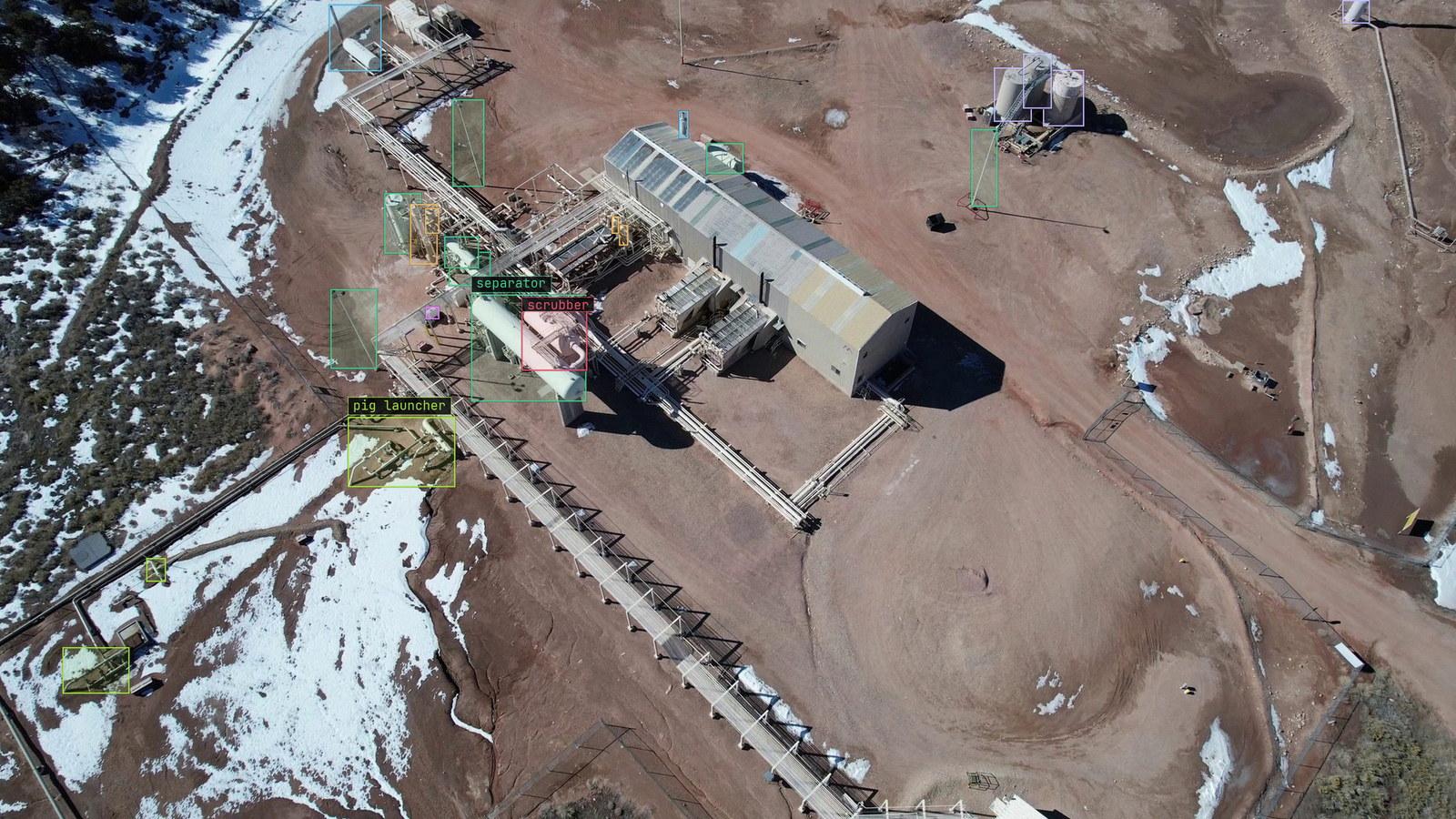
A well pad from above, separator, scrubber and pig launcher boxed, from a customer drone survey
The pad in the picture above has a build plan somewhere in a folder: a separator here, a scrubber there, a pig launcher at the fence line, each one placed on a drawing before it was ever bolted down. What the facilities engineer actually has, six months after commissioning, is a pad that has been walked twice by two different contractors, a skid that arrived in a later change order, and a growing doubt about whether the drawing still matches the ground.
A drone pass over the pad settles that question the way a walk with a clipboard never quite does, because the frame holds the whole pad at once and nothing in it moves while someone counts.
The class list is read off the pad's own drawing, not a generic catalogue
A vessel count is only useful if the classes match what the engineer already calls things. "Separator", "scrubber" and "pig launcher" are not generic computer vision classes, they are the labels already written on this pad's own piping and instrumentation drawing, and the box in the frame needs to carry the same word the drawing does.
That sounds obvious until the second pad on the same lease turns out to use a different scrubber model from a different supplier, boxy where the first one is cylindrical. The class is still "scrubber". The visual instance behind it is not the same shape twice, which is the first thing a class list written from a drawing has to survive.
Object detection answers what is here and where, not how much of it there is
The question on a pad like this is presence and position: is the separator where the plan says, is there a second tank that should not be there, has anything gone missing since the last survey. None of that needs an outline. A bounding box gives a location and a class, and that is the whole answer the facilities team is asking for.
A mask would cost several times the labelling effort for a question nobody downstream is asking in square metres. Nothing on this pad is graded by area the way a patch of corrosion or a spilled stain is, so the extra precision has nowhere to go.
A dense pad is a matching problem before it is a detection problem
A busy pad has a dozen near-identical valves, flanges and short runs of pipe in one frame, several of the same colour, several at the same scale, packed close enough that one box's edge touches the next box's edge. Telling flange eleven from flange twelve is not really a detection failure, it is a matching failure: the model found two things that look the same and has to decide which record in the plan each one corresponds to.
Lexi proposes a box for every instance the typed class list describes, and a person checks each one against the drawing before anything trains on it, catching the swapped pair a detector alone would wave through.
Two flanges, one record. The review has to settle which is which before anything learns from the pair.
On the oil and gas work behind our 12k+ precision image annotations delivered, the pads that stayed accurate over several surveys were the ones where the reviewer's queue was sorted by the model's own uncertainty. The two look-alike flanges landed in front of a person that way, instead of in the confident pile at the end.
A new skid is the frame that comes back for review, not the one that is missed
New equipment arrives on a working pad without asking the model's permission. A valve skid install, a tank swapped for a taller one, a scrubber replaced under a supplier's new part number: none of it looks like anything in training. It is either missed outright or boxed under the nearest wrong class, with a confidence that does not reflect how little the model actually recognises it.
The equipment changed is the right way to think about that moment. The pad did its job and the hardware moved on without the model. What catches it is not a sharper detector, it is the frames an uncertain prediction sends back for a person to settle, and the correction that follows becomes the class's first real example of the new part.
My own view, having built a few of these, is that a facilities team gets more from a presence check run on the drone pass it already flies than from a sensor retrofit answering the same question from the ground.
The drone pass exists for other reasons already. The check is a read of imagery that was going to be taken anyway.
The alert is a missing class on a schedule, not a dashboard
A pad inventory check is not useful as a live feed nobody watches. It is useful as a rule, run on a schedule tied to the survey cadence. The pad is flagged only when a named vessel is absent from where the plan puts it, or when a class appears that the plan does not list at all. That is a plain presence rule, held against the plan rather than scored by a dashboard.
The rig equipment and machinery use case sets out what that rule looks like on this pad specifically, including what the facilities team receives and when. The docs on labeling with Lexi cover how the reviewer's queue gets sorted so the two look-alike flanges above are the pair a person actually sees.
The pig launcher at the fence line, boxed in the picture with the others, is the one piece on this pad that nobody mistakes for anything else. It is also the one piece the drawing has never moved. The separator and the scrubber are the ones that drift, and the ones worth checking again next survey.
See it on your own footage.
Start with your footageRelated posts
Industries · 6 min read
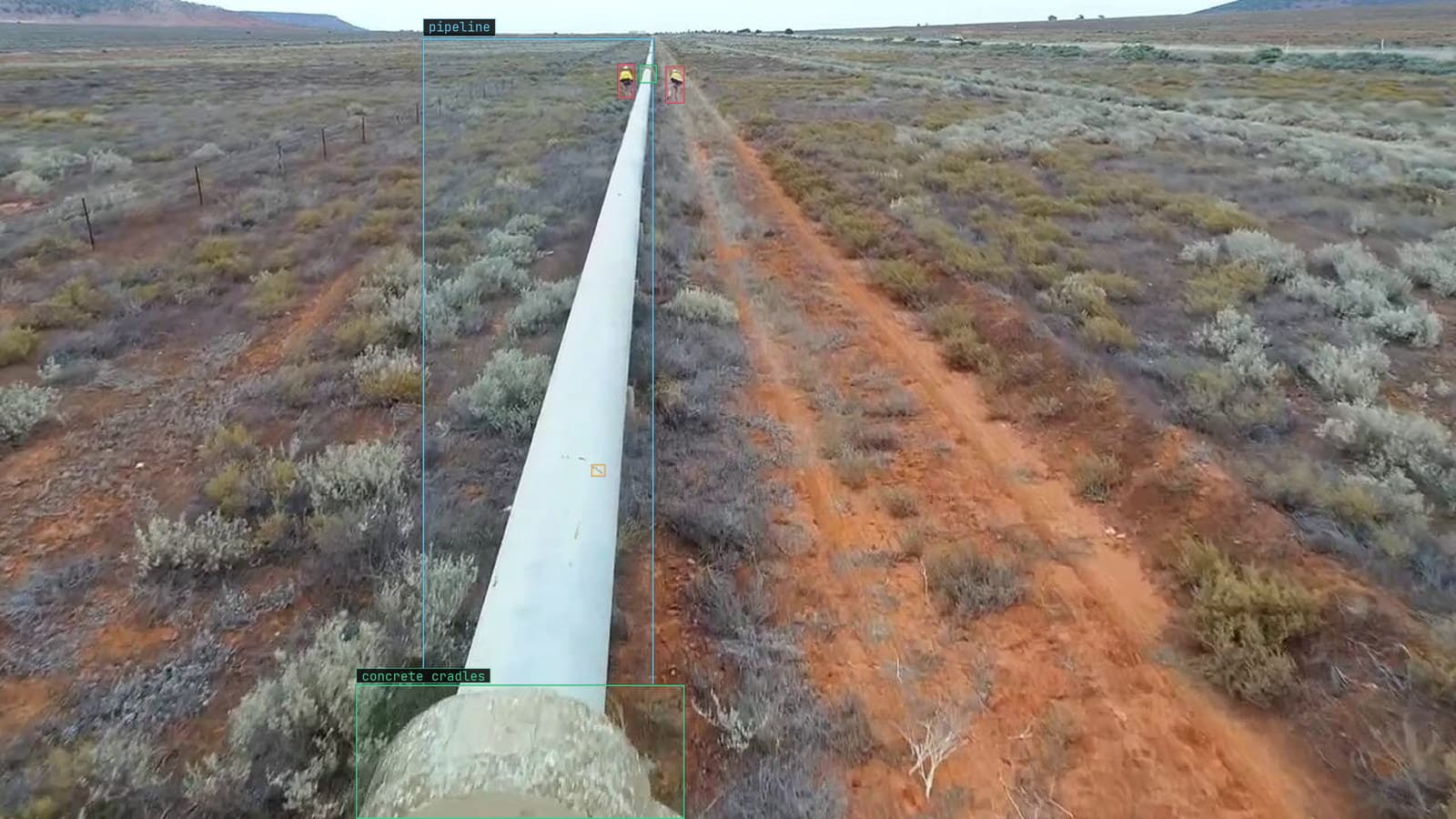
Pipeline inspection with camera nodes that watch for the crack before it is a leak
Cameras on the exposed spans, classes written with the integrity team, the alert raised at the node with the frame, and rain showing in the corrections first.
Andreas Ohrvall · Sep 26, 2026
Operations · 7 min read
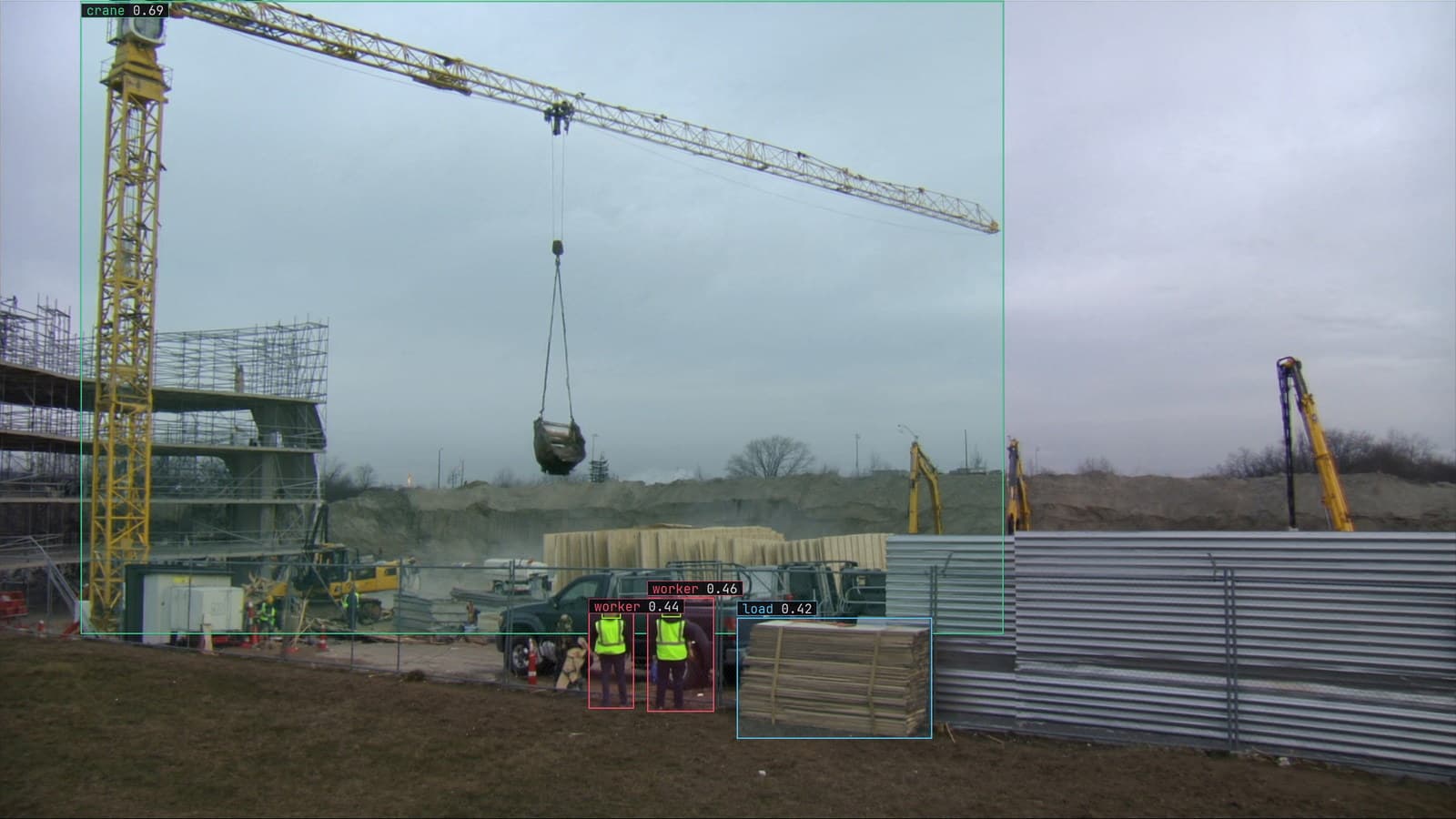
Zone monitoring system built on a site camera and a polygon
A zone monitoring system from one site camera. A polygon over the crane swing radius, people and vehicles as classes, and the alert with the frame.
Esdras Ntuyenabo · Sep 27, 2026
Industries · 6 min read
Object detection on satellite imagery finds every house inside the pipeline buffer
A proposed corridor over a basemap, houses and barns proposed as boxes, a GIS analyst approving each one, and summer leaf cover as the season that hides roofs.
Sheikh Srijon · Sep 25, 2026